By Chris Chavez
February 2, 2026
The Millrose Games once again electrified the Armory and lived up to its reputation as the premier indoor meet in America. If you wanted to get into the building, there were a limited number of day-of $195 tickets available. Even at that price point, it was worth the price of admission to watch world-class fields deliver world-class performances.
What made this year’s edition so great? The consensus from the CITIUS MAG post-show team was clear: this year’s Millrose was less about chasing times and more about winning races.
As the weekend began, whispers circulated about world records and American records across multiple events. Grant Fisher‘s scratch from the two mile eliminated one possibility. The Women’s Wanamaker Mile was hit with scratches by three-time champion Elle St. Pierre and World Championship 1500m silver medalist Dorcus Ewoi due to illness. Pace lights and pacers were all over the place. Meet director Ray Flynn joined our post-race show and noted that what emerged was actually more compelling.
“I think we got hyped up on records last year because we got spoiled and we had two world records, so you kind of had that in the back of your mind here,” Flynn said. “But this meet really became about racing and we saw some great racing tonight.”
Collegians stole the show in the women’s 3,000 and men’s 800 as Alabama’s Doris Lemngole (8:31.39) and Northern Arizona’s Colin Sahlman (1:44.70) won their races in NCAA record fashion. Lemngole improved Katelyn Tuohy’s 8:35.20 by almost four seconds, collapsing at the finish line in a combination of joy and exhaustion, while BYU freshman Jane Hedengren set an American collegiate record of 8:34.98 in third place. Sahlman took down Paul Ereng’s legendary mark of 1:44.84 set all the way back in 1989—a record that also stood as a world record when Ereng, an Olympic gold medalist, set it at the World Indoor Championships.
Here are some parting thoughts and if you prefer to take this on-the-go and listen in podcast form, you can listen to the post-show on the CITIUS MAG Podcast feed available on Apple Podcasts, Spotify or wherever you get your shows.
Cam Myers Is Operating On A Different Level Right Now
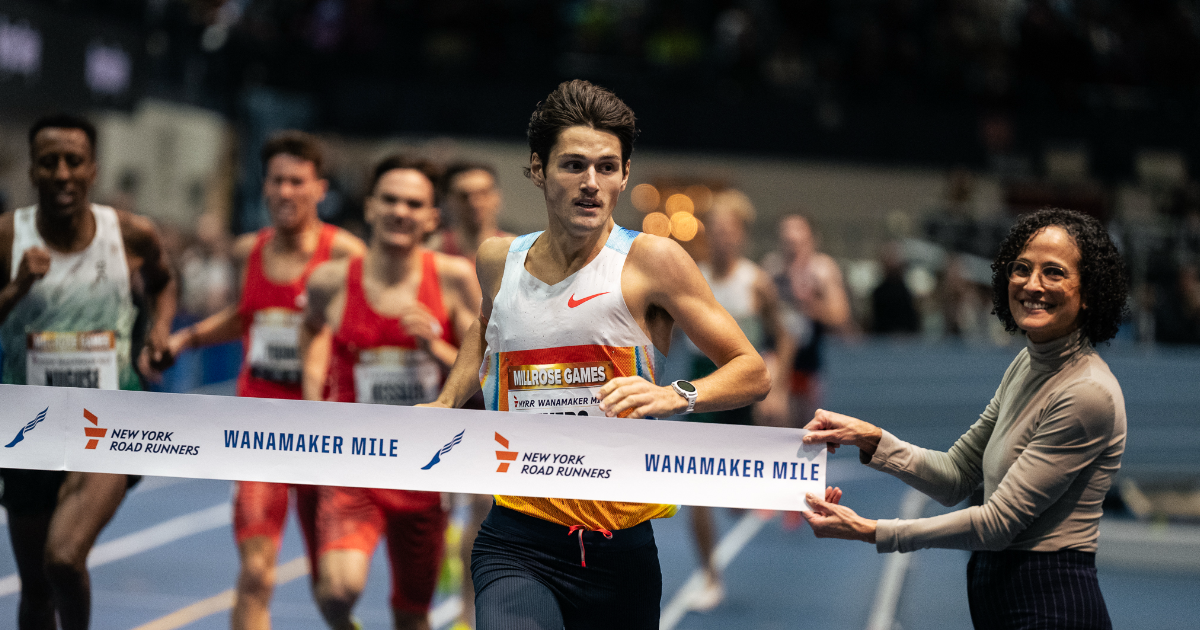
19-year-old Cam Myers didn’t just win the Wanamaker Mile, the Australian made it look easy against a stacked field that featured Olympic bronze medalist, U.S. record holder and three-time champion, Yared Nuguse, and newly-minted 2000m world record holder Hobbs Kessler. The 19-year-old Myers controlled the race from the front, weathered a late charge from Kessler, and pulled away over the final 50 meters to win in 3:47.90. Nuguse took second in 3:48.31, with Kessler crossing the line third in 3:48.68.
The performance continues what has been a remarkable indoor season for Myers, who appears to have taken another leap forward from his already impressive 2025 campaign. What stood out most wasn’t just the time or the win, but it was how comfortable he looked executing his race plan while everyone else jockeyed for position behind him.
Kyle Merber: “The maturity that he has. It’s not like these young guys are running fast because they’re freaks of nature—which they are—but they have a completely mature grasp of the sport that normally most of us wouldn’t have gotten until we’re in our mid-20s.”
The only question now is whether Myers will make the trip to the World Indoor Championships in Poland. With the Maurie Plant Meet in Australia scheduled around the same time, it creates a difficult decision for an athlete who values the home crowd Down Under.
Aisha Praught-Leer: “We have to incentivize the right things. It is a world championship. Love Maurie Plant, love the meet, love the people, love Australia—everybody in Australia knows I’m your girl—but we have to prioritize the right things. If contracts, endorsements, eyeballs are all channeling to a world championship, that is what we need to focus on. Medals are life-changing.”
Watch Cam Myers’ post-race interview here | Watch Yared Nuguse’s post-race interview here | Watch Hobbs Kessler’s post-race interview here | Full race video here.
Nikki Hiltz Finally Gets To Hoist The Wanamaker Mile Trophy
After coming to Millrose six times and never winning, Nikki Hiltz finally got their Wanamaker Mile victory. The win came in a somewhat different fashion for Hiltz. They pushed from 400m meters out, registering a 60.95 final quarter split, rather than waiting until the final straight. Hiltz challenged themselves to see if they could hold off Olympic silver medalist Jessica Hull from farther out, and used it as an opportunity to expand their tactical toolbox.
Eric Jenkins: “It’s usually the other way around as far as positioning goes. Usually, you see Jess kind of pulling and Nikki being the hunter, but Nikki looked great in that last 100m to pull away from Jess.”
For an athlete who has consistently been in the mix at Millrose but never quite captured the title, this was a long time coming. Hiltz is planning to run the 1500m and 3000m at the U.S. Indoor Championships. They won both events last year and opted to skip the World Indoor Championships in Nanjing, China, but they’re planning to go to this year’s meet in Poland, if they qualify for the team.
Aisha Praught-Leer: “This really plays into going into LA 28 with a long-storied approach of ‘Let’s get really good at winning races at the biggest stages and the highest levels and let’s see what it looks like at a World Indoors.’ The 1500m is the best it’s ever been and to be able to compete and to be able to medal in these situations requires unprecedented levels of strength, speed and tactical prowess. And we’re watching them collect all of the pieces that they need to have…We were in the corner of the backstretch watching the celebration and you could see how much it meant to them. They were holding the trophy above their head. This was coveted and I’m glad to see it.”
Watch Nikki Hiltz’s post-race interview here | Full race video here.

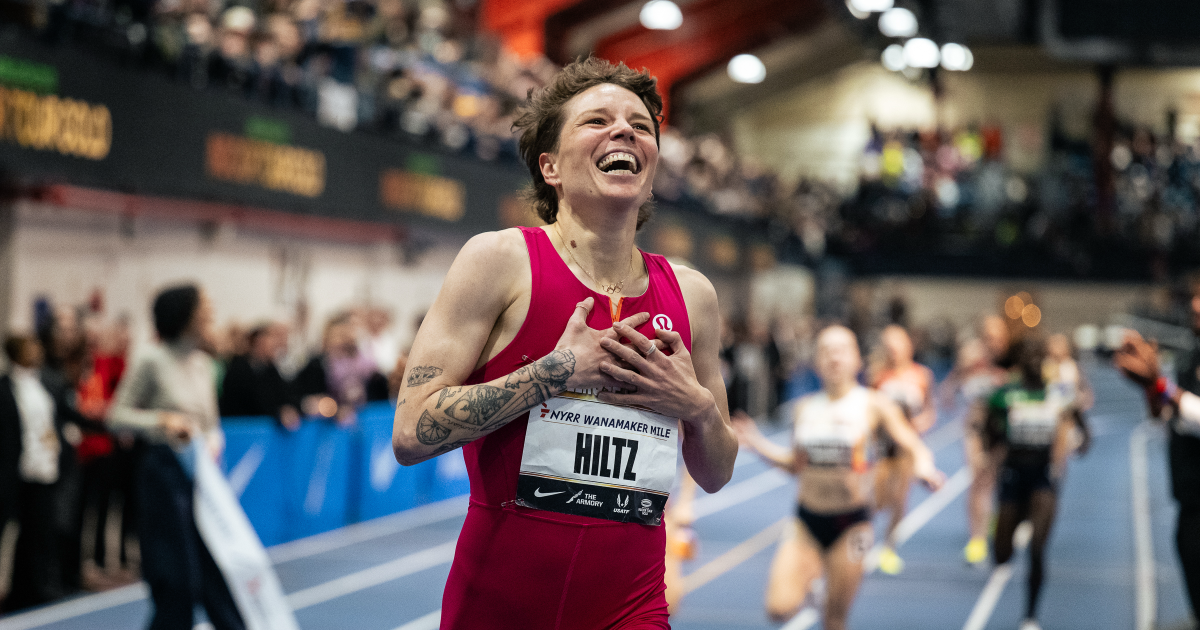
Nikki Hiltz | Photo by Johnny Zhang / @jzsnapz
The Two Mile Became A Tactical Showcase When Grant Fisher Scratched
The pre-race buzz around the men’s two mile centered on whether anyone could challenge Josh Kerr’s world record. When Fisher scratched just hours before the start due to illness, the entire dynamic shifted.
Eric Jenkins: “Genuinely the worst news you can get... If one guy scratches from the two mile—you hope it’s literally anyone but Grant Fisher. As soon as Grant Fisher’s out, they go, ‘Well, time’s out the window.’”
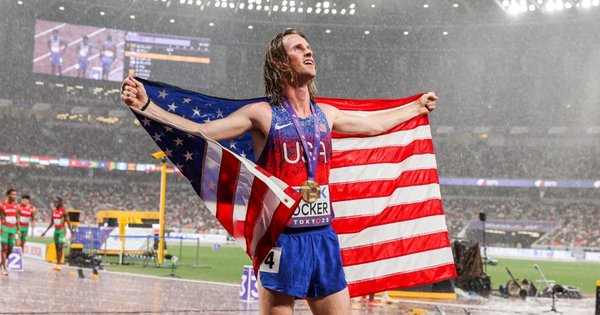
What unfolded was a tactical chess match that showcased the race IQ of 5000m World champion Cole Hocker. Rather than chasing pacer Ben Allen‘s early hot pace, Hocker sat back and dictated a tempo that was fast enough to hurt but slow enough to preserve his devastating kick—all from the front.
Kyle Merber: “Cole sat right off and he didn’t go. He made sure he goes, ‘I am not going to just be the one to go at this insane pace.’ I’m going to sit back. He’s so good at doing just fast enough that no one’s going to go around him, but slow enough that he’s going to have the best kick.”
Aisha Praught-Leer: “When you hit that icky in-between pace, it doesn’t feel comfortable, but you see the time on the clock psychologically. If I’m Ethan Strand, I’m thinking like, ‘Hey, we’re going slower than I thought we were, but it still really hurts. I’m uncomfortable. I’m not sure what to do.’ Cole did it right and it started building that doubt in your competitors. It’s a brilliant, brilliant move to do.”
Hocker ultimately won in 8:07.31 with Kerr taking second in 8:07.68. Parker Wolfe ran tough for third place in 8:07.83. 3000m steeplechase World champion George Beamish charged to 10th place with 400m to go to 5th after sitting nearly last for much of the race.
Extra kudos to pacer Ben Allen, who adjusted his strategy on the fly when Hocker didn’t immediately attach.
Kyle Merber: “Ben Allen did such an unbelievable job pacing. He allowed them to settle a little and then cut in and take the pace, which allowed Cole to immediately latch on. At some point, it became clear to him that Cole was not on top of him. He does little look-backs over the shoulder, which is allowed and encouraged if you’re the rabbit, and he stepped out on the turn a little bit, got on the outside of the lane, and slowed it down just a hair—nothing dramatic, but just enough to allow Cole to reattach. Without him, this becomes a totally different 8:15 race.”
Watch Cole Hocker’s post-race interview here | Watch Josh Kerr’s post-race interview here | Watch Parker Wolfe’s post-race interview here | Full race video

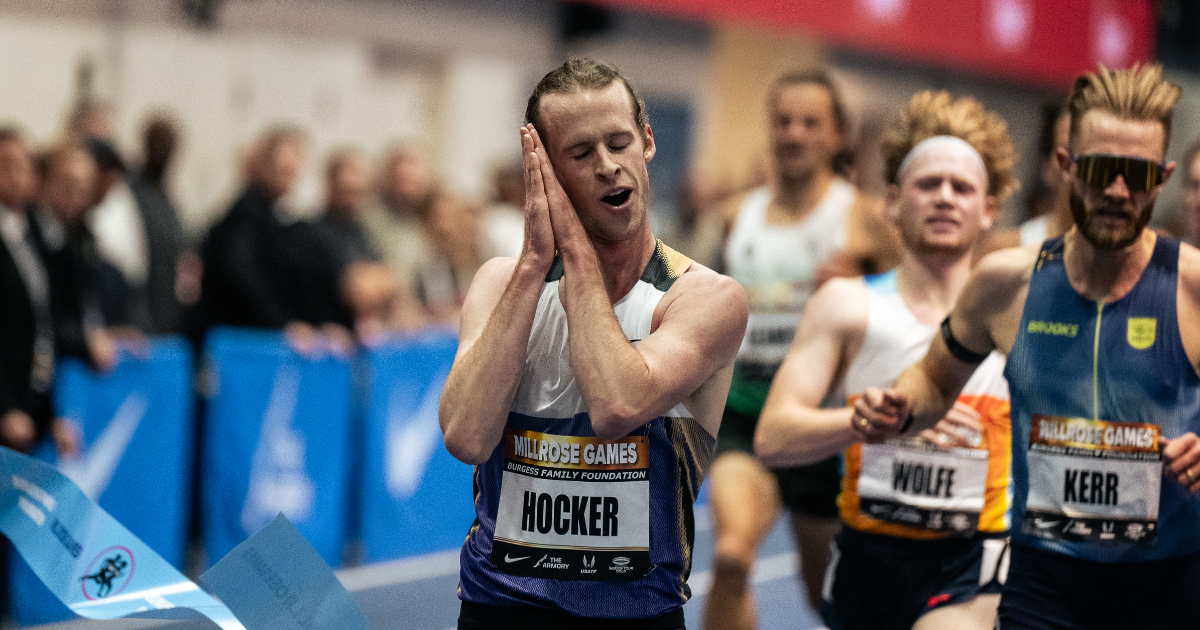
Cole Hocker | Photo by Johnny Zhang / @jzsnapz
The Women’s 3K Lived Up To The Hype
Without the strongest professional field, much of the pre-race attention for the women’s 3000m fixated on the collegiate stars. Alabama’s Doris Lemngole and BYU’s Jane Hedengren both broke Katelyn Tuohy’s NCAA record with very different styles.
Lemngole, who no longer holds the NCAA 5000m record after Hedengren demolished it with her 14:44 in December, reclaimed some territory with a devastating final lap to win in 8:31.39. Her 30.93 last 200 meters (63.76 final 400) was the kind of closing speed that wins championship races in March, and puts you in the conversation beyond it.
Eric Jenkins: “It was a perfect race for her. She just sat on Jane the entire race.”
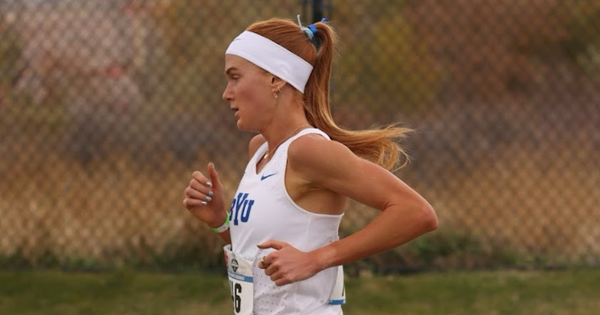
Hedengren, the BYU freshman who has quickly become one of the most exciting talents in collegiate distance running, ran 8:34.98 to finish third overall and set an American collegiate record (No. 2 overall). The performance was particularly impressive given she hadn’t raced since December.
Kyle Merber: “It’s kind of wild how quickly we’ve raised our expectations for Jane. Going through the results, she’s a freshman and it’s almost like, ‘Aww… Jane didn’t win.’ She’s a freshman! It’s funny how quickly we suddenly make the expectation—oh dang, you didn’t beat all the pros and set the collegiate record on the way.”
Aisha Praught-Leer: “That’s unprecedented, right? We don’t see teenagers—I mean on the men’s side, we do, but it typically takes women a little bit longer to develop—so we don’t often see phenom teens taking down—we don’t see the Cam Myers-types on the women’s side. It takes a little bit longer to develop and to get through the system and to get your legs under you to be able to take down a professional field. So I would say for Jane coming in third in 8:34, that’s an incredible day… I think it’s an important part of development in the sport: learning to process losses. If you think that it’s just going to be great races and wins, then you haven’t been in the sport long enough. This is part of this and it’s also great for the viewers. It builds this Jane and Doris rivalry that’s good for the NCAA and good for the sport overall.”
Lemngole is planning to run the 5000m at the BU Valentine Invite at Boston University in two weeks, presumably targeting Hedengren’s record. The rumor is that they’re looking to pace it for 14:40. This rivalry will be essential viewing come NCAA Championships in March.
Kudos to Nozomi Tanaka’s gutsy frontrunning to stay on pace early after the rabbit dropped out because it was critical to the record falling.
Watch Doris Lemngole’s post-race interview here | Watch Jane Hedengren’s post-race interview here. | NBC Sports has not uploaded the women’s 3000m.

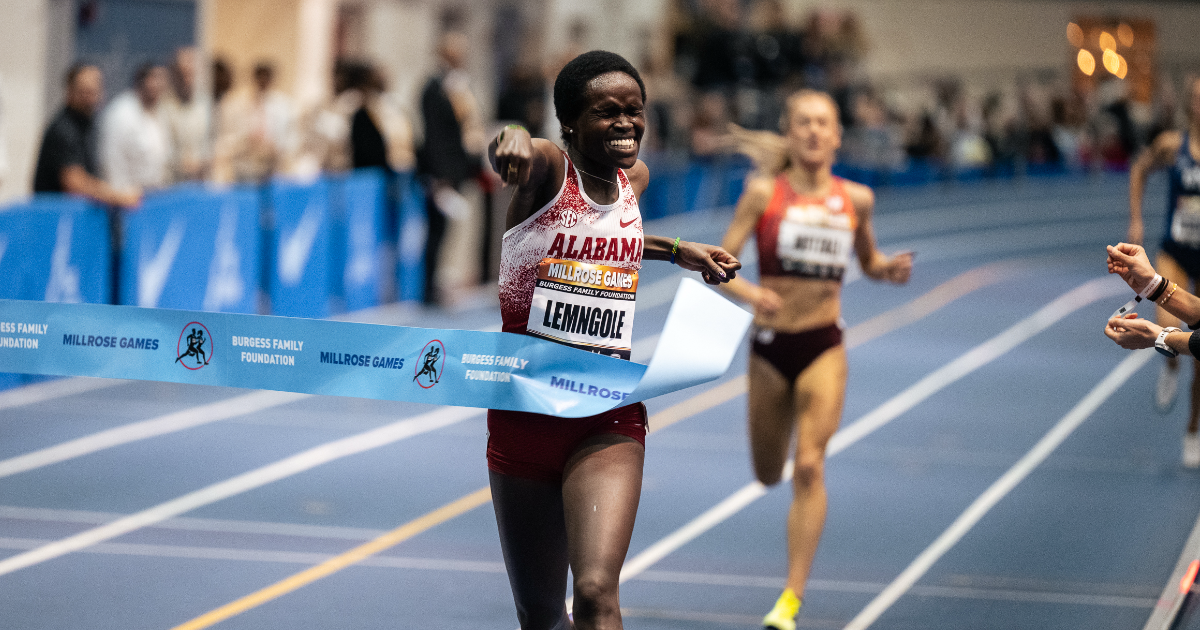
Doris Lemngole | Photo by Johnny Zhang / @jzsnapz
Roisin Willis Is Writing A Breakout Story In Real Time
23-year-old Roisin Willis followed up her American record 1:57.80 from Boston just two days ago with a dominant 1:24.87 victory in the 600 meters, pulling away from her former Stanford teammate and training partner Juliette Whittaker over the final 200 meters.
Willis announced after the race that she would be ending her 2026 indoor season to focus on training for outdoors and to ensure she graduates from Stanford this spring, as missing more classes would put her academic standing at risk.
Aisha Praught-Leer: “Go to World Indoors!... There’s nothing to lose. There’s only experience to gain, only time to gain, only exposure to the biggest stages and the brightest lights and enjoying that. I mean, especially as an American—this is an off year, right? Like there’s one global championship. It’s indoors. Why not?”
What stood out most about Willis’s performance was her tactical maturity. With Michaela Rose taking the race out hot (as she usually does), Willis remained patient and sat in third place for the first 400 before methodically working her way forward. By 200 meters to go, the outcome was never in doubt.
Kyle Merber: “With 200 meters to go, it was so obvious that she was going to win the race. And just putting a coaching hat on for a moment, her form just keeps getting better and better. She just looks so strong and her stride looks smooth and we know that that’s just going to continue to develop.”
The performance inserts Willis into the upper echelon of the women’s 800m picture that is threatening Jarmila Kratochvílová’s long-standing world record.
Chris Chavez: “In the last couple years, the men’s 800 has just seen this tipping point where everyone’s running 1:42 or faster. This is the year for the women’s 800. We’re seeing it already. Issy Boffey, who was fourth at the British Champs last year, ends up running the number eight all-time mark. Roisin goes off and runs 1:57 in the same race. Audrey Werro goes and runs 1:57 as well somewhere out in Europe. It’s young talent coming through and I think they’ve all gotten to this point where they’re like, ‘Okay, there’s a little sense of belief that come outdoor season we could take a shot at this world record.’”

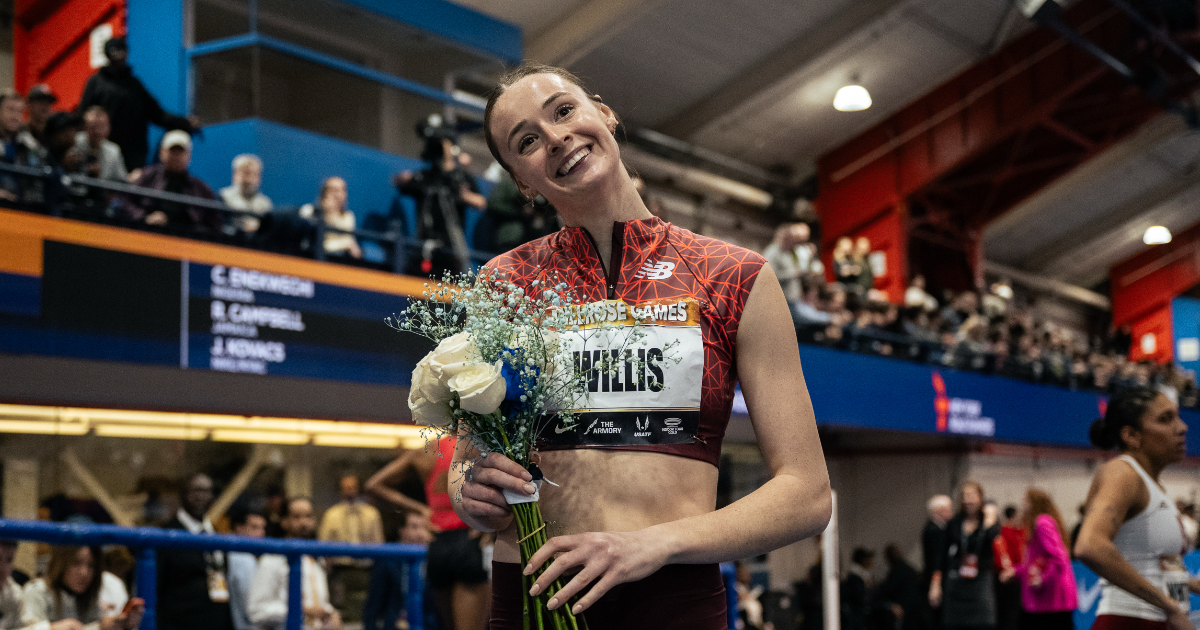
Roisin Willis | Photo by Johnny Zhang / @jzsnapz
Colin Sahlman Announced Himself With An NCAA Record
The men’s 800 meters might have produced the most surprising performance of the night. Colin Sahlman (a name barely discussed in our pre-show) ran 1:44.70 to break Paul Ereng’s NCAA indoor record of 1:44.84—a mark that had stood for nearly 37 years since 1989. Sahlman defeated a field that included Spain’s Mohamed Attaoui (5th at 2025 Worlds), Great Britain’s Ben Pattison (2023 Worlds bronze medalist), and Americans Donovan Brazier (2019 World champion and 2025 U.S. champion) and Bryce Hoppel (American outdoor record holder).
Chris Chavez: “This is probably the biggest statement victory. Coming in, everyone’s focused on ‘five 1:42 guys and Colin Sahlman,’ and now it’s Colin Sahlman and all these other guys.”
The victory was particularly impressive given Sahlman’s versatility. He was a high school prodigy at Newbury Park. He’s shown great strength across distances from the 800 to the 5000m, finished 16th at NCAA Cross Country Championships, and has run 7:36 for 3000 meters. Even more remarkable: Sahlman ran a 3:55 mile at Liberty University the night before Millrose, making his NCAA record 800 less than 24 hours later all the more impressive.
Eric Jenkins: “I’m trying to think what his best event is now. Now I’m confused. Probably the 800m. It’s tough to say. He didn’t make the NCAA Outdoor final in the 1500m. Think about how deep the NCAA is: Colin Sahlman just beat Donovan Brazier and Bryce Hoppel pretty handedly. He beat an unbelievably stacked field today in just a fantastic race… His form isn’t perfect—you watch him mechanically run, it’s not super clean, right? It’s not where you’re like, ‘Oh, this is a guy who mechanically looks like he can really sprint.’ But he’s got the stiffest ankles. They are trampolines!”
Watch Colin Sahlman’s post-race interview here. | NBC has not uploaded the men’s 800m
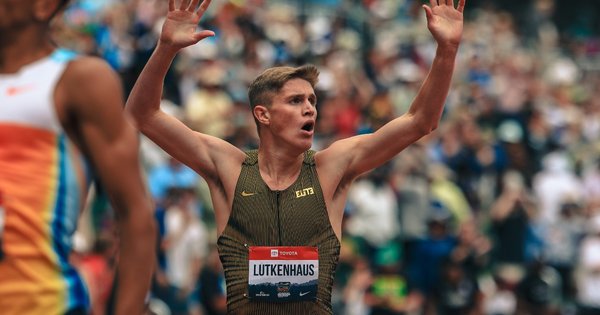
Cooper Lutkenhaus’ First Pro Season Continues To Show Progress
This was a weekend for the teenage phenoms of the world. Cooper Lutkenhaus improving to 2-for-2 in his professional career and adding yet another U.S. high school and world U20 record to his resume. This time, it was in the 600m in 1:14.15. He dropped by the CITIUS MAG post-race show to discuss what he’s learning from performances like this.
“I can go out harder than I think I can,” he told us after the race. “This season, the most important thing for me was to 1.) Learn different types of racing, especially from high school. 2.) Knowing I can put myself in any race I go into. That was the main goal for this one.”
Lutkenhaus is undecided on whether he will race the U.S. Indoor Championships. He will race an 800m at the Sound Invite in North Carolina in two weeks.
_____________________
Despite freezing temperatures and heavy snow outside, the meet attracted a sold-out crowd willing to pay premium prices at the door. As always, the atmosphere inside the Armory was what every meet director in the world can only hope to emulate. The fields were world-class and the racing delivered across every distance.
What’s Next: The indoor season continues with fast fields expected at the Sound Invite at the JDL Fastrack meet (featuring Hocker in the mile and 16-year-old Sam Ruthe, who ran 3:48 on Saturday) and the BU Valentine Meet in Boston, leading into the US Indoor Championships.
Holding The Finish Line Tape Is Nerve-Wracking
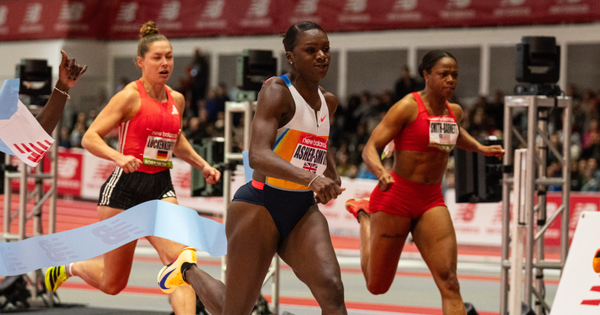
Sunday marked the first time that CITIUS MAG was the title sponsor for a race at a major meet. We were honored to have our name plastered in the program, on the scoreboard, on the bibs and across the finish line tape. Mac Fleet and I got the chance to hold the finish line and it was nerve-wracking. You’re told to look away from the runners and toward the cluster of photographers for a photo-op but when an Olympic silver medalist is charging at you at full speed, you want to make sure to do the job! My job was don’t let go of my end of the tape and stay out of the way of the runners. Tsige Duguma came away with a facility record in 2:35.50 for the win.
_____________________
Keep up with all things track and field by following us across Instagram, X, Threads, and YouTube. Catch the latest episodes of the CITIUS MAG Podcast on Spotify and Apple Podcasts. For more, subscribe to The Lap Count and CITIUS MAG Newsletter for the top running news delivered straight to your inbox.
Chris Chavez
Chris Chavez launched CITIUS MAG in 2016 as a passion project while working full-time for Sports Illustrated. He covered the 2016 Olympics in Rio de Janeiro and grew his humble blog into a multi-pronged media company. He completed all six World Marathon Majors and on Feb. 15th, 2025 finally broke five minutes for the mile.