By Paul Snyder
February 11, 2026
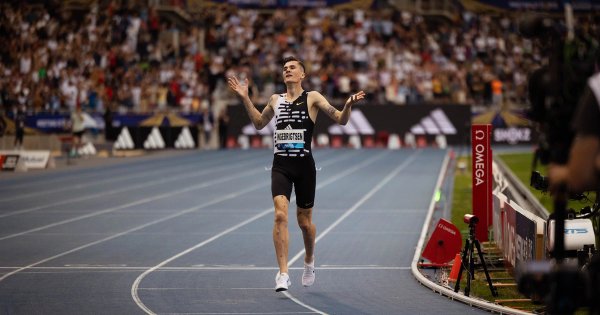
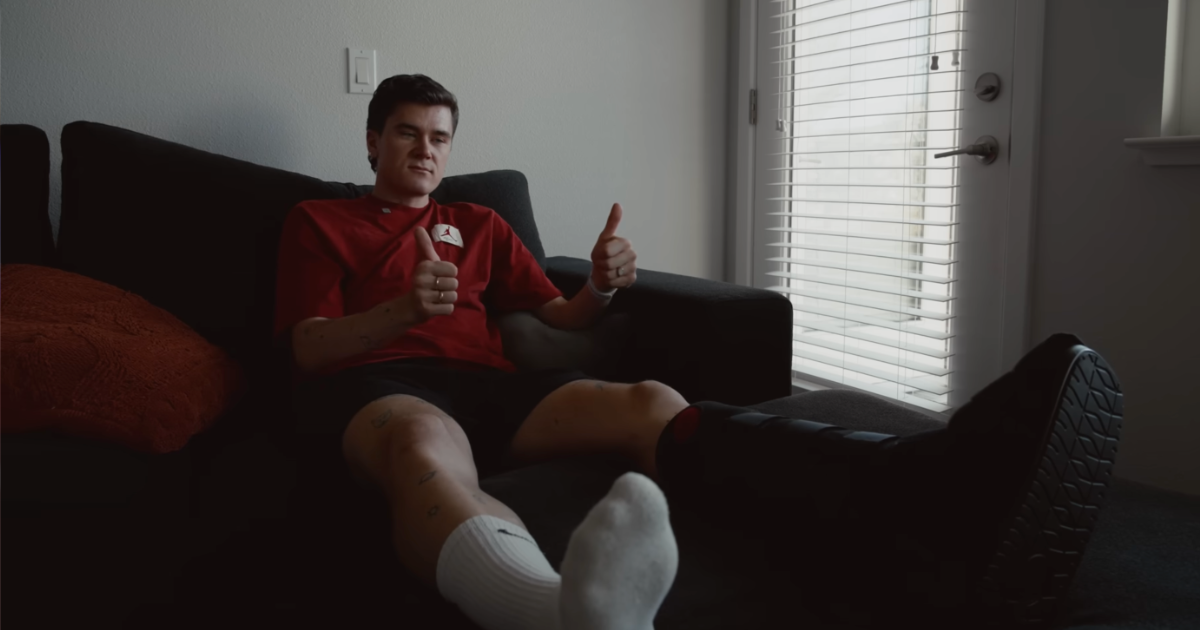
Jakob Ingebrigtsen recently underwent surgery in Palo Alto, California, to clean up scar tissue in the sheath around his left Achilles tendon. From the information Ingebrigtsen’s camp has shared, it doesn’t sound like it was a particularly invasive procedure, and he expects to be back training in a few months.
But you’d be forgiven if you’re skeptical about Ingebrigtsen’s rosy public-facing outlook. Anytime a 25-year-old superstar athlete is forced to go under the knife—particularly when the intervention wasn’t planned and required a trip halfway around the world—there’s cause for at least a little bit of concern.
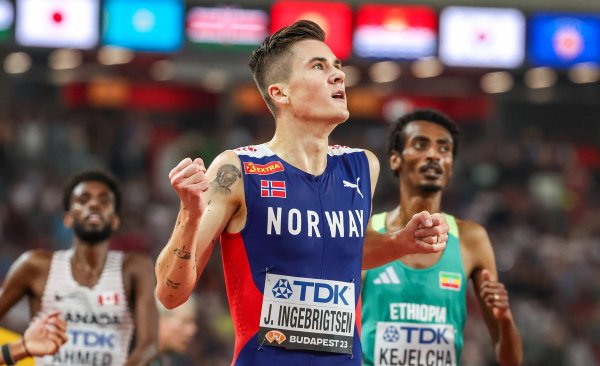
Ingebrigtsen’s Achilles troubles reached a fever pitch last April, precluding him from racing until the World Championships. In Tokyo he looked like a husk of the world-beating Jakob we’re accustomed to, failing to reach the 1500m final and winding up 10th in the 5000m. He hasn’t raced since, apparently gearing up for some competition this outdoor season, then hit this most recent surgery-requiring roadblock.
The nagging nature of the injury eventually triggered the decision to get that pesky paratenon operated on, but ultimately, this isn’t a bad year to have an unplanned surgery-shuttered season (the World Ultimate Championships are cool, but wouldn’t deliver the same sweetness of a return to the top of the World 1500m podium). Still, losing a second year of your racing prime when setting 10 career world records is publicly on your to-do list… suboptimal.
So back to the question at hand: should you be concerned about Jakob Ingebrigtsen’s prospects once he’s back training?
There’s plenty of precedent in other sports for athletes to return from seemingly catastrophic Achilles injury and pick up right where they left off. Kevin Durant comes to mind, and his full tendon tear occurred when he was 30, meaning he was about two decades older than Ingebrigtsen is now in athlete years. But Durant’s injury felt flukish—a full rupture that required major reconstructive surgery to repair. There’s also Christian Taylor, who underwent Achilles surgery at 29 and was never the same triple jumper after. Ingebrigtsen’s injury appears to be a chronic one—he’s experienced it on his other Achilles tendon as well. When judging injuries, severity isn’t the only consideration.
Let’s not forget that, despite his heap of 5000m golds, Ingebrigtsen’s preferred event is the 1500m. Without diving into the physics or the physiology, the faster and shorter the event, the greater strain training and racing puts on connective tissue like the Achilles tendon.
For plenty of milers, developing a set of injury-prone Achilles sheaves might spell disaster. But Ingebrigtsen is no ordinary miler… in fact, he’s probably more of a distance guy who managed to front-run his way to an Olympic 1500m gold medal. Until we actually witness his return to racing or hear word of another lower leg setback, let’s keep our hands off the panic button for now. But it does feel increasingly likely that a return as a 5000m/10,000m specialist or even a half marathoner is on the horizon.
The standard move when a track-focused distance runner’s tendons become non-cooperative is to head to the roads, where spikes are a thing of the past and the body’s ability to grind at sub-four pace is irrelevant. One of the most fun things about being an Ingebrigtstan, however, is that he does seem to choose his priorities with his heart, not his head. It’s not that he’s lost his wheels or is past his peak—he’s just gotta find the sweet spot, event-wise that he can train for without inviting scar tissue flare ups in that meddlesome sheath. Our money is currently on Ingebrigtsen remaining a threat to win gold in the 5000m in Los Angeles.
The alternative timeline—and not an entirely unlikely one, either—is that we are at the beginning of a frustrating, gradual period of decline for Ingebrigtsten. The injury cycle continues, he misses significant chunks of training, and the Ingebrigtsen that sporadically lines up going forward is more akin to Tokyo ‘25 Jakob than Tokyo ‘20/21 Jakob. That’s not something anyone wants to see, even the most ardent Josh Kerr fan. So here’s hoping this brief surgical hiatus kicks off a new chapter of Ingebrigtsen’s storied career, and that the book isn’t being slammed shut.

Paul Snyder
Paul Snyder is the 2009 UIL District 26-5A boys 1600m runner-up. You can follow him on Bluesky @snuder.bsky.social.