By David Melly
March 12, 2026
Another week, another major road race ending with confusion due to a lead vehicle mishap. This wasn’t déjà vu. It was the Los Angeles Marathon.
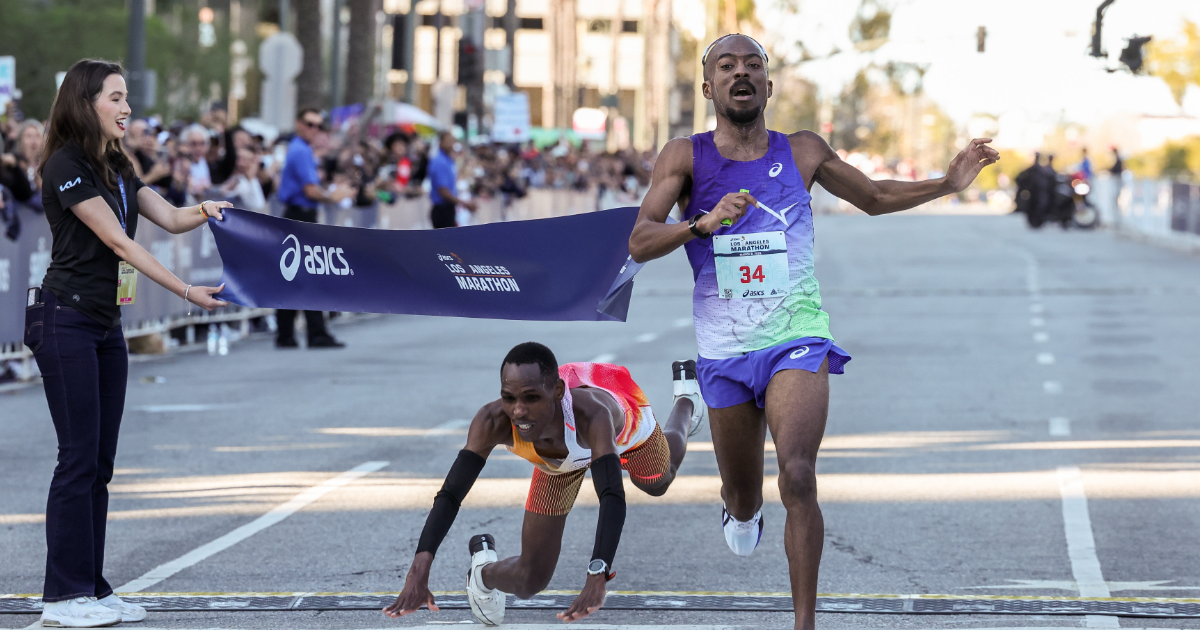
It’s exceedingly rare that a story from a non-major marathon gets so much mainstream media attention that it ends up on Barstool Sports not once, but twice. And yet, the finish of last weekend’s LA Marathon generated multiple news cycles worth of headlines and viral videos, first for Nathan Martin’s incredible come-from-behind victory—a true photo finish—and then for the revelation that the man he reeled in, Kenyan Michael Kamau, had the final steps of his race derailed by yet another instance of motorcycle-induced confusion.
Martin has gotten his share of flowers and then some for his 2:11:18 victory over Kamau, even ending up taking a trip down the Jennifer Hudson Dance Hallway to celebrate. Martin is a 36-year-old full-time teacher and track coach who finished seventh at the 2024 Olympic Trials and eighth at the 2021 NYC Marathon, and it’s about damn time that more people started to learn his name.
But Kamau, who’d never raced a marathon in the U.S. (his last seven marathon finishes were all in China), was arguably robbed by a confusing combination of unclear directions, a fan running ahead of him with a flag, and the motorcycles pulling off at the end of the course. It’s hard to know for sure, but given the fact that Kamau’s momentum was clearly stopped and the margin of Martin’s victory was just 0.18 seconds, it’s fair to wonder if that late-race confusion cost Kamau $15,000 in prize money.
It didn’t stop—or start—there. The big race in LA was actually ginning up controversy before a single runner had even started, with the pre-race announcement that runners who made it 18 miles would be given finisher’s medals regardless of whether they made it to the end. This was a well-intentioned, but perhaps poorly-messaged, effort on the part of race organizers to get ahead of potential warm temperatures and the medical issues such conditions can cause, encouraging folks to play it safe rather than get themselves in serious danger. Race day did end up seeing temperatures climb to the mid-80s, unseasonably warm for even southern California, but of course, that didn’t stop a lot of wannabe influencers offering bad-faith and tired interpretations about “participation trophy culture.”
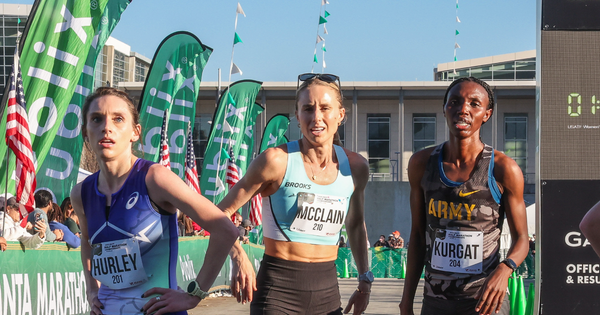
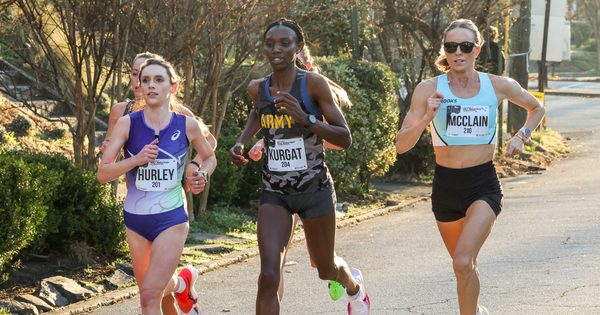
There’s something about road races that really gets the torches and pitchforks out. If it’s not a fresh round of marathon-qualifying discourse, it’s a fresh round of USATF-induced mania. Last weekend’s Gate River Run was once again the national 15k championship… kinda. From 1994 to 2024, the 9+ miler out of Jacksonville, Florida, served as the USATF 15K Championship, but then in 2025 the national governing body decided to drop the distance from its slate of national championships. (Of course, we still have three different championships of 20K, 21.1K, and 25K throughout the year.) Gate River is now relegated to the Professional Road Running Organization circuit, a real thing that we’d totally heard of before last week, but still offers extra prize money to top Americans—this year, Fiona O’Keeffe and Reid Buchanan, who finished second and fifth, respectively, overall. Apologies if all this is making your head hurt.
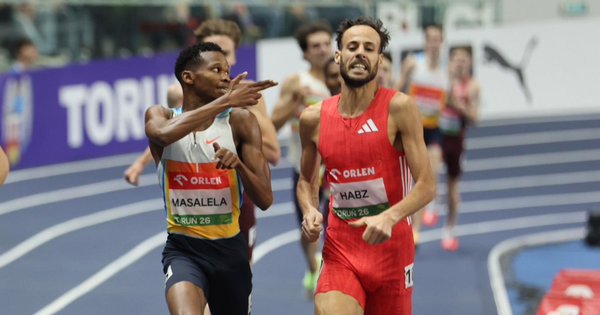
With the dust still settling on the Atlanta half marathon fiasco, it seems like the theme of the post-U.S. Indoor, pre-World Indoor stretch of the season has been road racing snafus season. For track fans, it can be tempting to peek out from the safety of the climate-controlled 200-meter oval with perfectly-calibrated banks coated in trampoline-like rubber where you just watched Keely Hodgkinson chase a pacer and a Wavelight around for a few minutes and think… what the hell is going on out there?
You wouldn’t be wrong to feel that way, but that’s kinda the point. Road races aren’t clinical physiology experiments masquerading as time trials. They’re a four-way battle between the competitors, the course, the elements, and unforeseen human error, with every moment offering a new unpredictable challenge. Everything from an untied shoe to an untimely downpour can impact the outcome, and that’s a feature, not a bug. Winning a marathon requires so much more than being the fittest. You’ve gotta be the toughest mentally, the craftiest tactician, a master of timing, and the best water bottle-grabber. You’ve gotta pick the shorts with the right-shaped pockets for your preferred gel, and log your sauna hours well before the 10-day forecast comes out. And even after all that, you still might randomly shit your pants or get tripped up by a spectator.
The romance of the roads isn’t just a marketing tactic; it’s a necessity. Before the LA Marathon had even started, we knew that we wouldn’t see a world record. Sabastian Sawe wasn’t on the start list, the course has 900+ feet of elevation gain, and there were no pacers. That doesn’t make the whole race pointless, however. A marathon in Los Angeles has different characteristics and dynamics from a 15K in Jacksonville or a half marathon in Lisbon, which in turn makes them all uniquely interesting.
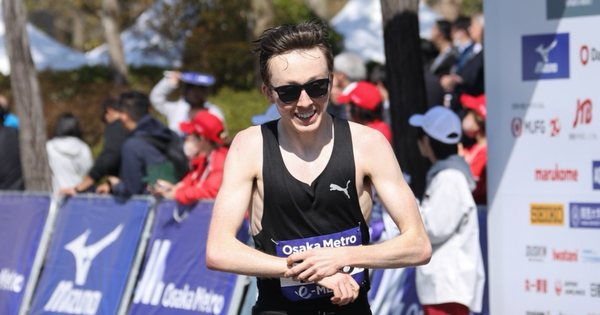
A sprint finish and a viral video led to a whole bunch of casuals becoming Nathan Martin fans. And yet, none of those viewers saw the three-way sprint finish at the Tokyo Marathon just one week earlier, featuring bigger international names running eight minutes faster at a World Marathon Major. And that’s okay! Different strokes for different folks. The endless variety and worldwide reach of road races are what make them appealing in a totally different way than indoor track. The chaos that comes with them can be perplexing, frustrating, or even maddeningly unfair, but it also gives them an intrigue and an excitement that can never quite be captured inside eight lanes or four walls.
David Melly
Since David began contributing to CITIUS in 2018, he's done a little bit of everything, from podcast hosting to newsletter writing to race commentary. Currently, he coordinates the social media team and manages both the CITIUS MAG newsletter and The Lap Count, supplying hot takes and thoughtful analysis in both short- and long-form. Based on Boston, David breaks up his excessive screen time by training for marathons, crewing trail races, baking sweet desserts, and mixing strong cocktails.