By Chris Chavez
February 11, 2026
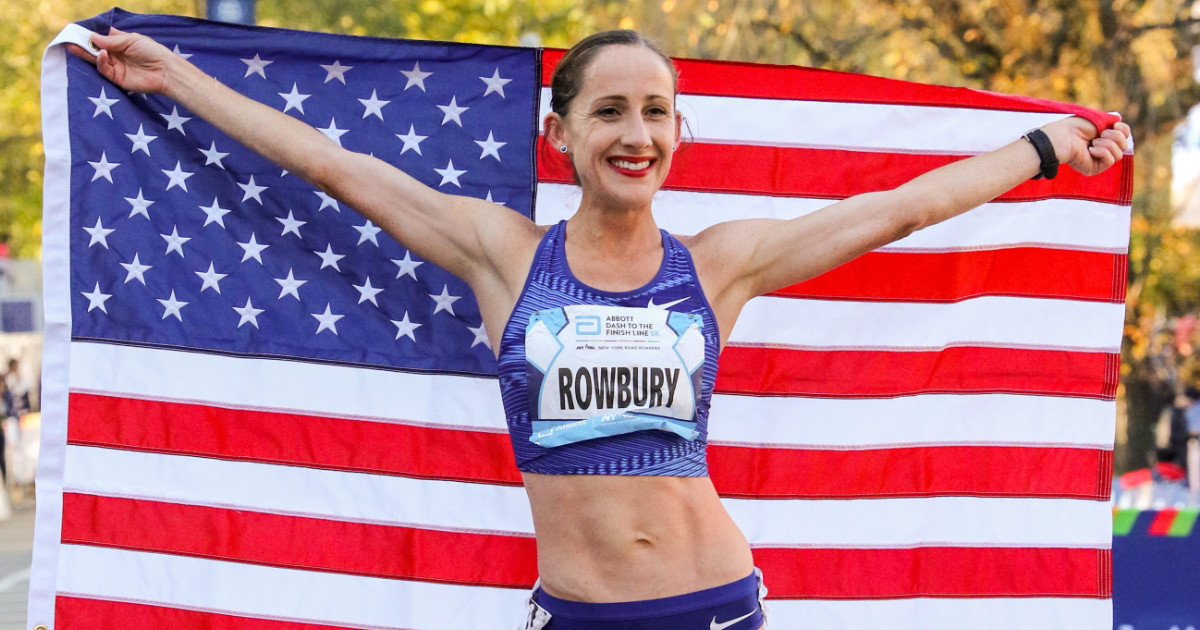
It took 13 years, but Shannon Rowbury is finally an Olympic medalist.
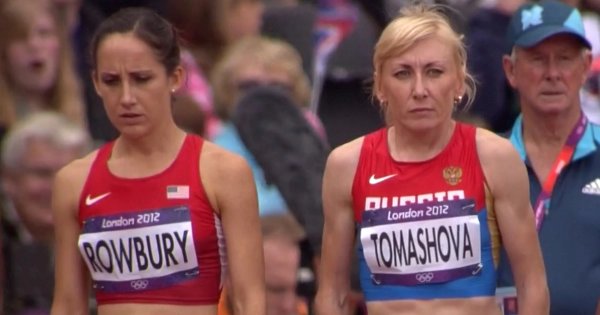
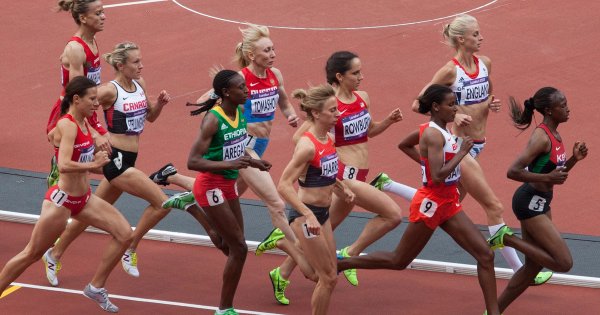
Last summer, the International Olympic Committee officially reallocated the women’s 1500m results from the 2012 London Olympics, elevating Rowbury to bronze after Russia’s Tatyana Tomashova, the original silver medalist, was retroactively disqualified following a doping case finalized in September 2024.
Rowbury crossed the finish line sixth on the day in London. Since then, five of the 13 finalists have been disqualified for anti-doping violations, including the original gold and silver medalists, Turkey’s Asli Cakir Alptekin and Gamze Bulut. What was once a chaotic, controversial final has slowly unraveled into a case study of delayed justice.
Rowbury joined me on The CITIUS MAG Podcast in Oct. 2024 to revisit that race and reflect on the emotional weight of learning more than a decade later that she was in line for an Olympic medal and be the first American woman to medal in the 1500m event.
Now, Rowbury is pushing for more than personal closure. She has joined forces with Lashinda Demus (400m hurdles reallocated gold medal from the 2012 Olympics), Zuzana Hejnová (400m hurdles reallocated silver medal from the 2012 Olympics), Kaliese Spencer (400m hurdles reallocated bronze medal from the 2012 Olympics) and Alysia Montaño (800m reallocated bronze medal from the 2012 Olympics) to bring a case before the Court of Arbitration for Sport against World Anti-Doping Agency and World Athletics.
Their goal: structural reform, so future athletes aren’t forced to wait years for the Olympic moment they earned. A GoFundMe has been set up to raise money for mounting legal funds for the case to be formally considered by CAS.
Rowbury shared more about the case with CITIUS MAG. The following interview has been transcribed and lightly edited for clarity.
CITIUS MAG: We’re talking about the London 2012 Olympic 1500-meter final again in the year 2026. But this time, the race is going to the courts. How did we arrive at this point?
Shannon Rowbury: Going through the process of the medal reallocation—starting with you forwarding a screenshot of the CAS ruling to my former agent, Ricky Simms, and finding out via WhatsApp—it became very apparent as the process unfolded that there was no process and that nobody was owning that human component of the athlete who had been robbed of their Olympic dreams. And then, as I dug deeper, understanding that it wasn't just the process, but the backstory that led to the robbing of those moments and the corruption within these organizations that actually facilitated, in my case, what became known as “the dirtiest race in Olympic history.”
So first, I spoke with Alysia [Montaño]. Both of us were in the midst of trying to understand this reallocation process. She and I have both fought for change in sport. In 2018, I created the first maternity policy with USA Track and Field and it was the first one for a sports national governing body. It was a committee that Alysia was on that helped form it, along with the help of Rose Monday and others. About five or six months later, Alysia and Allyson Felix had their New York Times article that blew open this story about the lack of maternity protections in sport.
And then you look at Lashinda [Demus], who through her work and the effort of her fellow medalists, Zuzana Hejnová and Kaliese Spencer, enabled athletes to get their medals at Olympic ceremonies, which previously had not been the case. Adam Nelson is the saddest example of getting his medal in an airport food court.
I think all of us first just relied on each other for emotional and moral support. But as we talked further and as we understood the odds were stacked against athletes and the need for reform in the process, we committed to trying to seek reform where we could. And so we filed a case with the Court of Arbitration for Sport in December against the World Anti-Doping Agency and World Athletics.
What's the hardest part about taking this fight on against two global organizations?
Those millions and millions of dollars that are made off of the athletes. And when we, as the five of us who lost significant earnings as a result of our Olympic experience being damaged and that medal moment being robbed from us, when we try to lay out why reform is needed and we try to hold them accountable—there's no civility at all that I've experienced from the organizations that are supposed to be athletes first, that are supposed to be protecting us. It's really another punch in the gut. It's heartbreaking. Change is hard, but if we really believe in athletes, if we want to protect clean sport, then we shouldn't be afraid to shine sunlight on the issues to make them better. It doesn't feel like that's where we're at right now.
The results from the IOC for the London 2012 race have been updated and you're set to get your medal no matter what in 2028 in LA. So, why at this point go to court?
Why be a glutton for punishment? Yeah, I've asked myself that. I've actually asked myself that a lot in the last couple of months because this has been a really scary process to go up against WADA and World Athletics—two organizations that I grew up admiring and complied with. It's scary and heartbreaking to read the documents, to realize how much was wrong when I was competing.
The following context is from page 31, section 10.7 of the 2016 World Anti-Doping Agency Independent Commission:
According to the report, after winning 1500m gold at the London 2012 Olympics, Turkey’s Asli Alptekin became the target of two extortion attempts tied to her Athlete Biological Passport (ABP) case, allegedly involving individuals connected to the IAAF (now World Athletics). With her gold medal, Alptekin was eligible for a €500,000 Turkish government bonus, which triggered the extortion interest. Alptekin had an abnormal ABP before London 2012, but was notified only after the Games. The sons of the IAAF president (who were consultants for the IAAF) Papa Massata Diack and his brother Khalil Diack allegedly sought money to “resolve,” “delay,” or prevent sanctions. Payments were made for cash and travel expenses, but no promised protection materialized. Confidential ABP information appears to have been leaked internally. The IAAF filed an appeal anyway, despite assurances it would not.
They knew that. It’s been out there for 10 years. And I didn't know any of this at the time until the last year because, truthfully, it was too heartbreaking to dig into it. I was so heartbroken by how my career had played out when it came to doping that I just needed to stay far away. Once I found out about my medal reallocation, once I started reading these independent investigations and understanding what was going on, it was absurd the level of corruption that was allowed to grow over the years and take place. And it wasn't just Russia; it was within the IAAF.
And so it makes me so angry that the leaders who were supposed to protect us were abusing us. And I feel better overall about where we are as a sport, but that same spirit of wanting to make change where we might be able, where we have an opportunity to do so, all five of us athletes are very motivated for that. When I'm questioning my sanity for taking up this fight, when I'm feeling terrified, I keep going back to: this is the right thing to do and our athletes deserve better.
In terms of reform, I think there are three key points that you have highlighted. The first one would be a Clean Athletes Assistance Fund. So what does this one look like and where did the idea come from?
That idea really came from the lack of process and protocol. When I reached out to Nike and asked them if they would honor my Olympic medal bonus, they said they had no obligation to do so. And I'm not the only athlete who had that happen to them. USOPC, fortunately, honored my Operation Gold $10,000 bronze medal bonus. But that's it.
When I look at athletes in positions like ours, there should be both a protocol and process for who owns that notification, mental health support to deal with the heartbreak and emotions that it brings up. But then also some sort of fund to say, ‘I know we can never make this fully right, but we're going to at least try.’ Lashinda accomplishing the medal ceremony at the Olympic Games as an option for athletes is very meaningful. And we want to take it further and create a fund for athletes so that they have a clearer mechanism for restitution, because now there is none.
From a financial standpoint, how different would a medal have been for your career after 2012?
Some of the numbers are easier to quantify. My Nike contract had a $50,000 bronze medal bonus. That was a rollover increase to base and my contract was up for renewal. But we saw in Kara Goucher's book that when she got bronze at the World Championships in 2007, her contract base was, I believe, $60,000 at the time. Her next contract was $350,000. So at a minimum, I missed out on $50,000 but it could have been a whole lot more. And then you add that up over the fact that I was a Nike athlete until the end of 2024 (the final years I was an ambassador), but if you add up year after year…it's hundreds of thousands of dollars. And that's just my shoe contract.
Then you add to it appearance fees because medalists get higher appearance fees at races. You add in partnerships and sponsorships from other brands. Lashinda shared that she had a contract on the table, but it was contingent on a gold medal. And she got silver, not gold, in the moment. So that was off the table. Not even accounting for mental health support, coping with it and all the other stuff that went along with it. But just the financial losses for each one of us were hundreds of thousands of dollars.
I didn't even try to dig into it until I was talking with my fellow reallocated medalists and really starting to talk through that grieving of: What did we lose? What did we miss? What moments did we miss as a result of this corruption in our sport and this need for reform? It's really devastating. But, I hate wallowing and being sad. It makes me so motivated to prevent that from happening to someone else. If there's a way to change it, it needs to change.
The second one is provisional suspension protections before the Olympic Games. Is this one specifically learned from the 2016 revelations from the WADA report?
Right. I think that the London 2012 example from the women's 1500 is exactly why there needs to be better protocol and process when it comes to positive tests. The IAAF president and his son withheld that information so that they could then have Alptekin come to Monaco and try to extort her. Then, they went to Turkey to try to continue the extortion process. On the surface, it seems as if WADA has a positive test, they hand it to World Athletics. World Athletics hands it to the federation. There's no clarity on timelines. And there are no levers to ensure those notifications are given promptly and enforced efficiently.
In addition to the example of Alptekin, there are also extensive examples of the Russian Federation and how notifications would go—there would be a delay of one to two years sometimes before those Russian athletes were notified, which gave them ample time to continue competing and affecting results in a way that they shouldn't. So I think this is yet another attempt to formalize the process with feedback loops in place so that it's not just, "Here's the information, do with it what you will," but instead, how do we ensure that this is verified, especially within that Olympic period? It’s so, hopefully, we can sit and watch the Olympics excited and believing that we're watching human greatness, which is what the Olympics are all about.
The last one was stronger conflict of interest rules in anti-doping governance. Where did this one stem from?
This relates to the so-called “Russian Doping Scandal” leading up to the London Olympics, but also to ongoing conflict of interest problems, such as those that underly the Chinese doping scandal (Context: Chinese swimmers won Olympic gold in 2021 despite having tested positive for a banned substance. WADA agreed with the Chinese anti-doping body’s determination that the positive tests came from contaminated food. The positive tests were not revealed until a 2024 investigation by The New York Times) and even the current conflict between WADA and the U.S. in terms of the funding, the withholding of funding, because there is an expectation on the United States’ part that there would be an independent investigation, not an internal audit, but an independent audit of WADA to ensure best practices.
You should not have interested parties sitting on your board when they could be making decisions that are maybe not in the best interest of sport at large. There should be mechanisms where conflicts of interest are eliminated. And when it comes to these very impactful, very important decisions, we can walk away knowing that they've been made fairly.
I have unfortunately had to go through an internal investigation when I was at Nike and I can tell you that the outcomes of those internal investigations seem to solely benefit the business that is conducting them, so they can find their skeletons and try to eliminate them before they become bigger PR or legal nightmares. But that's not necessarily—or usually it is not—in the best interest of those they're supposed to be serving. And so it is concerning not being able to have these protections against conflicts of interest to ensure fair sport and clean sport.
What’s the timeline look like from here?
We filed our case in December. We're trying to get this case to be public because we believe it is in the public interest to have these reforms. Right now, we're limited in what we can share, but we do have these deadlines that we need to raise money to pay fees in order to keep our case alive. So it's daunting and really scary because we could all be heartbroken. I think it would do our sport a disservice not to have this play out in a fair way. Creating this GoFundMe page was our attempt to keep this cause alive. And we need help because, unfortunately, while the five of us are willing to face these somewhat scary opponents, we don't have the resources to be able to fund this case ourselves. And so that's kind of why we're in this position right now.
Keep up with all things track and field by following us across Instagram, X, Threads, and YouTube. Catch the latest episodes of the CITIUS MAG Podcast on Spotify and Apple Podcasts. For more, subscribe to The Lap Count and CITIUS MAG Newsletter for the top running news delivered straight to your inbox.
Chris Chavez
Chris Chavez launched CITIUS MAG in 2016 as a passion project while working full-time for Sports Illustrated. He covered the 2016 Olympics in Rio de Janeiro and grew his humble blog into a multi-pronged media company. He completed all six World Marathon Majors and on Feb. 15th, 2025 finally broke five minutes for the mile.