September 23, 2026
Listen
“The best athlete has short-term memory. After good races you push it away, and after bad races you just forget and move on.”
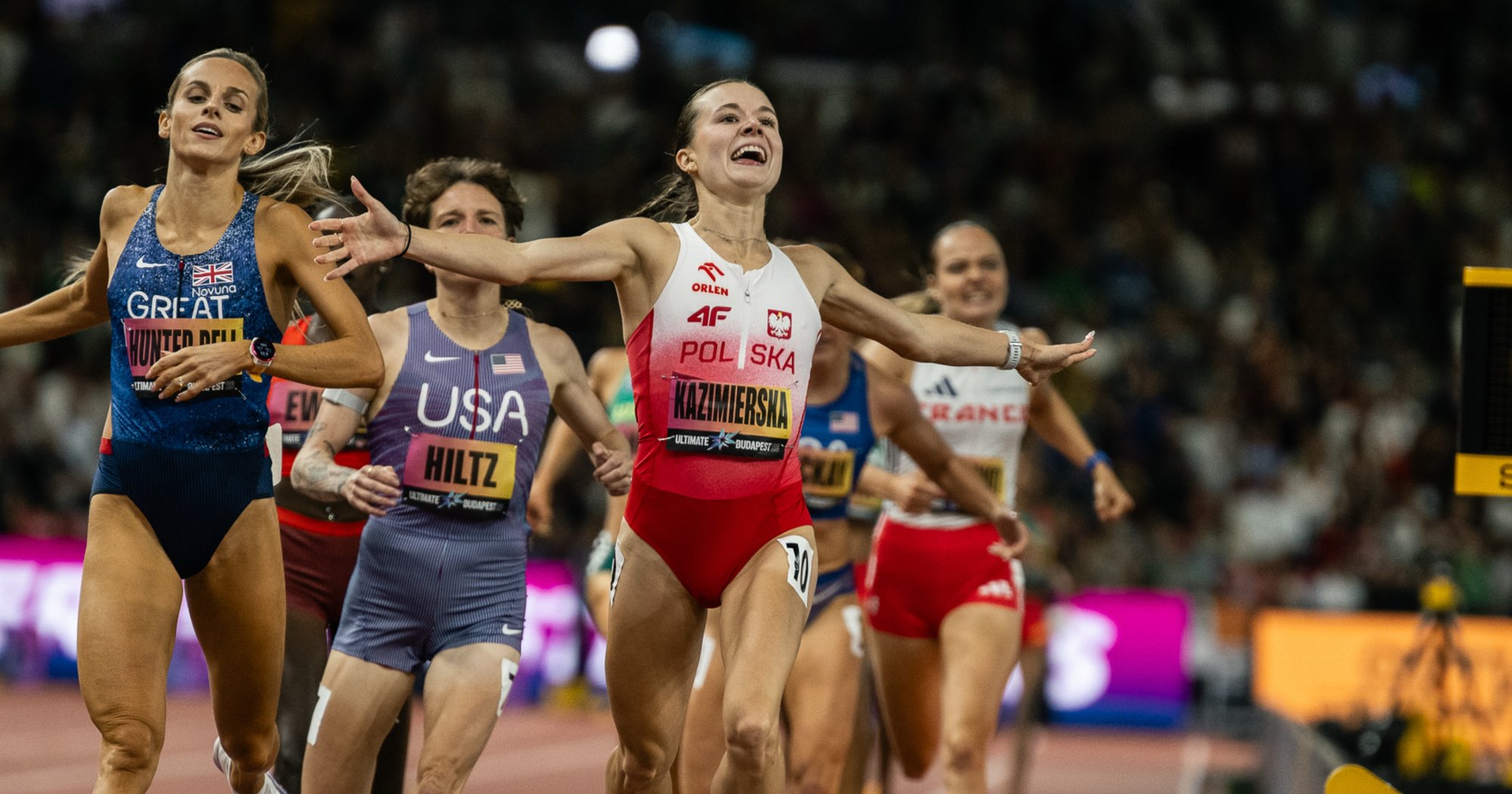
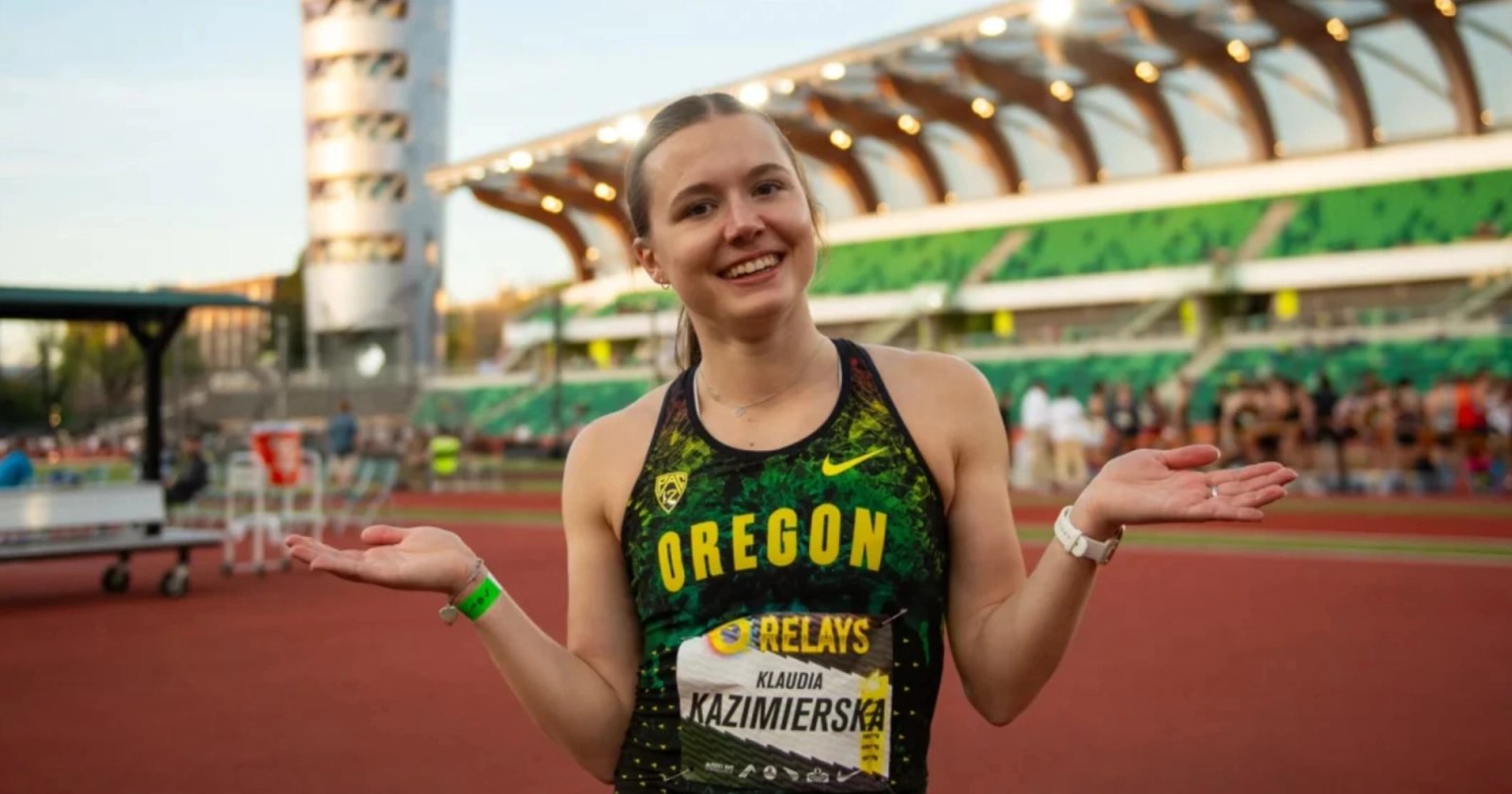
My guest on The CITIUS MAG Podcast is Klaudia Kazimierska — the World Ultimate champion at 1500 meters and one of the biggest breakthrough stories in track and field this year. She is 25 years old, a Nike pro and trains under coach Jerry Schumacher in Eugene, Oregon. Her past two months is the type of full season most athletes would dream of.
In August, she broke the Polish national record early in the month at the Silesia Diamond League. Then she went to Brussels and won the Diamond League Final in 3:54.05 — a world lead, a meet record, and a Polish record again all in the same race. Then she came back a week later and won the World Ultimate Championship 1500 meter final. Then she capped her season in London with another victory over Georgia Hunter Bell. In those last three races, she earned $275,000 in prize money.
In this interview, we go back to Poland, where she started running once a week at 11 years old because her dad knew the coach, ran 4:07 at nineteen and thought the Tokyo Olympics were right around the corner, then went backward. In 2021, frustrated and looking for something new, she started the paperwork to transfer to Oregon — a process complicated enough that it took a year. She’s made the Olympic and World Championship finals in the last two years, but 2026 was really the breakthrough. Brussels was the first time she put herself in a position to win. Then Budapest was the second.
You can listen to the full interview with Klaudia on the CITIUS MAG Podcast. The following highlights have been transcribed and edited lightly for clarity. Stream, download and listen to the show on Apple Podcasts, Spotify or YouTube.
CITIUS MAG: Has the past month felt real to you? You caught fire and then it was race after race after race, and each one of them a big high moment. One thing we kept pointing out on our shows is that for young athletes especially, when you have a big moment like winning your first Diamond League, it’s hard to come down from that and ramp back up for the next race. But you found a way to do it over and over. How was that from the inside?
KLAUDIA: I think I prepared myself mentally before the season started that I was going to be racing very often and it was going to be intense. We sometimes say the best athlete is the one with short-term memory — after good races you need to push it away, and the same after bad races, you just forget and move on. After every race, I usually think about it for one day, have fun, then get back to training.
Brussels was definitely the hardest because it was the first and the biggest. Coming back for Budapest was difficult, but I was also confident in my fitness. I was like, “If I just do my job and recover well, I’ll be fine.” Nikki Hiltz actually asked me in London, ‘How did you do that? How did you move on to the next one?’ And I was like, ‘I think I was just trying to forget.’ Now that the season is actually done, I have time to process it all, and it’s starting to sink in. Like — damn, this just happened. It’s not a dream anymore.
I think it also helped that I hadn’t over-raced in the pre-season. I raced enough to qualify for what I needed to qualify for, but I left the best for September.
GROWING UP IN POLAND
CITIUS MAG: A key part of your story is how the work and the training have compounded over time and now we’re really starting to see you flourish. Before we get into 2026, I feel like we have to go all the way back to growing up in Poland. Paint me a picture of little Klaudia. How did you find running?
KLAUDIA: I started pretty early, but I need to clarify that my previous coach was very gentle with me, which I think was crucial at that age. I was also a late bloomer, so I had time. We always said I have time to run fast — let’s just take things slow. I started running when I was maybe 11 or 12, but I was going to practice once a week. In Europe, we base it on clubs — not school clubs, just the running club in your city. I started in my hometown, which is Włocławek, because my dad knew the coach well. My dad was a runner in high school and they’re basically the same age. There was only one running club in my hometown, so there was no question where to go.
The first couple of years were very gentle — once a week. I even remember in the summer I wasn’t running because I thought: it’s vacation, you don’t train in the summer. I came back in the fall and everyone had been training the whole summer. I was like, ‘What? It’s summertime!?!’ So I wasn’t taking it seriously at the beginning. But even then, even with so little training, I would still be winning regional championships and things like that. My coaches were always saying she doesn’t need much work, let’s take things slow.
Around middle school, 13 or 14, I started training more — maybe four times a week, all after school. School is 8 to 2 or 3 p.m., practice is 4 or 5 p.m. It’s not connected to your school, so you do both separately. In high school, I started training more professionally. And I represented Poland for the first time when I was about 16, for the U17 Olympic Festival. Many athletes from that period are still racing now and competing at high levels — at the U18 championships, Keely Hodgkinson was racing in the 800 and she won. I think I was third in the 1500m. Cool to see how many of us from that time are still in it.
After high school, I went to college in Poland — which a lot of people don’t know. Running in Poland gets professional right after high school or even during it, so there’s no real collegiate system. I went part-time because I wanted to train as much as I could. I ran 4:07 when I was 19 and thought with the Olympics next year, I’ll be set…and I was not. Because of that regression in 2021, I was like: I think I just need something new – a new environment, a new system. I’d been with my coach my whole career and I needed someone who knew how to push me at the international level. I’d always thought about the NCAA. So in 2021 I started the process of transferring to Oregon. Because I was a mid-undergrad transfer, not a grad transfer, it took a long time, but in August 2022 I landed in Eugene.
CITIUS MAG: Did you get calls from college coaches while you were still in high school in Poland?
KLAUDIA: Yes, I was getting lots of DMs on Instagram. I talked to some coaches, and I got a message from an Oregon coach at the time — Coach Helen Lehman-Winters — and she was recruiting me since high school. But I kept telling her I wasn’t ready. I was like, no, I want to stay in Poland, I don’t think it’s the right move. Things were going well and I didn’t feel the need to change anything. But it literally took one year of going backwards before I thought: ‘Yeah, I think I need a new stimulus.’ I reached out back to them and she said if you ever change your mind, just let me know. I changed my mind two years later. She said: ‘Yeah, obviously we still want you.’ And that’s how it started.
MOVING TO OREGON
CITIUS MAG: When you leaned into going to Oregon, when did you take your first visit?
KLAUDIA: I didn’t take a visit. The first time I came to the US was when I moved. At the end of August 2022, I packed two suitcases and moved across the pond without knowing anything. And by that point the coaching staff had changed — I almost didn’t come to Oregon because of that. But then I was like: if I stay in Poland or transfer to any other school in the US, I still won’t know those new coaches. They’ll be new to me either way.
So I took a risk. I honestly didn’t really know who Shalane (Flanagan) was at the time — I just Googled her. I got on a Zoom call with her and I was so stressed. My English was very basic and I wasn’t feeling confident in it. And I had just had my wisdom teeth out and was all swollen. We still laugh about that call. But it felt like fate — I almost never came to Oregon, almost never got to meet Shalane and Jerry. Something kept pointing me there.
CITIUS MAG: What was the most challenging part of making such a big life change?
KLAUDIA: Probably just general classes and speaking English to people. I literally went to teachers in those first classes and said, ‘I don’t feel confident speaking, can you please not pick me to talk?’ Some of them even let me use a dictionary during tests, which was so nice.
I understood a lot, but it was so hard to actually say something because I was translating everything from Polish to English in my head. Now I just think and speak in English — but back then, by the time I’d finished translating one thought, I already had three more in my head and the moment had passed. It was a huge process happening in my brain all the time.
I was scared I wasn’t going to be myself in the US — that I wouldn’t be able to express what I felt, what I wanted, what I needed. And I think sometime after the first quarter, Shalane sat me down and said, ‘You need to tell me what you need.’ My first cross country season was not good, obviously, because I was adjusting to everything. She said, ‘We need to work this out. You need to tell me exactly what you need if you want to be a good athlete.’ And then I opened up, and that’s how our relationship really started.
CITIUS MAG: What was the biggest difference you found between what you were doing in Poland and then adjusting to Jerry and Shalane’s training?
KLAUDIA:Intensity and the fact that I’m training once a day. In Poland, I was doing camps with twice-a-day training, so the mileage was higher — but a lot of that mileage was what I’d call trash mileage. Just running slow, more like killing time than actually developing anything. Here we focus more on quality over quantity. I’m around 60-70 miles a week in the fall and winter, which is less than many Europeans who might be doing 80-90 on twice-a-day schedules. But the quality of every mile is different. Also, having a team, which just wasn’t the case for me in Poland.
CITIUS MAG: When do you think you made the full adjustment and it started to show in results?
KLAUDIA: The first season was already good. I finished fourth at NCAAs, which was a huge step. But definitely 2024 was when it finally clicked, because I finally broke the PR I hadn’t broken since 2020. I was stuck at 4:07 for four years and just waiting for it to happen. Then I broke it at NCAAs prelims — not even the final — and a few weeks later ran 4:01 in Poland. And that Olympic standard just hit me. That was a breakthrough not just time-wise but mentally. I finished third at NCAAs and just had so much fun doing it at Hayward, in front of my home crowd. For a girl from Poland to feel the love of that community, that was a big moment.
CITIUS MAG: Was being stuck at 4:07 frustrating?
KLAUDIA: Definitely frustrating. But for those two years I just didn’t have the fitness to do it. I was missing fitness. In 2024, I could see in training that I could break through it, but we were just waiting for the right race. And it happened at NCAAs prelims because I focused on racing, not the time. Just making the final. And that’s what brings the best results.

THE 2024 PROGRESS
CITIUS MAG: What did you have to shift mentally to lock in for the Paris Olympics?
KLAUDIA: Right after I ran the standard, Shalane told me I could make the Olympic final. And I was like: No way. I hadn’t even planned to stay in Europe that summer. But then we decided the best thing for me was to come back to Eugene and have my support system, have everything I’d been doing to get to this point. So I flew back and spent four weeks in the US, then flew back to Europe shortly before the Olympics. That decision was a big piece for me — instead of being alone in Europe trying to train by myself, I was here with Shalane, some teammates, my pacer. It all just clicked.
And I think that summer, not having school for the first time and training like an actual pro, was when I realized I could really do this. That was probably the first time I seriously thought about this as my career.
CITIUS MAG: Paint me a picture of a workout that summer where you started to believe what Shalane said.
KLAUDIA: I did a few crucial sessions. One was kind of a mixed workout — 400, 600, 300 — all really fast. Like 57s for a 400, 1:30 for a 600. That was insane for me at the time. I was like: I have the speed in my legs. When you’re running 60s all the time, 1500 at 64s feels way slower.
And then I did one big session when I was already in Poland before the Olympics — the kind Shalane likes, something like 800, 200, 600, 200, 400, 200, everything at 1500m to 800m pace. I was like: if I don’t break four minutes after that, I don’t know what I need to do. And I ended up breaking four minutes at the Silesia Diamond League. It feels like my big milestones always happen in Poland. Having my family in the stands and the home crowd support just doesn’t happen often.
CITIUS MAG: What did you make of your performance at the Paris Olympics?
KLAUDIA: I was confident I could get through two rounds. The final was a big question mark. I ran a small PB in the final, but I was sad. It sounds funny to be sad about a PB at the Olympics, but I felt like I ran it wrong. Gudaf Tsegay took it out so fast and I just went with it. I blew up.
Shalane wasn’t in Paris, but Jerry was there with his other pros. I went to him at the warmup track afterward and he said, ‘That was great!’ I burst into tears. I was like, ‘No, it was so bad.’ He was like, ‘Why are you crying?’ We had very different opinions about that race. But Paris made me hungry. I was like: I want to be a medalist one day. I want to come off that podium happy and smiling. After the initial reaction I was overjoyed with tenth place. But my first reaction was: I didn’t medal. How am I supposed to be happy about that? And that was the moment I decided: I don’t want to just be in finals. I want to be in the top three.
CITIUS MAG: You still had NCAA eligibility after 2024, and you came so close to winning an NCAA title but never got the individual 1500 crown. And then you’re so good at peaking for global championships. That’s a lot to try to map out and balance with Jerry and Shalane.
KLAUDIA: That’s a great question. And actually, this might be the first time I’m talking about this publicly: We thought we had everything lined up for me to win NCAAs in 2025. I was fit enough. But I got incredibly sick the day before the race. My sinuses were getting needled the day before because I couldn’t breathe. I was literally sneezing the whole night. I think I got sick at a team dinner at one of the facilities — the AC was blasting, I had chills, I was already feeling off. I wake up on race day and it’s awful.
And it was just so sad because it was my last NCAAs. My family came to Eugene for the first time. I was graduating. And it all fell apart. I finished fifth — my worst finish at NCAAs in my whole college career, in my last season. I really thought I had everything. I’d run 4:03 a few weeks before. But I had to forget it. I knew Worlds was coming up in a few months. Everything happens for a reason. But it broke my heart.
LESSONS FROM 2025

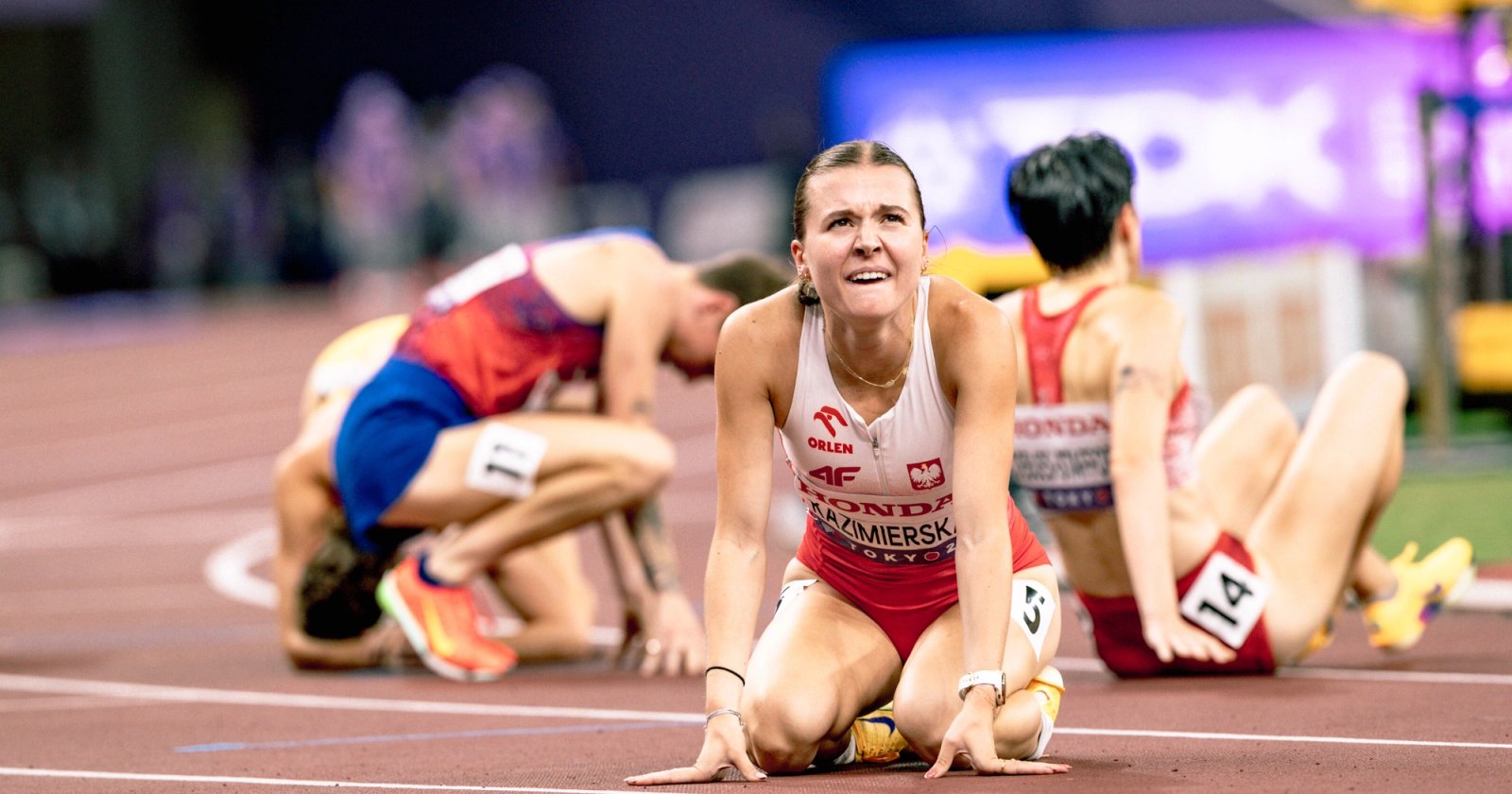
CITIUS MAG: Before we get into 2026, I don’t want to gloss over the Tokyo World Championship final. You ran 3:57, finishing seventh. When did things start clicking again after the disruptions of early 2025?
KLAUDIA: I was surprised by that race at the time — it was Tokyo, it was warm, third race of the championships. But I had been feeling pretty good that August. I came back to Eugene again — people will start laughing because I literally spend every summer in Eugene. But there’s something about being here.
The race was the first time I actually showed my kick in the last lap, I think. I hesitated a bit because Sinclaire Johnson was in front of me and I’d never beaten Sinclaire before. I was like, can I do that? But I just sent it. And it worked. I finished seventh and I think that was the first time I really believed that if the race sets up for me and I’m fit enough, I can compete with anyone. If I’d run 3:59 and finished tenth, I’d have been upset. But seventh felt like I ran to the best of what I was capable of. You find your own goal in a race you can’t win — and in Tokyo, mine was top six or seven. I made it and ran a PB. I medaled for myself.
CITIUS MAG: You’ve gotten so good at reading your competitors tactically. When did you really start picking that up?
KLAUDIA: Sometimes it’s a little bit of luck — you can’t always know what other people are going to do. You just control what you can control. What I know is that physically I have a great last hundred. Jerry has been reminding me of that before every race this whole season: “Remember, you have the best last hundred in this field.” And going into that last hundred, I know that if someone is going to pass me, they need to run in the low 12s. Nobody in women’s 1500m can do that. If I can get myself on the lead shoulder with 100 to go, the odds are heavily in my favor.
The thing is: You can’t hesitate. You have maybe one or two seconds to make a decision. If you miss the moment, the circumstances change. I made that mistake in May, June, July — I was thinking too long in races. And when you start thinking, you start doubting yourself. Pre Classic was the race that taught me the most. I went to the outside at about 350m to go and instead of pushing the move like I did later in Brussels, I was just scared. Scared to try to pass Faith because her name is big. Jerry was actually upset with me after that race. He was like: you cannot look at people and decide you can’t win because of who they are. And I was like: I know, I made a mistake. I added about twelve extra meters by going wide — more than the margin I lost by. I brought that thought with me to Brussels. I was like: you’ve been in this exact position. Now do it. Go.
CITIUS MAG: Jerry had some high praise for you at some point this season. In Brussels, you revealed he told you he has never seen an athlete do what you’ve done in training. When was that?
KLAUDIA: He told me in the last workout before I left for Europe — I was doing some 400s and 500s at race pace or faster. I didn’t even think it was my best workout of the year. But he told me that day that he was seeing things he hadn’t seen before from me. About the gear shift specifically — we do cutdown reps in practice, like a 250 where you change gears within the rep, and he said: I have not seen you change the gears like that. I was like: I’ve been shifting the whole time! Until Jerry says he sees it, clearly you haven’t been doing it right.
He’s not the most expressive coach in the world, but I got a few texts from him this year. After some workouts he’d reach out, which is how I knew things were building. Even back in January and February around indoor — even though indoor wasn’t my best — he was already saying, “Don’t worry. Outdoor is going to be way better. Even if you’re not happy with indoor, this isn’t the most important thing. I see good things coming.” And it literally worked out exactly that way.
2026

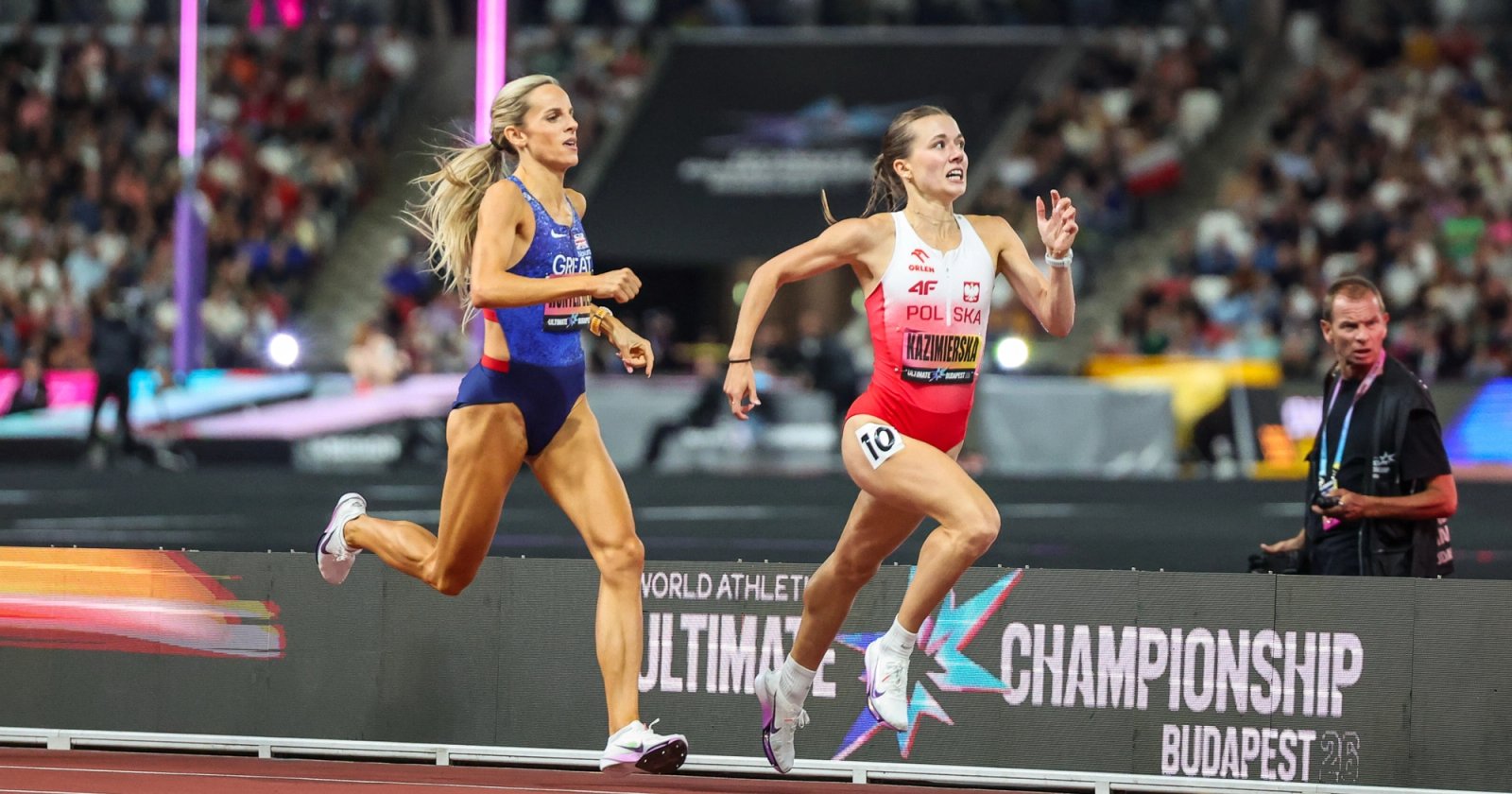
CITIUS MAG:You come away with 3:54 in Brussels — the fastest time in the world this year. And you still had Budapest on the schedule. Did you take a moment to celebrate?
KLAUDIA: And my birthday was two days before Brussels! I actually traveled to Brussels on my birthday, so we had already celebrated with my family beforehand. After Brussels, I was just shocked. For the first time, I felt like people were starting to know me. Before that race, I was very anonymous, which was actually fun as an underdog. But after Brussels, I just tried to put it together for Budapest and not to let that result be a weight on my shoulders, but a confidence that I could do it again.
CITIUS MAG: In Budapest, take me through when you decided to go, and then those last 150 meters where your stride couldn’t have gotten any bigger.
KLAUDIA: At about 200m to go, Georgia tried to come past me. I don’t know if it’s visible on the video, but I felt myself actually change gears — just picked up instinctively. I didn’t feel like she was passing me. I felt like she was on my shoulder right next to me, and even on video it looks like she’s maybe half a step in front. I did not feel that way.
But it takes a few steps for the person being chased to know they’re safe. You think someone is going to pass you any moment. So for that last hundred meters I was just pressing and pressing. By the last 40-50 meters, it was genuinely painful. You can see on video that we both shortened our strides, kind of went into slow motion, while Nikki and Dorcas (Ewoi) were chasing and getting closer. We had gone all out from 200m to go and just had to hold on.
CITIUS MAG: I was watching, thinking: “Hold your form! Hold your form!” Were you ready to dive?
KLAUDIA: Probably. But I don’t think about prize money when I’m racing. In Budapest, there was winner or everybody else — no top three medal, no podium. I just wanted to win. But also: I knew that if I was hurting, everybody else was hurting too. And that’s just belief in your fitness and what you’ve done.
CITIUS MAG: And then in London — the role reversal. Georgia tries to go at 250m to go and you find the inside rail.
KLAUDIA: On that move from Georgia, I think she felt me behind her and tried to flip the roles — her going inside, me forced outside. But I didn’t do it. I told myself: Be patient. Wait until the last hundred. If I need to go wide, I’ll go wide at the last hundred. I actually had that thought go through my head: “Just stay on the rail, you’ll be fine.”
Going into the last 100m, I was third and I thought, “Third isn’t bad. I can be third. It’s okay.” And then, “Wait, no. I can’t. It’s so close. I need to try.” So many thoughts in about five seconds while you’re processing everything. I made the move and I don’t even know how that rail opened up. I don’t remember that last 100m exactly. I remember one moment — I started getting closer to Georgia and Dorcas and I was like: “I think I have it. I think I have it.” And you can sense that people are starting to fall off, even though you can’t see their expressions. You just believe they won’t respond. And they didn’t. The gap felt wide open to me. Maybe because I’m narrow — I can sneak in there.
LOOKING AHEAD
CITIUS MAG: Next year we’re back to traditional World Championships. What does a happy and healthy Klaudia want out of 2027?
KLAUDIA: A PB and a medal at Worlds. I think that’s rational and that’s what I’m capable of. Everybody is going to prepare differently for a championship year. Some athletes take more risks and sometimes those pay off or sometimes they end in injury. I’m just going to try to do what I’ve been doing. The fitness I have right now — running 3:54 but doing it efficiently — I feel like this could medal next year. If I just get consistent and maybe take one second off my PR, that should be enough. PR and a medal.
CITIUS MAG: Have you wrapped your head around what you want to do with the approximately 275,000 dollars you’ve made in the last three races?
KLAUDIA: I wasn’t really thinking about it. People will be like, “I hope the money doesn’t change her.” You’re acting like I was poor before. I mean, yes, it’s a big amount, and I’m very grateful. But I don’t know, I’ll just get my nails done more often. That’s about it.
Support The Sponsor


OLIPOP
Like sparkling apple juice and gummy apple rings blending into one, Olipop's Crisp Apple is so tantalizingly sweet and refreshing it makes every day feel like a celebration. If you haven't had tried Olipop yet, grab a can and see what the hype is all about! Head to DrinkOlipop.com and use code CITIUS25 at checkout to get 25% off your orders.


SUUNTO
The Suunto Run 2 is their new flagship watch built specifically for road running and the marathon. You get around 10 days of battery with daily use and 24 hours in performance mode with dual frequency GPS. The watch also tracks your sleep, HRV, and training balance, so you know when to push and when to back off in your workouts. If you're in the market for a new watch, check out the Suunto Run 2.


KAIZEN
kaizen is a training app that starts with your running history to set the baseline and then updates around the training you do. kaizen looks at the bigger picture of your training to know your current fitness. The app translates your last few months of training into an accurate view of how your current fitness, taking a big picture view that quiets the noise of individual workouts. Download today in the App Store or Google Play and get two weeks free with code CITIUS within the app.
Chris Chavez
Chris Chavez launched CITIUS MAG in 2016 as a passion project while working full-time for Sports Illustrated. He covered the 2016 Olympics in Rio de Janeiro and grew his humble blog into a multi-pronged media company. He completed all six World Marathon Majors and on Feb. 15th, 2025 finally broke five minutes for the mile.