By Chris Chavez
October 7, 2026
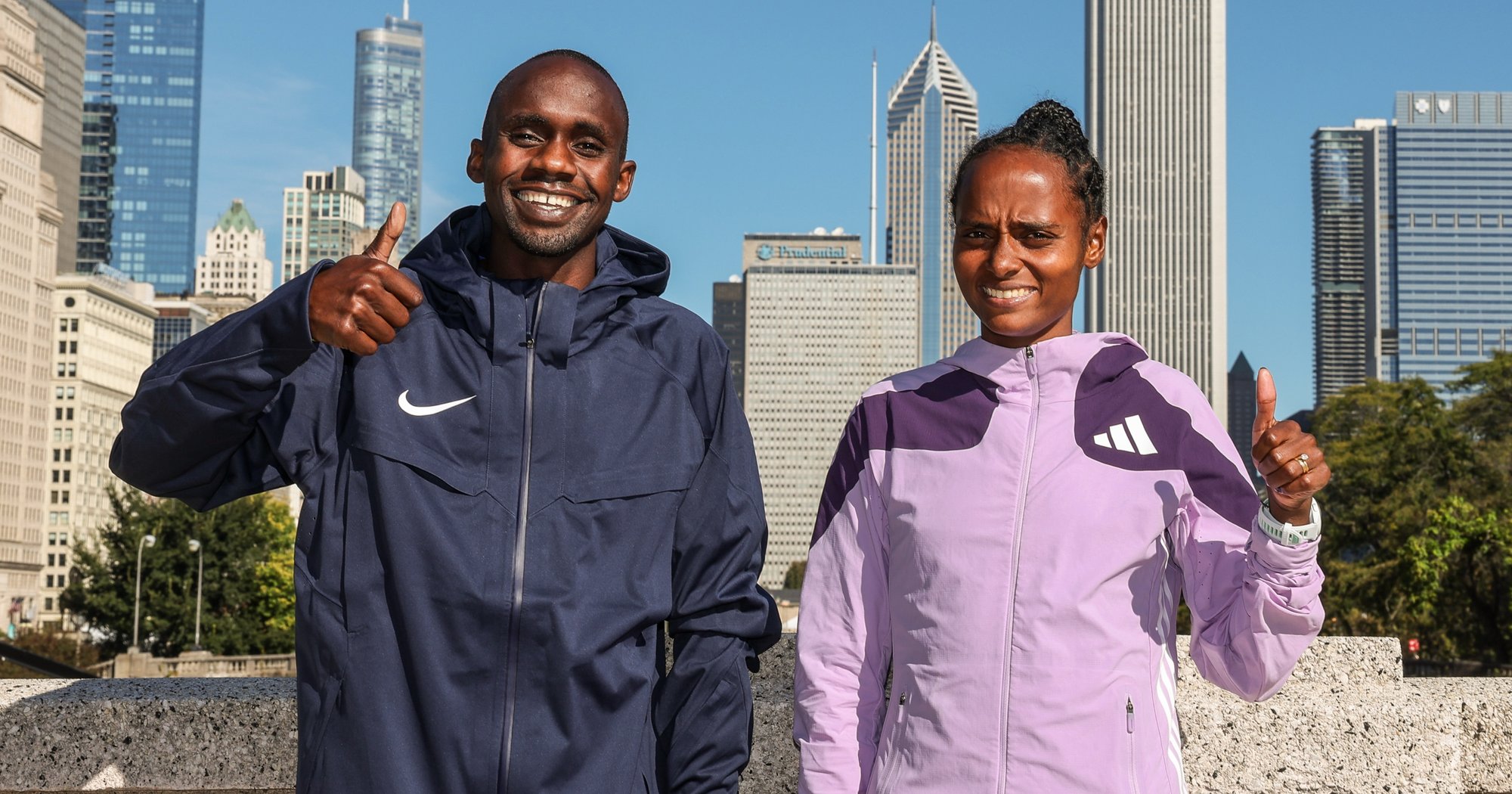
In just a few days, I’ll be boarding a plane to O’Hare to bring you boots-on-the-ground coverage of the 2026 Chicago Marathon on Sunday, Oct. 11. The famously flat course has produced a world record or an American record every year since 2022, with Conner Mantz delivering last year’s headline performance by breaking Khalid Khannouchi’s 23-year-old U.S. men’s marathon record. This year, several men in the field have openly discussed taking aim at Mantz’s mark, while defending champions Jacob Kiplimo and Hawi Feysa return to chase back-to-back titles.
How to watch: NBC5 Chicago and Telemundo Chicago on TV; NBC Sports NOW and the NBC Chicago channel on Peacock, plus nbcchicago.com and telemundochicago.com. There will be four hours of race broadcast and four more hours of finish-line coverage run 8 a.m. to 4 p.m. ET. Live tracking is available on the Chicago Marathon site and app.
Race Day Schedule (ET):
- 8:20 a.m. – Men’s wheelchair
- 8:21 a.m. – Women’s wheelchair
- 8:23 a.m. – Handcycle
- 8:30 a.m. – Pro open division and Wave 1
CITIUS MAG IN CHICAGO
We’re headed to Chicago for a packed marathon weekend! On Friday night, Eric Jenkins and Aisha Praught-Leer will host Off The Rails LIVE, presented by Under Armour, at Buddy Guy’s Legends. The show is sold out, but we’ll have limited standing-room spots available at the door.
On Saturday morning, a few of us will run the Abbott Chicago 5K as part of a longer lakefront run for New York City Marathon training. If you see us, say hi!
We’ll also have pre-race press conference coverage, prediction contests and live updates throughout the weekend, so follow along across our social channels.
Let’s get into it.
Weather: Folks have been glued to the forecast for days. As of this writing, Sunday’s outlook calls for 59°F with a dew point of 54°F at 7 a.m., rising to 64°F with a dew point of 57°F by 9 a.m. local time. For the elites, that looks manageable, though warmer than ideal for chasing records. The rising temperatures and increasingly moist air could make things tougher as the race progresses. An American record is still in play, but there’s less margin for error.
Women’s Race
The Favorites
Brigid Kosgei (Kenya) | Personal best: 2:14:04, Chicago 2019 | Tune-up race: 1:06:15 win at the Great North Run on Sept. 12
Brigid Kosgei returns to the Windy City for the first time since her historic 2:14:04 at the 2019 Chicago Marathon, when she improved her personal best by roughly four minutes and took 81 seconds off Paula Radcliffe’s longstanding world record. That performance now ranks sixth all-time, and Kosgei hasn’t run faster since—but she’s hardly faded from the conversation.
Over the past year, she’s put together an impressive resurgence: runner-up finishes in Hamburg (2:18:26) and Sydney (2:18:56), followed by victories in Shanghai (2:16:36) and Tokyo (2:14:29). That Tokyo performance was just 25 seconds shy of her best. She returns to the site of her greatest race with plenty of reason to believe she can contend again.
Hawi Feysa (Ethiopia) | Personal best: 2:14:57, Chicago 2025 | Tune-up race: None
Following the suspension of marathon world record holder and 2024 Chicago champion Ruth Chepngetich, last year’s race was wide open. Hawi Feysa seized the opportunity, lowering her personal best by two minutes and three seconds to claim her first World Marathon Major title.
She trains under Gemedo Dedefo alongside Tigst Assefa, who put together a phenomenal race in Berlin even after suffering an Achilles injury near the finish. That group’s form offers some reason for optimism, though we’ll need to hear more about Feysa’s own build before drawing too many conclusions. Without a tune-up result, there’s little evidence to give her the edge over Kosgei, who beat her in Tokyo. We’ll learn more on Friday.
Contenders
Sharon Lokedi (Kenya) | Personal best: 2:17:22, Boston 2025 | Tune-up race: 31:28 win at the B.A.A. 10K on June 21
Sharon Lokedi knows how to win. I could’ve put her among the favorites, but I also think she does some of her best racing when there’s a little doubt around her. She dominated while defending her Boston title in April, running 2:18:51 a year after setting the course record of 2:17:22. She’s won New York and finished fourth on the infamously hilly Paris Olympic course.
There’s always intrigue when a marathon champion proven on challenging courses gets a shot at a flat, fast one. For her frequent rival Hellen Obiri, that opportunity produced a 2:15:53 in April’s women’s-only London race. Now it’s Lokedi’s turn to see what she can do in Chicago, with training partner Jacob Thomson helping guide the pace.

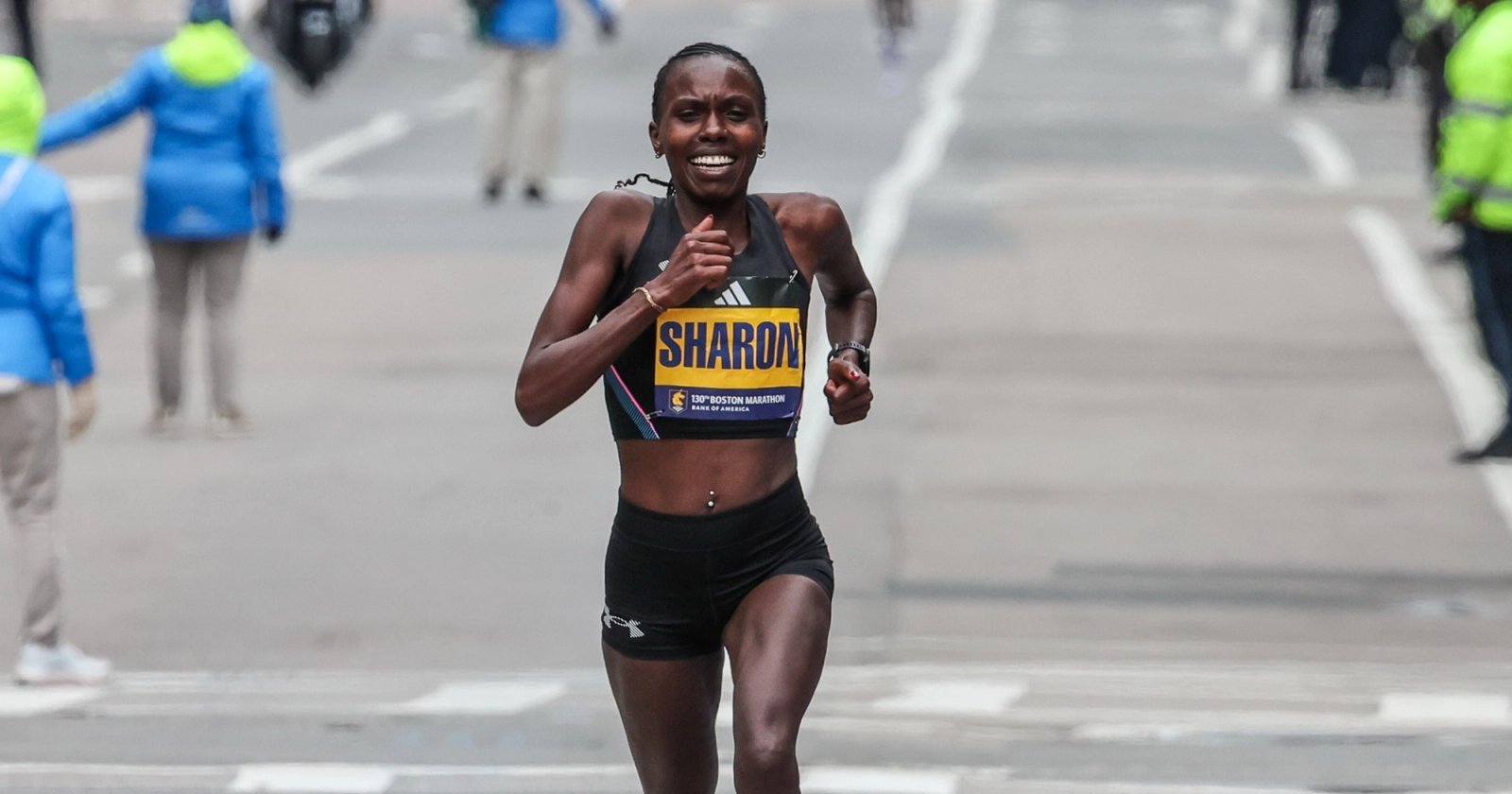
Sharon Lokedi | Photo by Kevin Morris / @kevmofoto
Loice Chemnung (Kenya) | Personal best: 2:18:24, Chicago 2025 | Tune-up races: 31:46.90 win in the 10,000m at the Kenyan National Championships in June; 30:52 win at the Port Gentil 10K two weeks later
The 29-year-old was one to watch ahead of her marathon debut in Chicago last year, and she delivered with a fourth-place finish in 2:18:24. She raised the stakes in February, winning the Barcelona Half Marathon in 1:04:01 (No. 6 on the all-time list), then carried that form into a runner-up finish in Boston. It took Lokedi’s blistering 14:48 split from 35K to 40K to shake her.
Now Chemnung returns to Chicago with two strong marathons behind her and a better sense of what it takes to contend. She’s already shown she can hang with the best; the next step is finding a way to beat them.
Sutume Kebede (Ethiopia) | Personal best: 2:15:55, Tokyo 2024 | Tune-up race: None
If Chepngetich’s 2024 performance were ever erased from the record books, Kebede would become that year’s Chicago champion—giving her a 2024 Tokyo–Chicago double with victories in 2:15:55 and 2:17:32. Now she returns to Chicago for the first time since that runner-up finish.
Her back-to-back Tokyo wins in 2024 and 2025 leave little doubt about her ability on flat, fast courses. But she finished fourth there this year in 2:17:39, behind Kosgei and Feysa, two of the favorites she’ll face again on Sunday.
Top Americans
Emma Grace Hurley (USA) | Debut | Tune-up race: 1:06:23 PB for fifth at the World Road Running Championships Half Marathon
Emma Grace Hurley arrives for her marathon debut fresh off a result that makes it a bit tough to keep expectations modest, since she ran 1:06:23 for fifth place at the World Road Running Championships in Copenhagen, a women’s-only American record that helped Team USA take a team silver medal. That, plus a workout that we got to witness in Indiana and the build on Strava, gives plenty of reason to be excited about what she can do over twice the distance, but she and coach Andrew Begley have taken a measured approach this whole time.
Her mileage peaked around 110-115 miles per week, which is a relatively small increase from her half marathon training. She’ll have her own pacer in Chicago and plans to start a little conservatively. In our recent conversation with her, she’s targeting the top 10 overall rather than a particular American placing. However, she added that the plan might still look like “a big swing on paper.”
She’s prepared but knows fully well that there are things folks can only learn on race day. This will be the first of two planned marathons before the 2028 U.S. Olympic Marathon Trials. As she put it: “This one is for learning and the next is for nailing it.”
Dakotah Popehn (USA) | Personal best: 2:24:20 from Chicago 2025 | Tune-up races: 32:38 for eighth place at Beach To Beacon 10K; 1:08:47 half marathon at the Antrim Coast Half Marathon
Since her breakout at the 2024 U.S. Olympic Trials and subsequent 11th-place finish as the top American at the Paris Olympics, Dakotah Popehn has established herself as a formidable racer. What’s still missing from her résumé is a top American finish at a World Marathon Major and a personal best that reflects that ability. She hasn’t been afraid to bet on herself and chase the low 2:20s, even if those swings haven’t always paid off. According to her Strava, she’s stayed committed to high mileage, logging four weeks of 120-plus miles since the end of August. I still think there’s plenty of untapped potential here.
For what it’s worth, Hurley holds a 5–2 head-to-head advantage over Popehn, should the race for top American come down to those two.
A Few Notes On The Other Americans
– Natosha Rogers (Personal best: 2:23:28, Chicago 2025): Rogers established herself as a marathoner last year, running 2:23:51 in Nagoya before finishing as the top American in Chicago in 2:23:28. I’m less sure what to make of her latest Instagram post, where she wrote, “This year has had some exceptionally unique challenges that really shook me and tested my faith and passion.” If she’s in form, I could see her running alongside Popehn and Hurley. That post leaves me a little hesitant to put her in that group just yet.
– Molly Born (Personal best: 2:24:10, CIM 2025): Born makes her World Marathon Major debut after winning her first marathon in Sacramento last fall. She followed that with a strong spring, including a win* at the USATF Half Marathon Championships (*after the lead car sent three women off course—and hopefully that’s the last time we need that footnote). She opted to skip last month’s World Road Running Championships, potentially prioritizing her Chicago build over a trip where she would have been a non-scoring member of Team USA and ineligible for a team medal.
– Elena Hayday (Personal best: 2:24:45, Boston 2026): It feels like someone from Minnesota Distance Elite breaks through every year. In 2024, it was Popehn. In 2025, it was Annie Frisbie. Hayday could be next after running 2:24:45 for 13th in Boston this spring, one spot behind Popehn. Her runner-up finish at last month’s USATF 20K Championships in New Haven adds another reason to keep an eye on her.
– Susanna Sullivan (Personal best: 2:21:56, Chicago): Sullivan deserves consideration after setting her personal best on this course and finishing fourth at last year’s World Championships in Tokyo. Her latest tune-up was a 1:11:56 half marathon last month. That result alone doesn’t tell us much about her marathon readiness, but her résumé makes her hard to overlook.
– Sara Hall (Personal best: 2:20:32, The Marathon Project 2020): This will be her first marathon where the introduction can include “New York Times bestselling author.” On the roads, she could look to challenge her own U.S. women’s masters record of 2:23:45. Her fastest marathon last year was a 2:24:38 at CIM.
Men’s Race
The Favorite
Jacob Kiplimo (Uganda) | Personal best: 2:00:28 from London 2026 | Tune-up race: None
A year ago, if you’d told me someone would run 2:00:28 and finish third, I would’ve thought you were crazy. But that’s exactly what happened in London, where Sabastian Sawe became the first man to break two hours in a record-eligible race, clocking 1:59:30, and Yomif Kejelecha followed just 11 seconds later. Even in third, Jacob Kiplimo finished faster than Kelvin Kiptum’s previous world record of 2:00:35.
Kiplimo has taken a different approach heading into this year’s Chicago Marathon, skipping a tune-up race. Before winning last year in 2:02:23, he had run a 58:29 half marathon two months earlier. We’ll learn more about his training and preparation on Friday, but with a personal best a full minute faster than anyone else in the field, he’s the clear favorite.

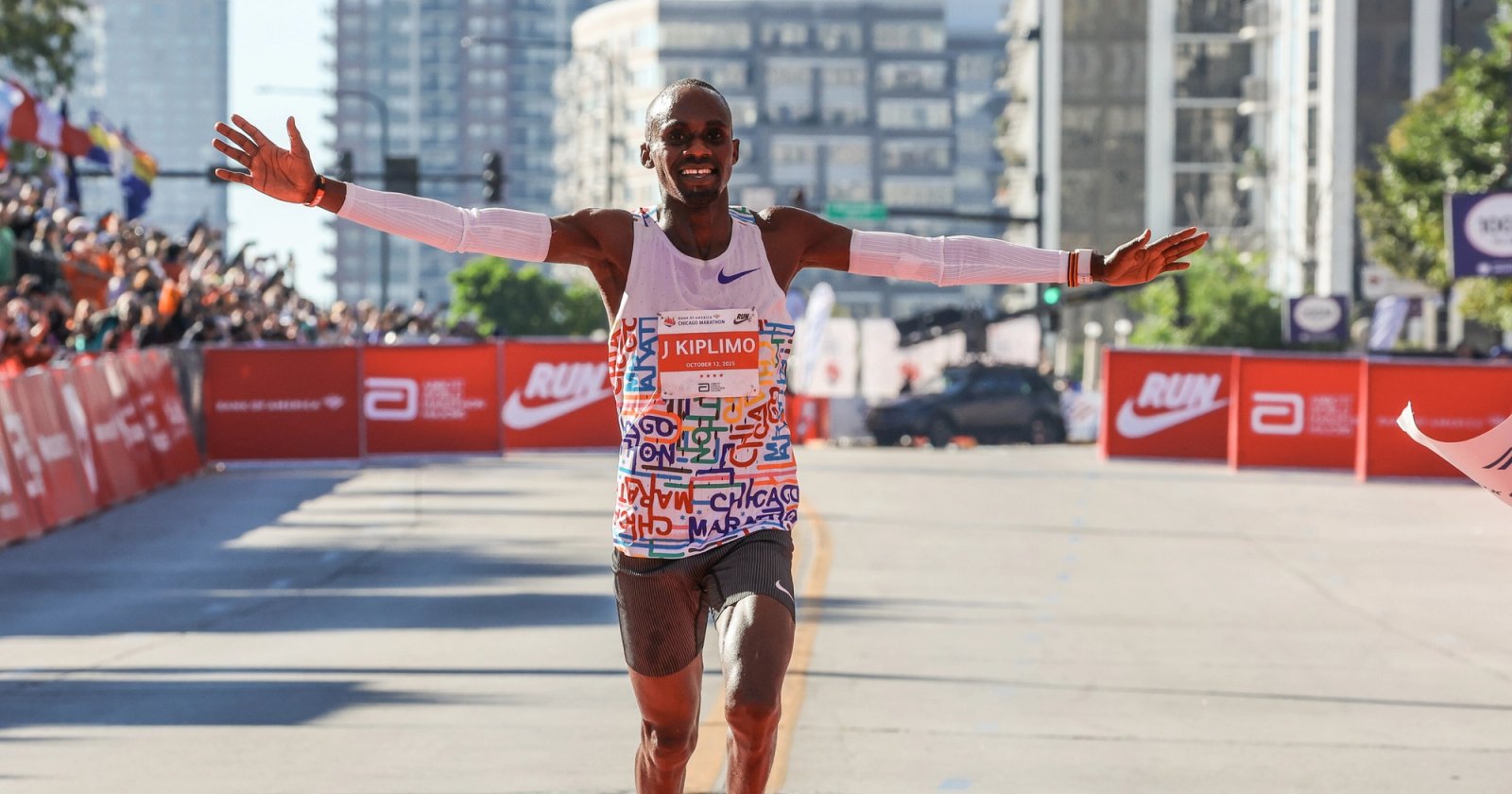
Jacob Kiplimo | Photo by Kevin Morris / @kevmofoto
The Contenders
Amos Kipruto (Kenya) | Personal best: 2:01:39 from London 2026 | Tune-up race: 35:36, 4th place at the Giro Podistico Internazionale Di Castelbuono 10K in Italy
Amos Kipruto is the only other man who has run under 2:02 and that came when he was trying to catch Kiplimo in April. He also tried to close the gap at last year’s Chicago Marathon, finishing second to the Ugandan star. Kipruto has been marathoning for a decade now, and in 10 World Marathon Majors appearances, he’s made the podium six times – including the last two years in Chicago.
Daniel Mateiko (Kenya) | Personal best: 2:03:44 from Tokyo 2026 | Tune-up race: 58:30, 2nd place at the Antrim Coast Half Marathon
I’ve been high on Mateiko’s marathon prospects since seeing him boldly try to run with Kelvin Kiptum in the 2023 edition of this race but then dropping out of his debut. He’s put together solid performances since then: 2:04:24 for third at the 2024 Valencia Marathon and 2:03:44 for fourth at the 2026 Tokyo Marathon. He’s definitely made for a flat course since he didn’t do so well at the Boston Marathon last year. We’ll see how his Chicago redemption fares.
Adriaan Wildschutt (South Africa) | Debut | Tune-up race: Pacing the Cape Town Marathon through 35K
If you caught the Cape Town Marathon in May, you saw the NAZ Elite stud pacing the leaders toward a 2:05 finish. He told me he’d cleared it with organizers to finish the race if he felt great so when the pace slipped, he still felt strong and didn’t want his hard work to go to waste which is why he surged from 30K to 35K, building a lead before ultimately stepping off.
He’s adapted well to the roads, running a 59:13 personal best in Valencia last year and winning the NYC Half in March. But the marathon is twice the distance. He told me he plans to settle in with the 2:04-pace group, hoping to pick off runners who try to follow Kiplimo and save enough for a strong finish AFTER 35K this time—with a podium spot in mind.
His teammate and training partner Alex Masai, who unfortunately had to withdraw from this year’s race, finished third last year and has passed along some course tips. Also worth watching: Elroy Gelant’s South African record of 2:05:36, set in 2025.
Others to note: Ethiopia’s Milkesa Mengesha ran his 2:03:17 personal best to win the 2024 Berlin Marathon but hasn’t approached that level since. His compatriot Tadese Takele (who owns a 2:03:23 PB from 2025) has won back-to-back Tokyo Marathon titles and will make his U.S. marathon major debut. And there hasn’t been nearly enough chatter about Brian Kibor, whose 58:39 half marathon PB ranks No. 28 all-time, making his marathon debut.
Unlike last year’s headlining duel between Kiplimo and John Korir, this feels like Kiplimo’s race to lose. But the beauty of the marathon is its unpredictability: a cramp, a missed bottle or one bad stretch can change everything. We’ll see how the podium shakes out.
The Americans
Fans’ biggest hope here is that Chicago race organizers are able to keep a camera on the pack that will not be going with Jacob Kiplimo toward the front of the race. It’s truly a shame to dish out so much in appearance fees to some of the top Americans only for folks to barely watch the race unfold. And we should have one of the best in recent history thanks to a lot of the pre-race hype and chatter, which we’ve had fun adding to via the CITIUS MAG Podcast.
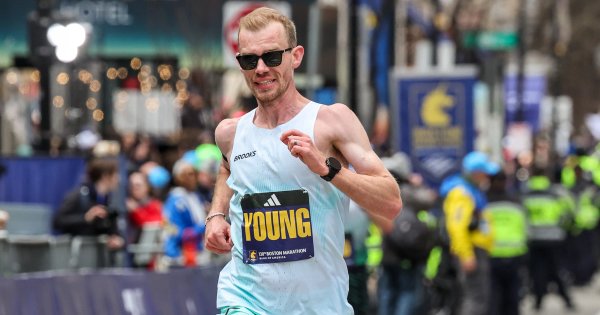
Clayton Young | Personal best: 2:05:41 from Boston 2026 | Tune-up race: 1:02:04, 7th at The Great North Run on Sept. 13th
First off, kudos to Clayton Young for coming out last month and declaring that he’s chasing his training partner Conner Mantz’s American record. Hopefully that hasn’t made things too awkward in Provo. Some dismissed the announcement as Brooks marketing hype, borrowing from the playbook that worked with Josh Kerr’s mile world record attempt. But on our show, Clayton said the goal was his before he brought it to Brooks, which helped amplify it.
Considering his Boston performance put him less than a minute off the record, the ambition isn’t exactly earth-shattering to those of us in the running world. A major sportswear company getting behind it, though, brings that story to a broader audience. And anyone following this field knows he’s not the only one with a shot.
Then came a significant setback. Young revealed that he sustained a 12-centimeter split tear in his semitendinosus, one of the hamstring muscles, over the final 250 meters of the Great North Run. One doctor advised four weeks off, which would have ruled out Chicago. Another recommended taking it day by day, and that’s the approach he’s followed. His Strava activity and recent YouTube videos suggest he’s still putting together solid workouts.
The injury casts considerable doubt on his American record chances. It has also shifted the conversation toward whether racing could aggravate the tear and compromise his 2027 season and build-up to the U.S. Olympic Marathon Trials. Those concerns won’t disappear when the gun goes off. For now, though, he remains entered, and he has a reputation for clutching up on race day, but doing it with a torn hamstring would be new territory.
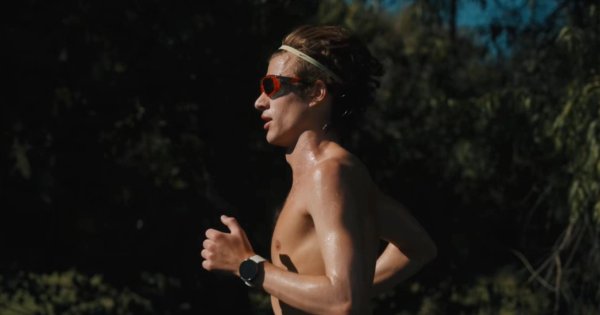
Charles Hicks | Personal Best: 2:04:35 at the 2026 Boston Marathon | Tune-up race: 58:06 for 2nd place at the New Haven 20K
After running the second-fastest marathon ever by an American citizen—albeit on Boston’s record-ineligible course, with World Athletics still listing him as a Brit—I think it’s fair to put Charles Hicks in the American record conversation. With his transfer of allegiance from Great Britain completed in July, he’s now eligible to claim it. What’s remarkable is that he hasn’t even been a marathoner for a full year, having debuted in New York last fall. He’s taking a more measured approach to Chicago so after finishing second American in New York and Boston, he wants to be the first American across the line.
I appreciate his long-term vision for the event. He told me that he and coach Jerry Schumacher have mapped out a tentative path through the Olympic Trials. For Chicago, the biggest changes were increasing his peak mileage from 115–120 before Boston to 125–130 and completing the full build at altitude. It produced what he called the best workout of his career: 5 miles at 4:48/mi, 4 at 4:44, 3 at 4:39 and 2 at 4:34; that’s 14 miles of work at roughly 4,500 feet in Provo.
Hicks sees this build as an extension of the work behind his first two marathons, both of which went exceptionally well. Boston showed him that running 2:04 is physically possible. Now he gets to see what that foundation, another strong training block and a flat, paced course can produce.
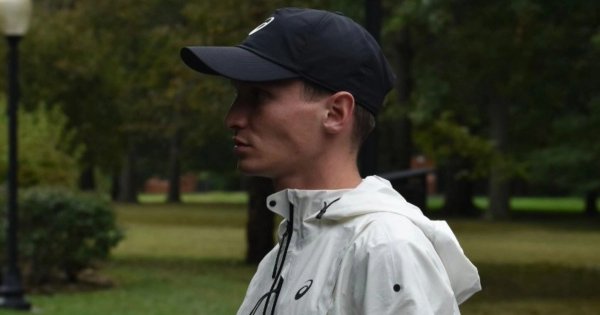
Vincent Mauri | Personal Best: 2:05:54 at the 2026 Glass City Marathon | Tune-up race: None
How much more space can we dedicate to The Vinny Mauri Experience? His debut sent shockwaves through the U.S. distance running community, and he’s followed it with one of the most fascinating and unconventional marathon builds we’ve seen.
Mauri hasn’t raced since Toledo, opting instead for roughly 20 weeks of training. That included seven consecutive weeks with long runs exceeding 26 miles and a 138-mile peak week featuring the much-discussed 45-mile treadmill day on Sept. 8: 2 × 50 minutes in the morning and 4 × 20 minutes in the afternoon. The treadmill has a purpose beyond generating outrageous Strava uploads: he says it helps him control the effort without overcooking himself. He’s still self-coached and, even after signing with ASICS, still working at Second Sole.
Take one look at our comments section whenever the American record comes up, and you’ll see he’s developed something of a cult following. His framing of Chicago: “Toledo was a debut effort. This is my debut race of the marathon.” He sees this as his first chance to truly race the distance. Mauri says he’s fitter than he was in Toledo and wants a personal best, with the American record in the back of his mind. Now we get to see what he can do with pacers and competitors after running his debut alone.
It’s one thing to settle into a pace and race the distance. It’s another to respond when someone surges, a pack breaks apart or a rival makes a move late. That could be Mauri’s biggest test and the most compelling part of the experience yet.
Don’t You Forget About Me!
In this era where everyone is fast, we’ll feel silly if someone from this next group has the race of his life and upstages the three Americans above. Here’s who else deserves your attention.
– Galen Rupp (Personal best: 2:06:07, Prague 2018): The two-time Olympic medalist and one of the greatest American distance runners in history could remind these youngins who won Chicago in 2017. His more realistic record target, though, is the U.S. men’s masters mark of 2:10:02, set by Elkanah Kibet at the 2024 U.S. Olympic Marathon Trials. Rupp told us he hasn’t been this excited heading into a marathon in a long time, with his training giving him plenty of reasons for optimism.
– Biya Simbassa (Personal best: 2:06:53, Valencia 2024): Simbassa ran 2:06:53 in Valencia in 2024 and followed it with a 2:10:53 at the New York City Marathon last fall. Injuries kept him out of a spring marathon, so Chicago will show us how well he’s bounced back.
– Hafu Knight (Personal best: 2:07:38, Boston 2026): Knight broke out in 2025 and kept that momentum going with a personal best in Boston this spring, finishing ahead of Rupp. Even then, he was sixth American—a reminder of how deep U.S. marathoning has become.
– Daniel Mesfun (Personal best: 2:08:24, Seville 2026): Mesfun set his personal best in Seville earlier this year at 38. Now he returns to the World Marathon Majors stage for the first time since 2019.
– CJ Albertson (Personal best: 2:08:17, Chicago 2024): Albertson returns to the course where he set his personal best two years ago, in what was already his third marathon of that year. Last fall, he arrived cooked from the World Championships, with Chicago serving as his fifth of six marathons that season. This time, he has only Boston in his legs—a comparatively light workload by CJ standards.
– Alex Maier (Personal best: 2:08:33, Düsseldorf 2025): Maier might be buried on the start list, but don’t forget that he won three national titles in 2025 and gave Mantz’s half marathon American record a scare with his 59:23 in Houston. He withdrew from Boston and hasn’t raced this summer, leaving some questions about his current form. If he’s fully healthy, though, he’s my pick from this group to surprise people.
The rest of the U.S. sub-2:10 club includes Brian Shrader (2:09:46), Reed Fischer (2:09:47), Ben Rosa (2:09:47) and Frank Lara (2:09:53).
One wild card: Patrick Cullen. If the name is new to you, the former Northeastern and BYU runner has taken well to the marathon, posting a 2:12 personal best at Gold Coast in July. Now he’s declared he’ll run 2:06 in Chicago. Make of that what you will, but a look at his Strava suggests we’ve got another treadmill fanatic on our hands.
Keep up with all things track and field by following us across Instagram, X, Threads, and YouTube. Catch the latest episodes of the CITIUS MAG Podcast on Spotify and Apple Podcasts. For more, subscribe to The Lap Count and CITIUS MAG Newsletter for the top running news delivered straight to your inbox.
Chris Chavez
Chris Chavez launched CITIUS MAG in 2016 as a passion project while working full-time for Sports Illustrated. He covered the 2016 Olympics in Rio de Janeiro and grew his humble blog into a multi-pronged media company. He completed all six World Marathon Majors and on Feb. 15th, 2025 finally broke five minutes for the mile.