September 25, 2026
Listen
“I’ve allowed my brain to anchor on the fact that I can run 2:04. It’s physically possible — and that’s as good as it gets as a signal. Now let’s go find out what the trend looks like.”
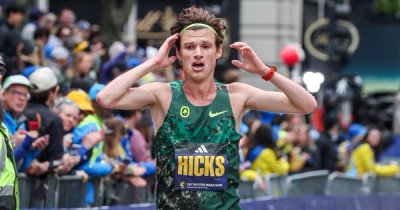
My guest for today’s episode is Charles Hicks and the last time we had him on was right after he ran 2:04:35 at the Boston Marathon. A lot has happened since then. His wife graduated law school. They got married. They went on a honeymoon. And then Charles moved out to Park City, Utah, to train at altitude for the first time in his career (no tent, no simulated environment, just real air at real elevation) for what will be his third marathon in less than a year.
That third marathon is the Chicago Marathon on October 11th. Charles is going into it with a specific goal he’s been comfortable saying out loud: he finished second American in New York, second American in Boston, and now he wants to be first American in Chicago. The American record conversation is happening around him after Clayton Young has called his shot publicly. But Charles’s approach to it is characteristically his own: Beat the guy next to you and let the record follow if it’s going to.
In this conversation, he takes us through how Chicago has been on the plan since a text thread in 2024 where he and Jerry mapped out New York, Boston, Chicago in sequence; we get into some of his training and what organic altitude training has taught him about pacing discipline that sea-level training couldn’t and much more. He’s one of the most philosophical marathoners you’ll find.
You can listen to the full interview with Charles on the CITIUS MAG Podcast. The following highlights have been transcribed and edited lightly for clarity. Stream, download and listen to the show on Apple Podcasts, Spotify or YouTube.
CITIUS MAG: The last time we had you on, we kind of established that you had potentially set the world record for a runner who had never been based at altitude. That’s now changed. How have you taken to training at altitude for this block?
CHARLES: It’s been awesome, but it’s very much been a test of will. Training at altitude is super fun on the easy days and then on the workout days, it is a beast. I’ve been theorizing both mentally and physiologically about whether there’s a difference between running at altitude in addition to living at altitude. Physically, there are real things — more oxygen-carrying capacity across the lungs and so on. But mentally I think it’s a totally different ball game.
It’s not just the pain, or how hard it is to breathe through some of these workouts. Most importantly, it’s about managing the red line. At sea level, you kind of get away with less control over pacing — you can make mistakes and recover from them later in a workout. At altitude, it’s one or two strikes and you’re out. Mastering that has been really rewarding, and I hope to take it into a marathon, which I think operates under very similar logic. In shorter races you can get away with a couple of mistakes. In the marathon, even if you make a mistake thirty minutes in, you’ve still got ninety minutes left.
CHICAGO MARATHON 2026
CITIUS MAG: How did we land on choosing Chicago?
CHARLES: That actually happened all the way back in 2024. Jerry and I had a very long meeting when we first decided we were going to move up to the roads and experiment with the marathon. We picked New York as the first one because we wanted it to be unpaced and competitive. And because some of my best cross country races were hilly, we figured we might as well lean into that for the first time and see how it went.
Then in that New York block, I texted Jerry a rough outline of the marathons I wanted to run: New York, Boston, Chicago.
Boston was obvious. There’s not a lot of great spring options and it’s just a phenomenal race. And then I really wanted to cover all three domestic majors as quickly as possible, because a big part of our thesis was how do we get to the roads, and then to the marathon, as quickly as possible while doing it in a way that extends our longevity. For me, information acquisition has always been at the forefront of this process. The most important thing I want to know is what it’s like to race all three domestic majors — which from what I’ve seen are the bread and butter for preparing for the 2028 Trials.
CITIUS MAG: Does the roadmap extend all the way through Saint Louis?
CHARLES: Yeah, it does. Written in pencil, obviously — there are negotiations that go into which marathons make the cut. I’m not fully committed to anything. But I do have preferences and room for variability. I think it would be amazing to get a U.S. singlet at some point, but we’re always going to balance needs before wants. I’ll admit: we’re way ahead of where we thought we’d be at this point. We’ll just keep chipping away and looking ahead to St. Louis and hopefully LA.

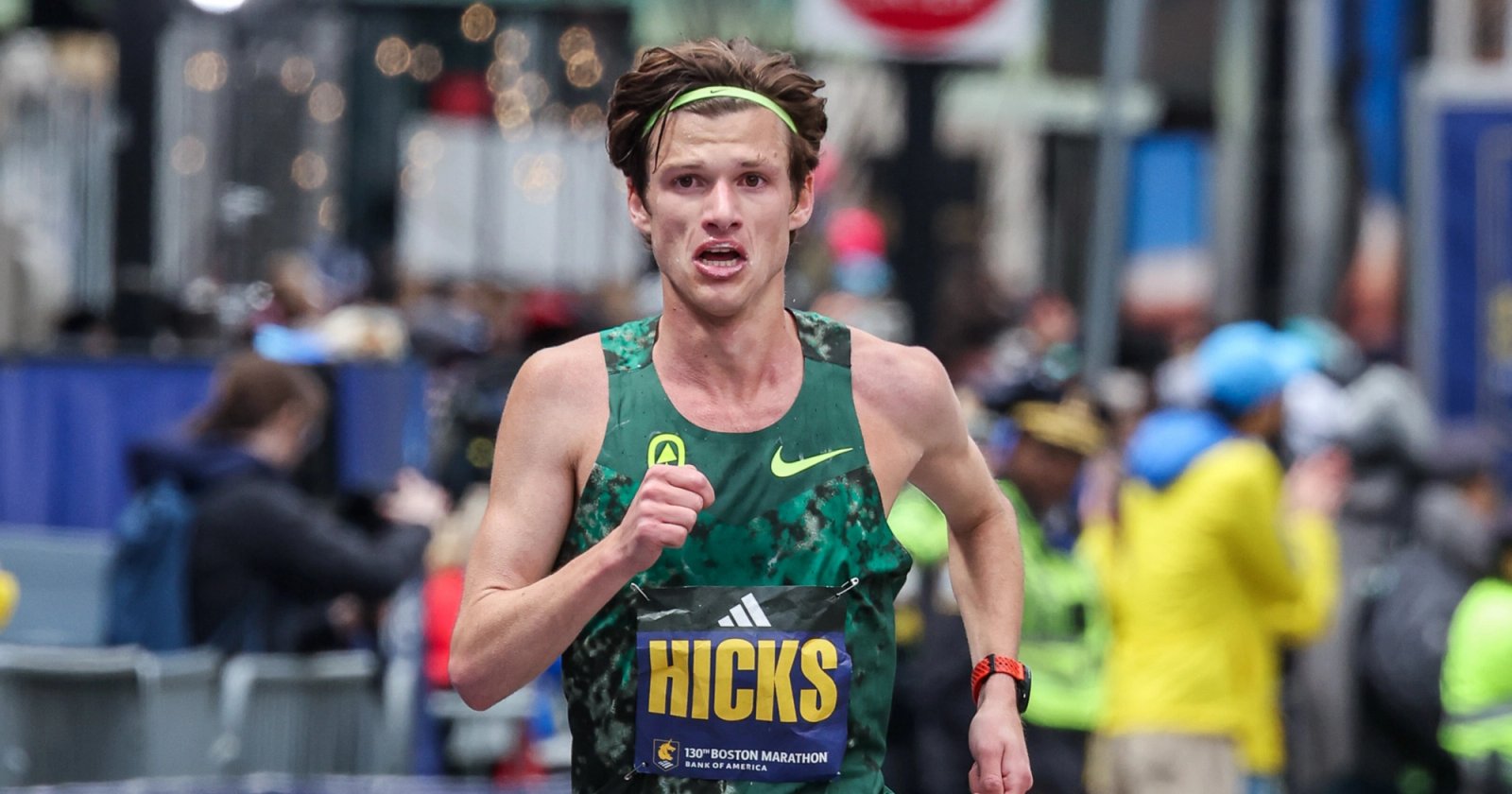
Kevin Morris / @kevmofoto
CITIUS MAG: After how well you ran in Boston, how did the conversation with Jerry shift about what you’re hoping to get out of Chicago in particular?
CHARLES: One of the things I love most about marathon running is how much it reminds me of cross country. I always want to pick a goal based on the guys I’m actually running against. Most importantly, a goal that isn’t contingent on conditions. Beating the guy next to you doesn’t get easier or harder based on meteorological events.
There’s been a lot of talk around Chicago about going for the American record. But my goal — way before any of that — was: I was second American in New York. I was second American in Boston. I want to be first American in Chicago. You can’t run an American record without being the first American, right? But it’s a less scary-sounding goal. My entirely focused goal is to go out against that field and compete, finish as high as possible overall, and hopefully be first American. But I really also hope to be making progress toward the podium, because I think that’s the best goal for all of us in that field to be shooting for.
CITIUS MAG: I love the contrasting styles, because Connor came out last year and flat-out called his shot on the American record early. And then Clayton Young beat everyone to the PR punch and called his shot too for 2026. For you, is there something you get out of not putting it out as a blanket statement? Because it’s almost a different philosophy: You’re heading into your third marathon, you’re still building information and maybe finishing first American is a more palatable and specific goal.
CHARLES: Absolutely. I think it’s also just almost like a questline — I had all these different milestone points set out over the arc of my marathon journey, and the hardest part is that they’ve been extremely compressed. I’d heard so much about how badly the first couple of marathons tend to go, so I’m trying to stay rooted in: we’re in a phenomenal place for where we expected to be. You have two incredible data points, and only two data points. The sky feels like the limit right now, but let’s accumulate more races. Let’s build toward some of those things. And I’ve never run Chicago — maybe I’m allergic to the course. I’m excited. I think flat should be easier than hilly. But I’ve found throughout my career that treating the unexpected with a level of respect has served me. When I feel like I’ve run enough marathons, I’ll probably have a little more bravado.
CITIUS MAG: So the clock isn’t the assignment here. Being such a data-driven guy, what data points are giving you the most encouragement right now?
CHARLES: I’m very optimistic based on what we’re seeing. What Jerry and I have been laughing about is that with this block, I essentially tried to overcome everything all at once — conditions-wise. When we came up to Park City in June, the lows were around 80 degrees and the highs were 110. We were running between 4,800 and 7,000 feet of elevation. We went from running 500 feet of elevation gain per week to over 5,000 or 6,000 feet, going over the mountains in Park City.
Over the past couple of weeks, the most encouraging thing is that the workouts are no longer being adjusted for altitude in order to hit the right paces — they’re just faster, flat out. I also took my peak mileage from the 115-120 range before Boston to 125-130 for this block over a sustained eight- to ten-week volume period. And I can basically recite the weeks if you want.
CITIUS MAG: Do it.
CHARLES:Close to 115, 128, 128, 130, 105 — then something like 128, 128, 129, then down to 88 around the tune-up race, then 107, 115, and now we’re starting to bring it down in the final three weeks. If you compare it week-to-week with Boston, it’s not perfectly pretty since I dropped down significantly for the USATF Half Marathon Championships — but the theme of this whole approach is expecting to make mistakes as you continue to try new things. The New York build was about seven weeks long. Boston was almost twice that. This one builds on everything that came before, and there’s pretty much more of everything we could throw at it without the body breaking.

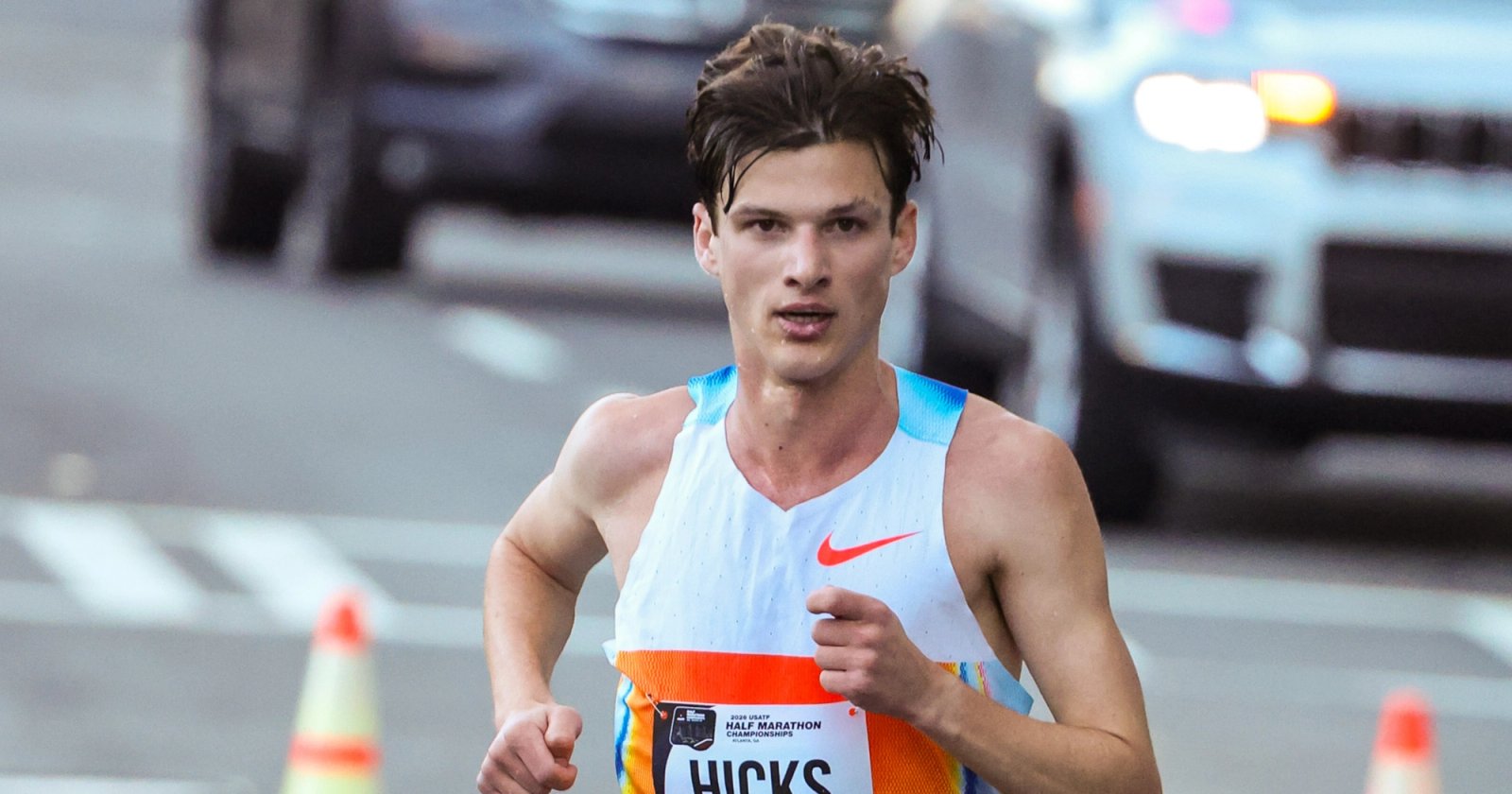
Kevin Morris / @kevmofoto
CITIUS MAG: Let’s touch on New Haven — the USATF 20K Championships, the tune-up race for this block. Last time you came down for the tune-up more dramatically. This time you kept mileage higher. What was the hardest part of juggling that?
CHARLES: It’s actually encouraging to compare them. For the USATF Half Champs ahead of Boston, I think I went something a little above 110 miles, then 88 miles, then around 60-something miles race week. For this one, I went 125, 88, and then backed up the very next week. I think we’re just a lot stronger. One of what I’d call a superpower for me throughout my career is chaining blocks together without interruption.
What that allows me to do is factor in everything from the current block: higher mileage, more elevation, altitude training, heat training — and also factor in the fact that when I ran Boston, I hadn’t trained for Boston yet. When I’m running Chicago, I have all the advantages of the Boston build right behind it. Daisy-chaining continuous work is something I really lean on. I’ve been lucky enough to not have missed more than a week of training since my sophomore year of high school. And so the question isn’t just what’s in this block — it’s what’s in every block combined.
CITIUS MAG: You’ve said before something like aiming for 2:06 is the surest way to run 2:06:01. So how much is the clock actually in your head out on the course, and when do you allow yourself to think about it?
CHARLES: One of my biggest psychological advantages, I think objectively, is the age at which I’m running these marathons. It allows me to be a little less intentional about ceiling-setting than I’d maybe have to be at a different career stage. The main advantage of youth is just that the future is so open-ended. I’m trying not to overfixate and maybe inadvertently close my ceiling.
If I ran close to the American record on a record-eligible course, the younger you do it, the better it is for your trajectory. But my biggest thing is: I don’t want to rob myself of a phenomenal day by chasing a result that’s somewhat arbitrary for where I’m at right now. I never want to stand on that start line thinking that if I don’t run the American record it’s a failure. That’s how people get into a less loving relationship with running itself.
What I want to be thinking about at Mile 17 when it starts to suck, and someone makes a move — can I go with them, and can I hang on? That is so much more of what I’m trying to train out of myself than a specific time. And ironically, I’ve found that’s kind of how I’ve run really fast in the past.
CITIUS MAG: There’s a difference between “anchoring” and “ceiling-setting”. Define that for me.
CHARLES: For Boston, the most important thing was correctly analyzing the available context of the day. And Boston was undeniably a historic day for times. It’s very easy to get swept up and think, I’m gonna run 2:02 next time, or I’m going to break two hours in Chicago. I don’t think that’s the healthiest way to project performance.
What I do instead: I analyze the field. I drop in a PDF, go over everybody’s times, and look at how people progressed from their best day ever to that day in Boston. If you forced me to say how much the Boston conditions were worth, I’d say roughly 90 seconds to two minutes per person, depending on the athlete. I found it encouraging: if that’s the case and I ran an American record time on a hard day in Boston, then theoretically on a pace course in Chicago, something incredible can happen. So in the back of my head I’ve been thinking: out-train the conditions, give yourself that boost internally through the work, and let’s find out what the trend actually is.
I’ve allowed my brain to anchor on the fact that I can run 2:04. It’s physically possible — and that’s as good as it gets as a signal. Now let’s go find out what it looks like with pacers, on a fast course, with all this training behind it.
RACING VINNY MAURI AND HIS TRAINING APPROACH

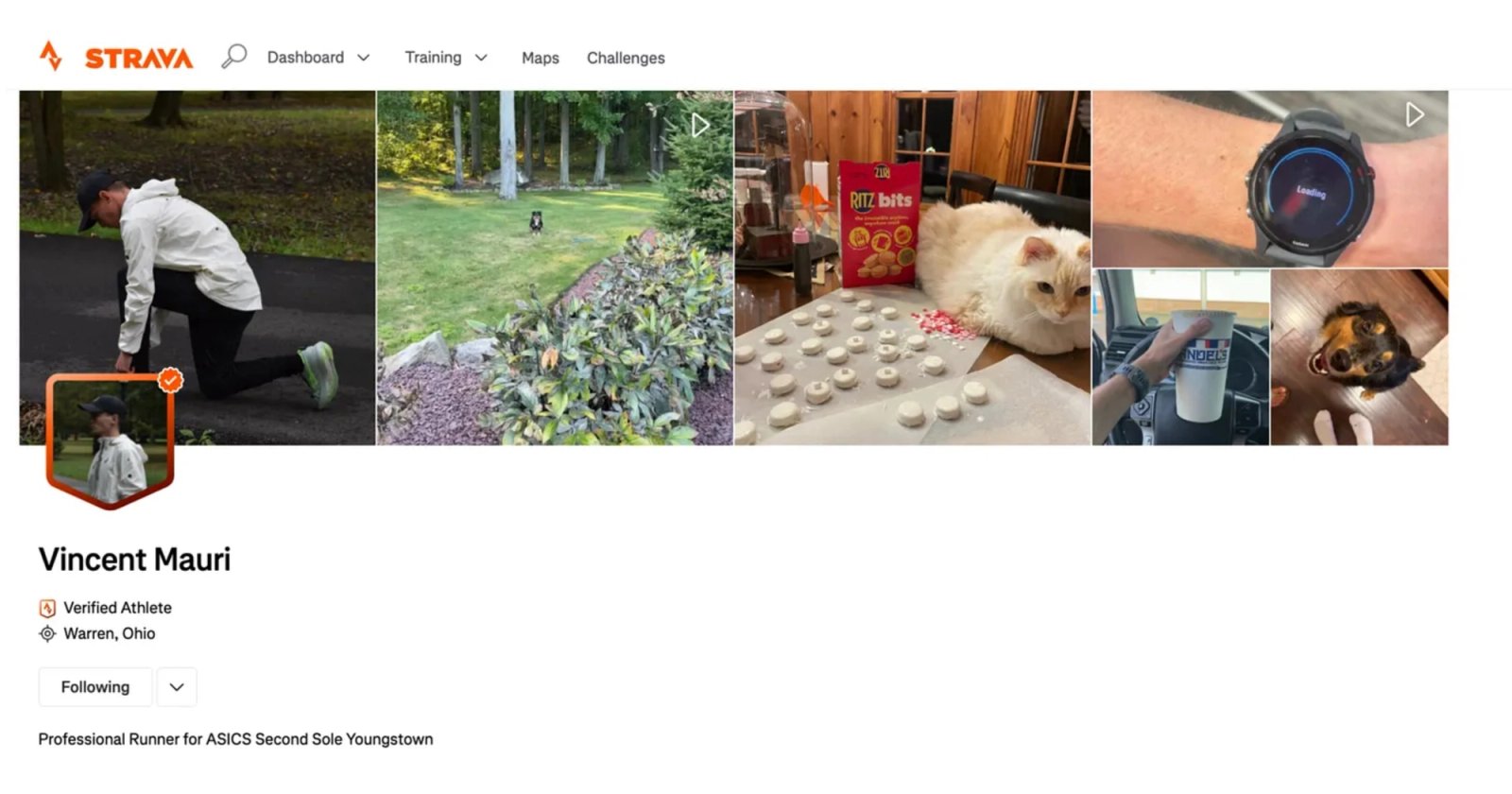
CITIUS MAG: Last time we talked, you still hadn’t seen what Vinny Mauri was doing on Strava. I sent you the link. What have you made of the 45-mile days, the short rest, the whole approach?
CHARLES: I am 100% hoping he knocks it out of the park, because I think it would be awesome for him to validate treadmill running as a high-level approach — it opens up a ton of possibilities. All the way back to middle school, I’d heard that treadmill running doesn’t translate the same way as moving your body across the actual ground. But things are starting to change. The thing I’m most curious about is that on a treadmill you have infinite fueling availability and so much control over pace, effort range, exactly what carbs are going in. When you’re out in the open, it’s messier.
Looking at Vinny’s approach, the double days are the most fascinating to me. But I honestly don’t want to put the cart before the horse. What I’m most excited to do is represent my own training next to his. I actually sent him a message on Instagram like, “Dude, I just can’t wait to go out there and duke it out and see how these things shape up.”
The more roads that lead to Rome, the better, especially for different people in different training situations. I think we’re both just excited to represent our processes and maybe learn from each other. And there just aren’t that many marathoners our age. Having other people going for it at the same time is genuinely helpful.
CHARLES’ TRAINING
CITIUS MAG: I saw you were on the track and in spikes getting ready for this one.
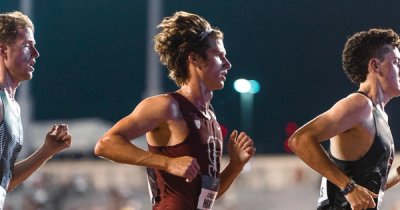
CHARLES: We’ve been doing a lot of track work going into this one. I put out a YouTube video that showed some 400s and miles. On Monday, we did 15 x 1K. My calves are sore from nine miles in spikes. We were ripping.
What excites me most is that because the base loading block was so high and the track work we’re doing is so fast, the theory is that with how far apart those two different strengths are — high volume and high speed — they kind of meet in the middle and create a really beautiful pairing of fast-twitch and strength speed. We’re going to find out.
CITIUS MAG: You’ve talked about daisy-chaining and never having a major interruption, but did anything in this build threaten that?
CHARLES: Literally two weeks ago, after the USATF 20K Champs. I was crushing the week — 107 miles over six days. I was going to bed before what would have been a long run of 24 miles, which would have put me at 131 for the week. And I just could not fall asleep because I had a brutal earache in my right ear. I was Googling at midnight and the verdict was: You can run your long run, get your longest week ever, but you’re probably going to make it worse and it’s going to last a lot longer, and your body is going to be expending resources to fight this the whole time.
So I took the whole day off on Sunday. Agonizing. I did easy mileage on Monday. Two days later, the ear was completely gone. Jerry texted me: “Wednesday workout, ready to go?” “All good, completely fixed.”
Then I ran my best workout of my entire career. Five-miles at 4:48/mile, four miles at 4:44/mile, three miles at 4:39/mile, two miles at 4:34/mile — all at about 4,500 feet in Provo, 14 miles of work, well under marathon pace no matter how you adjust for altitude. I was floating. And I think if I’d hammered against my body on that Sunday, I would not have been feeling as good.
I tend to aim for perfection when things are going great, so I can spend a little bit of that perfection when things aren’t. Because the rest of the build had been completely uninterrupted, when it came to an A-or-B decision, I felt confident just taking the day off. And honestly, with Jerry’s workouts, missing one can sometimes be beneficial.

CITIUS MAG: Take me through some of the race day choices. What’s on your feet, your kit and watch?
CHARLES: For shoes, better safe than sorry, I’ll leave the specific details out. But I have been doing some stuff in the AlphaFly 4s. Kit-wise, there’s a Nike Chicago exclusive kit dropping — I don’t know what the shorts look like, but I got to unveil the top a couple of days ago, which was cool.
Half tights or shorts? Probably depends on the weather, but I skew toward half tights.
On the watch: New York I ran with no watch at all. I’d never raced with a watch. Everyone was like, ‘What are you doing?’ And I was like, I just wasn’t that curious. I kind of prefer to be as unconscious as possible when I’m racing. In Boston, I was alone for a long stretch and I was grateful to have the data.
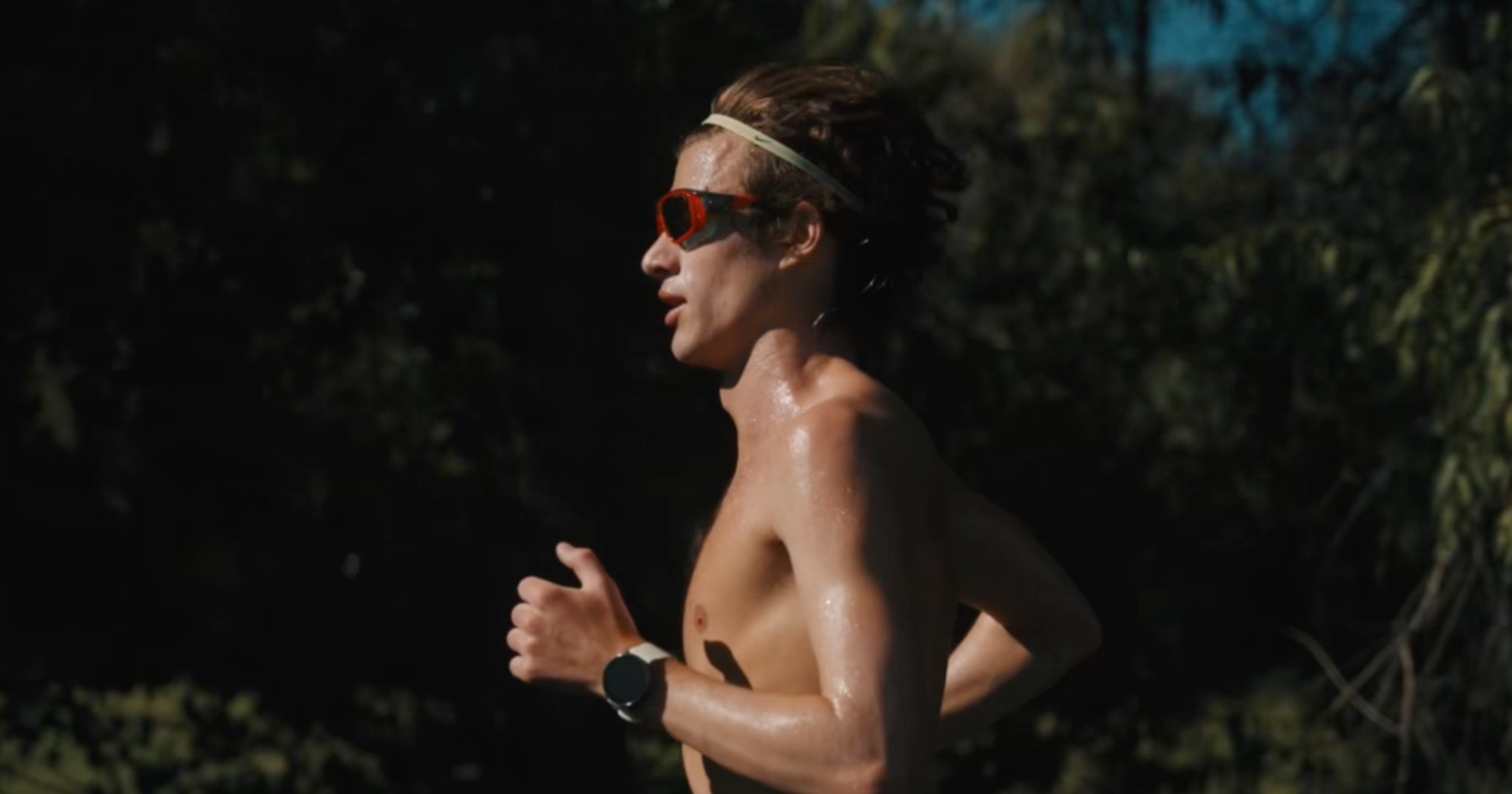
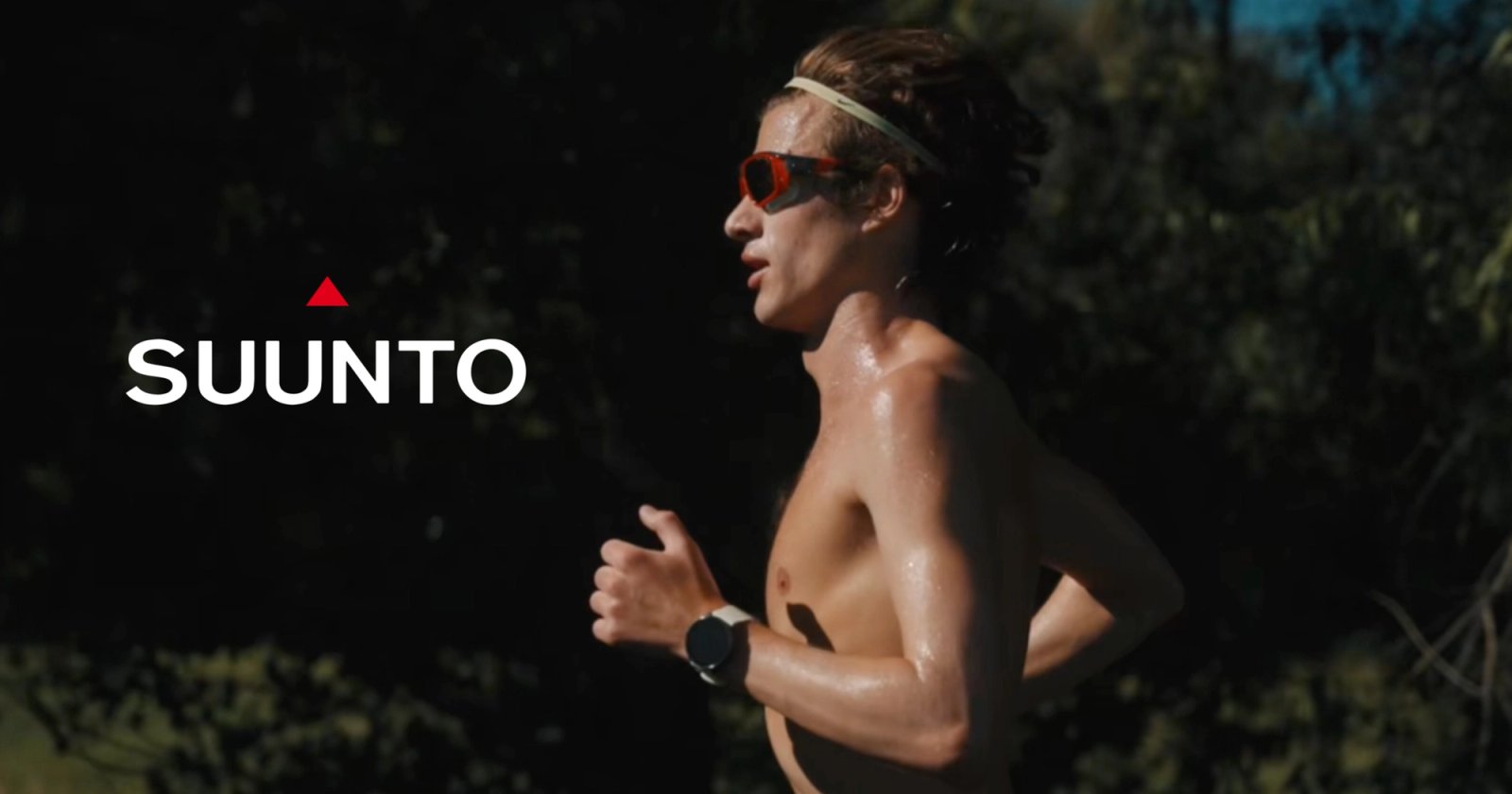
For Chicago, I’m currently at about 70-80% planning to race in the Suunto Run 2. The Run 2 is the maximalist option — beautiful bright screen, clean animations, tons of features, but feels lighter than it should on the wrist. I want something that gets the job done with as little interruption as humanly possible, and I think that’s exactly what the engineering team has been going for with this one.
Support The Sponsor


OLIPOP
OLIPOP: Like sparkling apple juice and gummy apple rings blending into one, Olipop's Crisp Apple is so tantalizingly sweet and refreshing it makes every day feel like a celebration. If you haven't had tried Olipop yet, grab a can and see what the hype is all about! Head to DrinkOlipop.com and use code CITIUS25 at checkout to get 25% off your orders.


SUUNTO
SUUNTO: The Suunto Run 2 is their new flagship watch built specifically for road running and the marathon. You get around 10 days of battery with daily use and 24 hours in performance mode with dual frequency GPS. The watch also tracks your sleep, HRV, and training balance, so you know when to push and when to back off in your workouts. If you're in the market for a new watch, check out the Suunto Run 2.


KAIZEN
KAIZEN: kaizen is a training app that starts with your running history to set the baseline and then updates around the training you do. kaizen looks at the bigger picture of your training to know your current fitness. The app translates your last few months of training into an accurate view of how your current fitness, taking a big picture view that quiets the noise of individual workouts. Download today in the App Store or Google Play and get two weeks free with code CITIUS within the app.
Chris Chavez
Chris Chavez launched CITIUS MAG in 2016 as a passion project while working full-time for Sports Illustrated. He covered the 2016 Olympics in Rio de Janeiro and grew his humble blog into a multi-pronged media company. He completed all six World Marathon Majors and on Feb. 15th, 2025 finally broke five minutes for the mile.