By Paul Snyder
April 9, 2026
April is a funny time for professional track and field. For athletes who gave indoors an honest effort, this month is about ramping back up following a mini-break. For athletes all-in on the late spring/early summer outdoor championship season, it’s still so early.
But there are still meets… big meets. Sure, most of them are geared toward getting hundreds of college athletes their NCAA regionals qualifier early, but they’re meets with a lot of history that invariably attract high-level pros as well. Usually they have the word “Relays” in the name and usually they’re somewhere warm.
Busting the rust usually looks very different for sprinters and distance runners. Distance runners that don’t want to come out swinging can move up or move down in distance, take on an event where they’re not going for national titles, and blame a bad performance on an ill-timed kick.
Sprinters looking to start off low-key have to get more creative. They might opt for the rarely-contested 150m or the bizarre, grass-track handicapped race against civilians we wrote about earlier in this newsletter. But historically, the bread and butter of elite sprinter’s early season competitive diet has come from hiding individual results in the form of joining an all-star relay squad.
The Texas and Florida Relays just took place, and while, yes, relays occurred, and in them high schoolers and collegians ran quickly, the primary takeaways came from field events, individual sprints, and wind-assisted high schoolers.
In Gainesville, Max Thomas clocked the second fastest 100m in the world this year, going 9.90. At the Texas Relays, Camryn Rogers extended her own Canadian and North American records in the hammer, thanks to an 81.13m heave; Gabby Thomas ran an early-world-leading 11.00 in the 100m; and two high schoolers ran historically fast (with some respectable tailwinds): Mariah Maxwell’s 22.25 200m puts her third on the all-time, all-conditions list behind just Allyson Felix and Dana Wilson; and Andrew Jones went 12.97 in the 110m hurdles, then followed it with a legal 13.15, good for #2 all-time among high schoolers.
Ideally, pros should race pros and the meat of the track and field season should focus on marquee matchups. But this is April. At relay carnival-type meets, let’s get the pros involved. Throw together an all-star squad or two from existing training groups, work out a schedule that works for your body over 1-3 days, and put on a show while busting the rust.
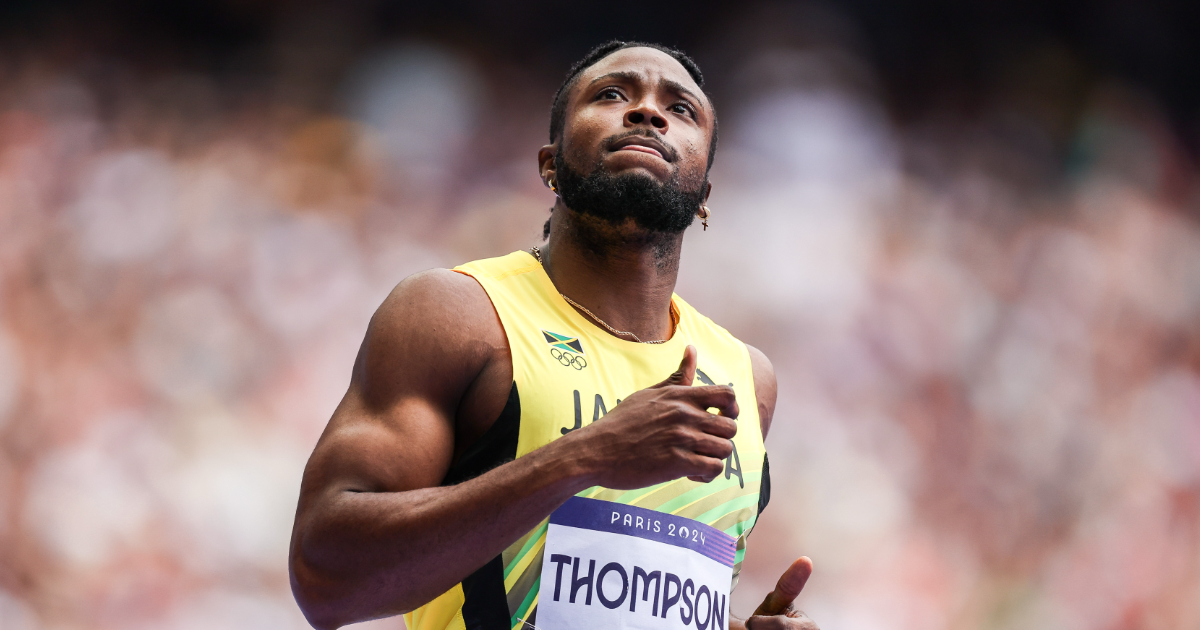
The closest thing we got to that this past weekend took place in Florida… just not at the Florida Relays. At the Miramar Invitational, Kishane Thompson set a world best 150m mark—on a regulation track—at 14.93. But from a pure excitement standpoint, we’ll be focusing on a race that featured a team of Texas high schoolers. They placed third in the 4x100m, just 0.04 seconds behind the winning Star Athletics squad, which featured Aaron Brown, Kenny Bednarek, Kyree King, and Courtney Lindsey.
A squad of true, professional Big Dogs, up against a squad of true professional Slightly Less Big Dogs (Sam Blaskowski, Pjai Austin, Brendon Stewart, and Brandon Hicklin), all looking to work out the kinks in a race atmosphere while getting in a good effort. None wanting an official mark to appear next to their names this early on in the season, but still… none of them wanting to lose, least of all to a bunch of kids yet to graduate high school.
The Bednarek-featuring appears to have raced twice, so this was clearly a workout for them. But still, they toed the line—while Thompson and Ackeem Blake headlined low-key open races. Between the men’s 100m and 150m, there were at least eight top Jamaican sprinters at the Ansin Sports Complex that day. What was stopping them from grabbing a dang baton and getting a rep or two in?!
This should be a no-lose situation: if you run fast, you get to strike a little extra fear in your competitors’ hearts and beat them head-to-head. If you mess up… no one can tell, really, in a 4x100m. Plus, you get the chance to hone the very same tools that could deliver you an extra medal or two in a championship setting, an opportunity that doesn’t pop up all that often mid-summer.
This isn’t a novel idea by any means. The USA vs. the World races at Penn Relays used to be a common site for world records and superstar appearances. If it’s good enough for Usain Bolt and Shelly-Ann Fraser-Pryce, it should be good enough for… well, pretty much anyone!
Now, to be fair, Penn Relays shelled out more than a few pretty pennies to put together those programs, so a truly star-studded relay showcase in April or May is likely a matter of budget (even for World Athletics…). But the next-best thing is to make a few calls, shuffle around the meet schedule if you have to, and get the sprinters that are already racing in Texas and Florida each April to put their rust-busters to more entertaining use. If we can’t get everybody to Torun or Gaborone, let’s meet them where they are—and put on a show.

Paul Snyder
Paul Snyder is the 2009 UIL District 26-5A boys 1600m runner-up. You can follow him on Bluesky @snuder.bsky.social.