By David Melly
November 25, 2026
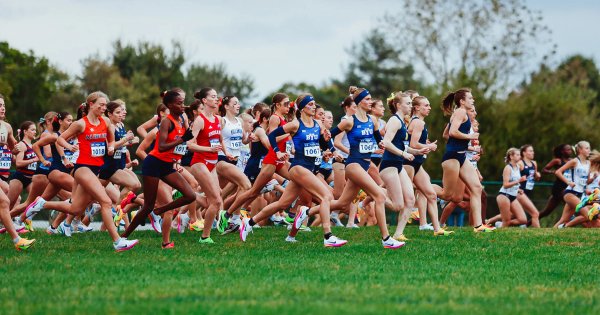
Last weekend’s NCAA Cross-Country Championship had a lot of firsts. The men of New Mexico and women of Alabama claimed their first team titles on a warm, fast day in Terre Haute, Indiana, and Elsingi Kipruto delivered the first individual men’s title in Louisville Cardinals program history.
Since 2016, just three programs have won men’s team titles, with the trophies bouncing around between Northern Arizona, BYU, and Oklahoma State. A pair of dynasties have taken over the women’s competition since the COVID pandemic, with every 2020s title before this one going to either NC State or BYU.
This year, even as they were dethroned, the Wolfpack did have plenty to celebrate thanks to Hannah Gapes’s dominant 18:44.3 6km victory, and the Cougars kept both men’s and women’s teams on the podium. The lesser trophies brought with them a reminder of what makes cross-country awesome. In both races, the gap between the last podium spot (fourth place) and the first team going home empty-handed was just one point. And in both races, the fourth-place team only overtook the fifth-place team in the final kilometer of the race. Teamwork, tactics, and grit made the difference, which in turn is what differentiates XC from its more individualistic road-racing cousin.
So obviously everyone was happy with such exciting, unusual meet outcomes, right? Uh… not quite.
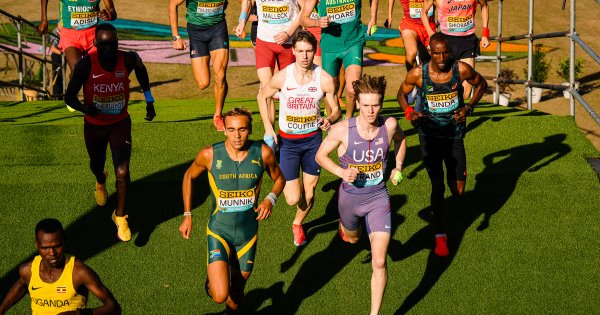
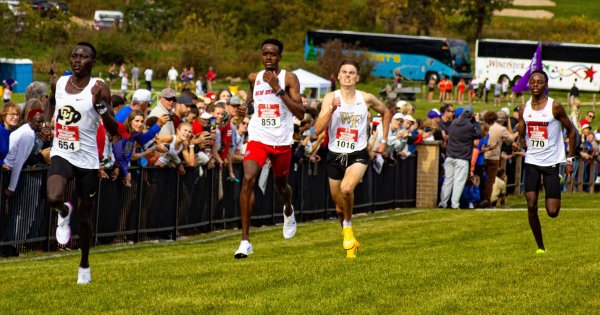
Viewers and online commentators were quick to observe that the front of the field looked a lot more like an Athletics Kenya trials race than a U.S.-based cross-country championship. As we’ve pointed out before, the “national” and “collegiate” parts of National Collegiate Athletic Association have always been a bit fuzzy, and that international athletes and those with somewhat-professional racing background have been integrated into collegiate running as long as the sport has existed. But the reality remains that 20 of the top 25 women’s finishers at NCAAs this year were Kenyan, and 16 of the top 25 men. The top Americans were Rocky Hansen (6th) and Katy Zang (16th), with just one total American across both races in the top ten overall.
All five of the scorers for both national-champion teams are international student-athletes. Depending on your own perspective and biases, that can tell a beautiful story about the opportunities that you can earn with a bit of talent and a lot of hard work, and the role that the NCAA plays in bringing together young dreamers from all over the world to deliver a truly elite level of competition.
…Or it can highlight the increasingly commercial and mercenary nature of well-funded institutions taking the “student” out of “student-athlete” and making it nearly impossible for U.S. talent to rise to the top of what’s supposed to be the premier amateur (and developmental) domestic circuit. There’s some truth in both views.
Again, none of these phenomena are new, but what is clear is that the NCAA overall is in a period of perpetual upheaval that more or less began with the introduction of name, image, likeness (NIL) compensation in 2021. Dollar figures and compensation structures are rarely revealed publicly, but it’s safe to say that a good chunk of this year’s All-Americans are receiving more benefits than per-diem and a shared hotel room. Together with ever-shifting eligibility rules and the growth of international recruiting services designed to facilitate a talent pipeline from countries like Kenya toward eager NCAA coaches, college cross-country has become more “pay to play” than ever before.
Whenever any sport at any level goes through a period of dramatic change, the choice is pretty clear: adapt or die. Outside the confines of the running-specific newsletter world, far more ink has been spilled about the earth-shattering impact that bottomless NIL funds and numerous eligibility court cases have had on sports like basketball and football.
But something interesting that running-obsessed readers might have missed is that in revenue-generating sports, the parity and quality of play has actually never been better.
Ethical concerns and long-term sustainability aside, the fact that there are actually way more programs with megarich booster superfans than you’d expect has actually leveled the playing field somewhat. Before, you needed money and coaching and prestige and history and institutional support to get to the top, and now you just need… a lot of money. The gap between the haves and have nots has never been wider, but in a weird way, being able to buy your way to “have” status is egalitarian—and it’s worked for more traditionally middling programs like Texas Tech football and BYU basketball.
But where does this leave little ol’ cross-country? In short, we’re grappling with a lot of the same problems but on a much smaller scale. We’re nowhere near a reality that includes $50 million rosters and seven-figure coaching contracts, but that also means that some institutions have figured out that you can put an NCAA title on the trophy shelf for the price of a backup point guard. If you, the athletic director/university president/billionaire alum, decide to care about cross-country financially, the barrier to entry into the highest level of competition is comically low.
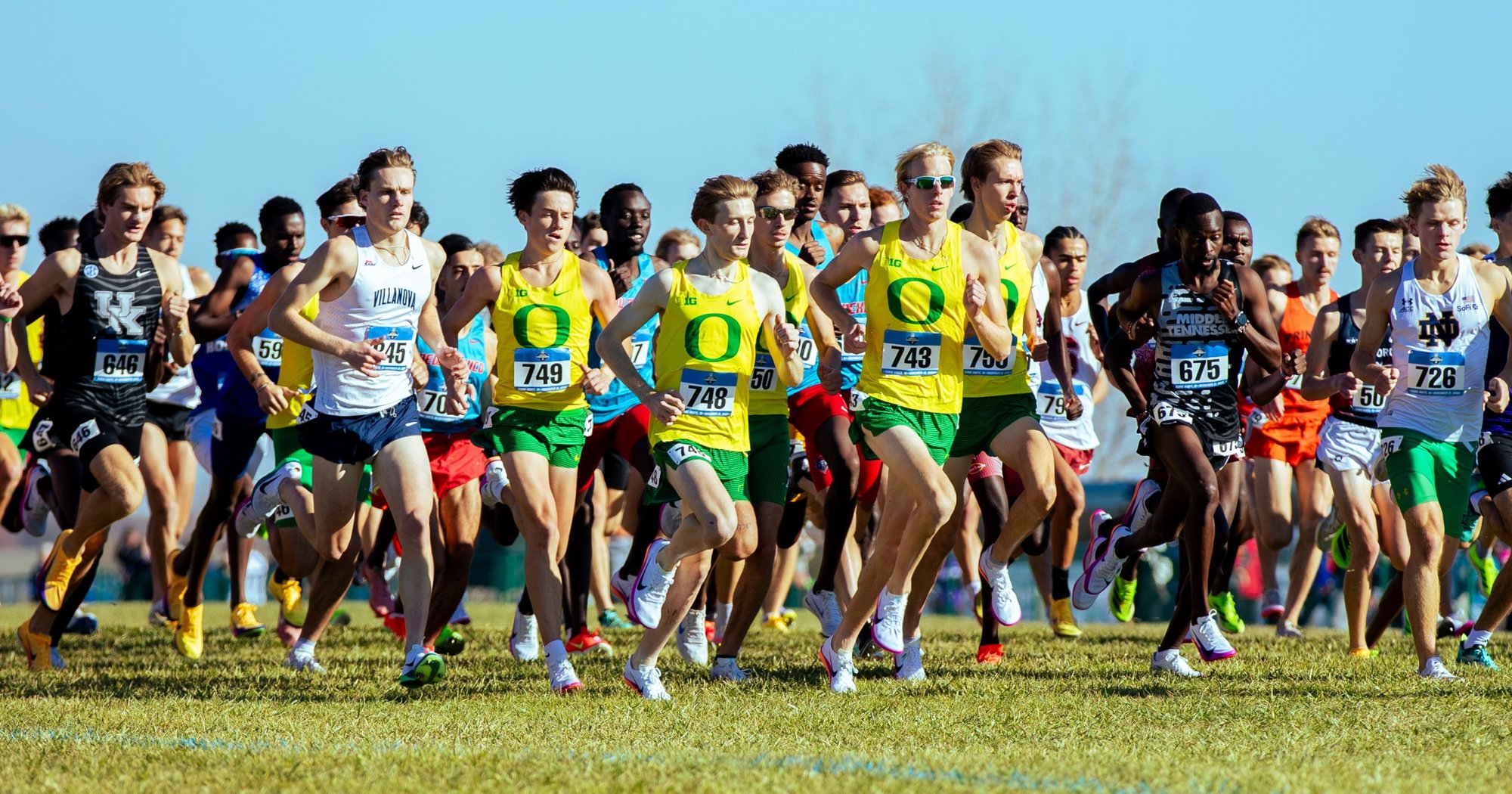
The path doesn’t run exclusively through Scholarbook or a comparable Kenyan recruiting service, either. Let’s look at two of the higher-profile names in last Saturday’s results: Nick Griggs of Oregon and Riley Chamberlain of BYU. Griggs finished eighth in the 5000m at this year’s European Championships as an Irish professional and just took ninth at NCAAs as the Ducks’ top scorer. In a world where the right judge can send RJ Luis from the Boston Celtics to a game against University of Louisiana-Monroe, the question of Griggs’s eligibility is barely a blip on the radar. Chamberlain joined the scores of college athletes securing temporary restraining orders to take advantage of the new “five in five” rule after leaving college last spring, and she ended up with another All-American honor and contributing role in the Cougars’ third-place finish.
Neither Griggs nor Chamberlain are breaking any rules; it’s just that the rules are fuzzy at best and change on a nearly daily basis. In some ways, what we saw this weekend in Terre Haute is no different than what’s happening in other college sports, but because of cross-country’s relatively low payscale and relatively stagnant landscape, it’s shockingly easy to game the system with significant and immediate results. It’s tempting to ascribe a moral judgment to the various strategies coaches and administrators employ in order to win, but if winning is the ultimate goal (should it be, in what is fundamentally a national system of higher education? Feels like that ship has sailed…), you can’t blame any one program for playing the hand they’re dealt. Adapt or die.
If you do think the system is broken, the “fix” extends far beyond any one runner, team, or even the sport of cross-country entirely. What we really need, ultimately, is for the NCAA to finally escape from circuit-court hell and for there to be real and lasting legislative changes creating clarity and guardrails designed to facilitate fairness from both top to bottom and across institutions and conferences and sports. Measures like salary caps, spending limitations, and true market-based determinations of NIL value would go a long way to put this runaway train back on the rails. Of course, that would require Congress getting its act together in a productive manner, so don’t hold your breath (when did this newsletter get so political?).
NCAA XC is evolving due to forces outside its control. In 2002, the first year Terre Haute hosted the national championship, seven of the ten finishers on both the men’s and women’s side were American; only one was Kenyan. Stanford won its third of four men’s titles in an eight-year stretch; it hasn’t won again since 2003. Should Cross Country Town, USA, host the meet another 24 years in the future, we have no idea what it will look like, but we can virtually guarantee that it won’t look the same as it does in 2026. Change is the true constant in sports.

David Melly
Since David began contributing to CITIUS in 2018, he's done a little bit of everything, from podcast hosting to newsletter writing to race commentary. Currently, he coordinates the social media team and manages both the CITIUS MAG newsletter and The Lap Count, supplying hot takes and thoughtful analysis in both short- and long-form. Based on Boston, David breaks up his excessive screen time by training for marathons, crewing trail races, baking sweet desserts, and mixing strong cocktails.