By Kyle Merber
October 14, 2026
The first NCAA Track and Field Championships were held in 1921 at Stagg Field in Chicago, and one year after winning the Olympic gold medal for Canada, Earl Thomson of Dartmouth tied his world record of 14.4 in the 110m Hurdles. With that victory, Thomson became the first non-American to win an NCAA title in Athletics; granted, he was born in Saskatchewan and his family moved to California during his childhood.
Following the 1948 Olympics, Coach Jumbo Elliott of Villanova is credited with opening the door to mass-recruiting foreign athletes, notably from Ireland. In 1958, Crawford Kennedy of Michigan State, a Glasgow native, led his team to an NCAA Cross Country Championship with his individual victory. The next two years Al Lawrence, the Olympic Bronze medalist at 10,000m from Australia, would win the subsequent titles for the University of Houston.
Since 1958, the men’s NCAA cross-country champion has been won by a non-US citizen 40 times – that’s 59% of titles. On the women’s side, the first international athlete to win an NCAA Cross Country title was Angela Chalmers of Canada competing for Northern Arizona University in 1986. In total there have been 19 titles won by women who were not originally from the United States who have earned themselves a title over grass, mud, and hills. Since the NCAA has existed, top athletes have been putting the “international” in the “national” association.
Think of how difficult freshman year is for an average kid from the suburbs who moves into a dormitory at the nearest state school. Without Mom to cook dinner or Dad to help with homework, they’re thrown into a new environment with big changes and massive pressure. The common guidance among college coaches is that if a kid can match their high school bests as a freshman then it was a successful year. Now imagine that same experience when family is not just a drive away, when the food tastes different, and the language of the professor is not their own.
It’s incredible when athletes take a bet on themselves to uproot their lives and commit to chasing a dream. In the recent words of Mario Garcia Romo about his transition from Spain to the University of Mississippi, “I knew that moving to the United States would be one of the most challenging decisions of my life, I also knew it was an opportunity I couldn’t let slip away. Running is a sport where you only have a few precious years, and you have to make the most out of them.”
Kyle’s disclosure: Perhaps I am biased, since this is how I met my wife, who after two years contemplating the decision while attending college in her home country of Ireland, eventually decided to make a leap of faith to finish her degree at Stony Brook University. I am well aware of the sacrifices her family made for her to be there, and what an enormous change it was: when she got picked up at the airport the week before school started, it was also her first time in America.
Last fall the discourse surrounding international athletes in the NCAA heated up as the coaches of BYU and Oklahoma State traded barbs on the subject. The contrast between the two rival programs could not be more pronounced, as Ed Eyestone is largely focused on recruiting athletes within the state of Utah or of the Mormon faith, whereas Dave Smith scours the globe. Despite these different approaches, each school has won two NCAA titles since 2019.
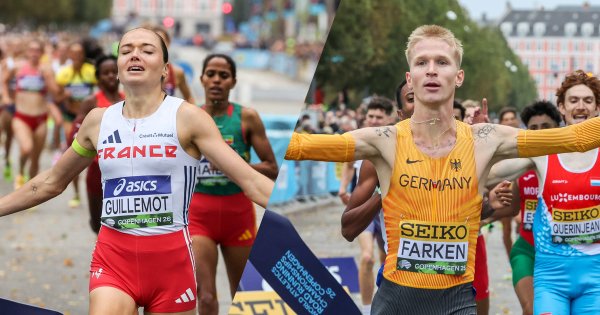
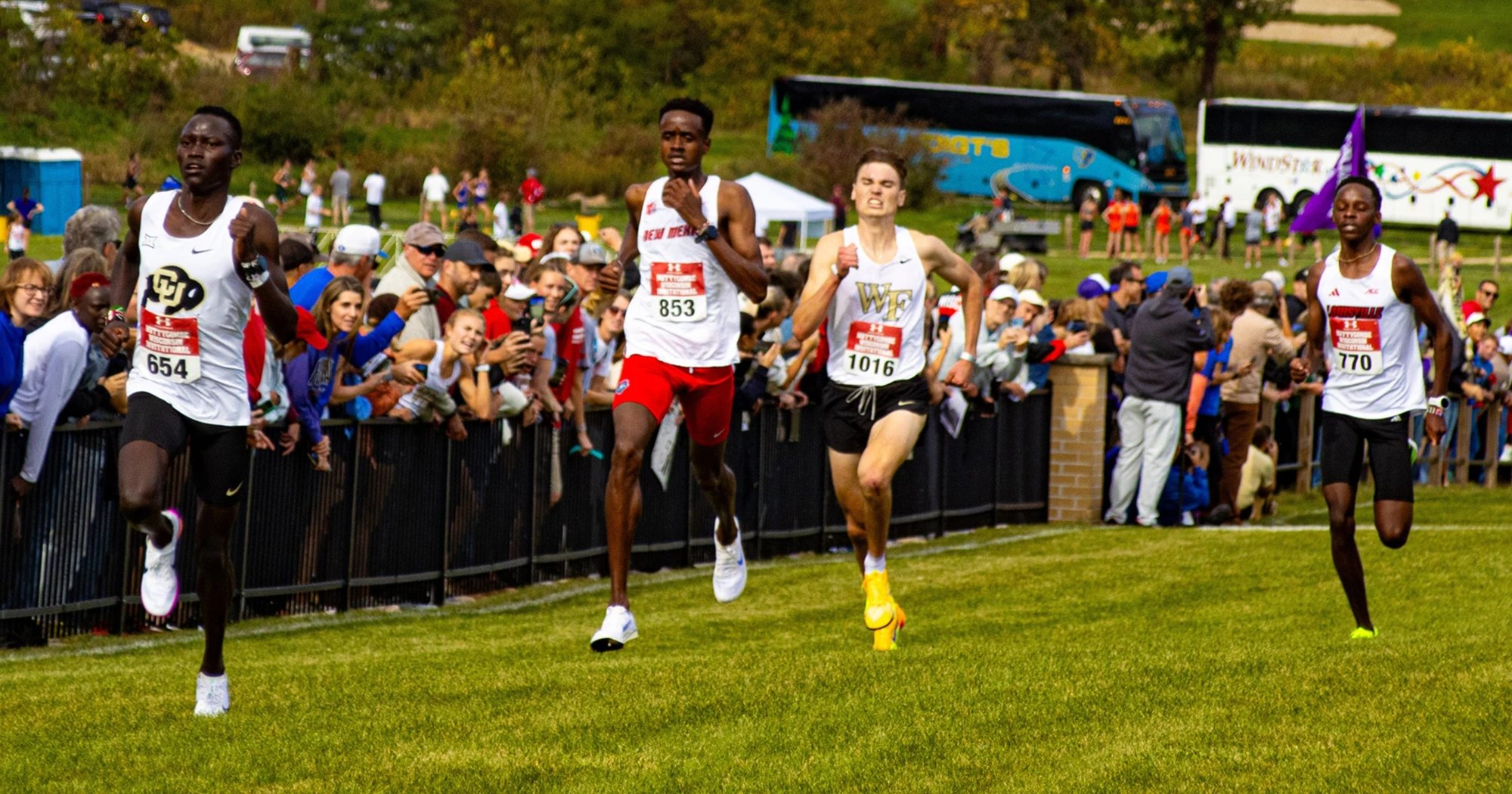
Conversations picked up where they left off last season again following the Nuttycombe Invitational in Wisconsin this past weekend. The New Mexico men won the loaded meet with five international athletes scoring for the Lobos, and West Virginia won the women’s race with four scorers coming from overseas. Both individual winners, Meshack Kipruto and Judy Chepkoech, are from Kenya.
At Nuttycombe, there were five American women in the top 25 and 15 in the top 50. The men’s side featured 22 in the top 50, and when you look at the historical data the trend is clear. In 2021, there were 33 Americans in the top 50 finishers at Wisconsin, and in 2016 there were 37. So while there is a long historical presence of international athletes in the NCAA, particularly at the top, the last decade has also seen an increase in depth.
Twenty years ago there were only a handful of schools with an international pipeline to recruit athletes from overseas. Iona University, a perennial podium team at the national meet, would wear shirts that cheekily had, “Assembled in the USA” on the back. Today, it is not uncommon for programs like Cal Baptist University to have 13 different countries represented on their roster. Practice is like a United Nations meeting.
With recruiting services like Townhall and Scholarbook now available to any college willing to pay, the barrier to entry and required effort is lower than ever. As a consequence of these middlemen, there were an additional 97 international athletes competing at last year’s NCAA Cross Country Championships. And yet it remains true that every one of those athletes still had to bet on themselves and take a big risk to be there.
The NCAA has been through an overhaul the past few years: first in the NCAA v. Alston, which allowed third-parties to pay athletes for the Name, Image, and Likeness, and then last year the landmark case of House v. NCAA permitted universities to pay its athletes directly in a direct revenue share. From the perspective of international athletes, moving to the United States was no longer strictly an academic opportunity – it was a career path.
What’s happening at NCAA XC meets is partially the result of decisions made to impact high-revenue sports like football and basketball. Having an increase in international runners is a byproduct of those rule changes. And as budgets are reassessed and roster sizes have become limited, the college coaches in non-money-generating sports are threatened by potential cuts. With their backs against the wall, many are choosing to fight for their survival by entering into the arms race to remain competitive. To rely exclusively on American recruits is a risk of falling out of favor with Athletic Directors whose primary interest is in winning within the rules.
This past week it was announced that the University of Oregon, a powerhouse program that is more than capable of handpicking the best Americans (and paying them) has added a certified stud to the roster. Ireland’s Nick Griggs will be joining the Ducks with seven European junior medals, a World Championship appearance, and two Irish national records already under his belt. He has run professionally for Puma for the past few years, but in the current Wild West of endless compliance lawsuits and NBA bench players returning to college, it’s far from unprecedented. At 21 years old, he is still well within his window of NCAA eligibility. Not to put any ideas in some higher-ups’ heads at Adidas and/or NAU, but maybe Hobbs Kessler is still eligible too?
One of the biggest issues that many take up with the current landscape of the NCAA is that many of the freshmen are not anywhere close to the age of a freshman. Fortunately, that is actively changing with the now effective 5-for-5 rule, which means eligibility clocks will start as soon as athletes enroll in a college anywhere in the world or during the start of the academic year following their 19th birthday, whichever comes first. With the remaining exceptions of military service and religious missions, the era of the 26-year-old collegiate athlete is over.
Although it is now operating more or less as a professional sport, in theory, the spirit of the NCAA should be about student-athletes chasing educational pursuits alongside their athletic ones. During the height of the pandemic, the NCAA temporarily waived the need for athletes to pass standardized test minimums. In 2023, that became permanent. English literacy exams or English-as-a-second-language classes are not universal admission pre-requisites. And in the revenue sports world, the rush of “reclassification” in football and basketball among American recruits means completing four years of high school isn’t exactly a requirement anymore either.
Until Congress passes comprehensive legislation establishing a clearer framework for the unique circumstances of college sports, the NCAA will remain a strange, inconsistent smorgasbord of ever-evolving recruiting and compliance policies. But even a clearer playing field won’t necessarily make U.S. colleges any less attractive to international athletes. The NCAA is the best in the world at developing talent and it’s no question that many would seize the opportunity to train at elite institutions with state-of-the-art facilities.
That doesn’t mean there aren’t some realistic changes that some of the people who read this newsletter are capable of making. One idea worthy of consideration is that the USTFCCCA should consider bringing back its “All-American” distinction that was removed in 2011 that considered the top American citizens at NCAA championship meets. It would be a great way to honor more worthy athletes if awards were given out at the end of the season to highlight both those who were “All-NCAA” in addition to “All-American.”
Next, in addition to an athlete’s year in school, it would be beneficial to also include their country in standard results pages. The NCAA is an international organization from the track and field perspective, and just as is the status quo in other international competitions, it gives fans a clearer understanding and potentially deeper rooting interest in those competing. In that same spirit, it would be beneficial to include athletes’ ages alongside their year in school. That is standard for athletes competing in other age-group championships like the U23 European XC meet and it helps provide context and appreciation to each performance.
The NCAA has always been international, but like many modern institutions, it’s also evolving at a breakneck pace. But evolution isn’t necessarily a bad thing. There’s potentially even an advantage for American kids to be racing the best earlier. There is a correlation between the United States’s improvement on the global stage in the Olympics and World Championships and the increase of international athletes now at the college level, as the gap between the level of competition shrinks. In the borrowed philosophy of the stoics, you can only control what you can control, and running fast solves most problems.

Kyle Merber
Kyle Merber is a former professional miler turned media multi-hyphenate. While he’s not above dropping a quick “back in my day,” he’s far more focused on the present. Since 2021, he has brought his signature analysis and commentary to track fans across the CITIUS MAG network. When he’s not writing The Lap Count or hopping on podcasts, Kyle manages partnerships and pitches a relentless stream of ideas for Chris to consider. He might not be running a 3:52 mile anymore, but he keeps himself in just good enough shape to ensure the athletes still respect him.