By Kyle Merber
February 4, 2026
There are few performances in history that hit so hard that you’ll never forget where you were when they happened. My brain is still processing Sam Ruthe’s run in Boston the way your parents or grandparents remain in awe over the moon landing.
3:48.88 at 16 years old.
How can we even begin to make sense of that?
We can start with the stats: Ruthe’s performance lowers the age group record by every metric imaginable. It’s the 11th fastest indoor mile in history, and 54th overall. The next fastest 16 year old ever is some guy named Jakob Ingebrigtsen, who could only muster up a 3:56. And we all know how that turned out…
For Kiwis, the best way to contextualize the performance might be all the people Ruthe ran faster than to set this new national record: John Walker, George Beamish, Nick Willis, Rod Dixon, Peter Snell.
If I may… I think an interesting comparison might be against myself! When I was 16 years old, I was receiving letters and calls from nearly every college program in the NCAA. My ego knew no bounds, and my Olympic gold medal aspirations felt fully justified. With a mile time of 4:15, the world was my oyster!
We can rationalize this teenage 3:48 with a long list of reasons as to why Ruthe is so much quicker than everyone who came before him. Back in OUR DAY, we didn’t have super shoes, bi-carb, double threshold, the BU track, YouTube, or rabbits. We quadrupled at dual meets on Tuesday afternoons and we liked it! But deep in your gut, does it really feel like these factors all add up to this level of breakthrough?
Prodigious performances like Ruthe’s aren’t just impressive for the potential they reveal. They’re just plain impressive. But while it’s fun—and more healthy— to enjoy the show, it’s natural to speculate about the future of every prodigy. Not every great teenage athlete will go on to rack up Olympic medals, and those expectations can be daunting or even detrimental. So how can we identify the type of talent with staying power?
A generation ago, college coaches were all searching for that ideal recruit, the preternaturally talented diamond in the rough who won states after accidentally running 30 miles one week. Bonus points if they still played competitive soccer, and hailed from a “tough” state, like Michigan.
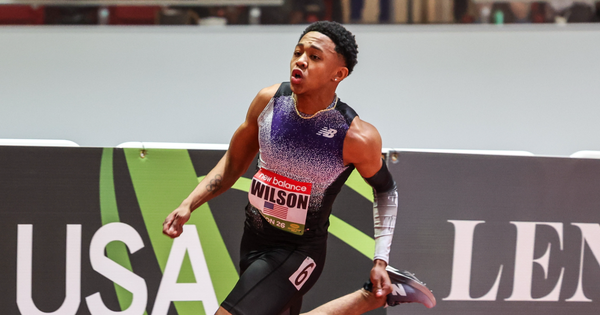
Now with athletes like Sam Ruthe (16), Cam Myers (19), Quincy Wilson (18), Marta Alemayo (17), Cooper Lutkenhaus (17), Gout Gout (18), Jane Hedengren (19), Biniam Mehary (19), and others running world class times before their 20th birthday, it’s safe to say the game has changed. They’ve all trained hard at a young age—you can’t run as fast as they are without doing so—but don’t appear to be on anyone’s radar as a burnout risk.
It’s worth asking: what factors should fans be looking for to help us make our best predictions about who will still be relevant in their mid-20s?
It’s helpful to look at the precedent and characteristics of previous generations’ wunderkinds. Allyson Felix was a World champion at 200m while still a teenager. Sydney McLaughlin-Levrone made the Olympics at 16. Galen Rupp and Jakob Ingebrigtsen should dispel any notions that training hard, like really hard, as a high schooler will shorten your peak long-term.
The first thing to consider is the support system around a young athlete. Is there space in their lives to be a phenom and also, y’know, a person? Cooper Lutkenhaus is still making it to practice every day. Quincy Wilson is staying in his home state for college.
We often see burnout among athletes whose parents are overly involved. There is a difference between being proud, and being invasive. What we want to see is parents whose love is not contingent on their children winning. That allows an athlete to cultivate the necessary intrinsic motivation that will guide them to keep chasing barriers, and to rebound from the inevitable disappointments that are part of the sport.
One perk of being precocious is that fans take a vested interest in every step along the way. Unfortunately there is a population of jealous psychopaths who also love to watch successful kids struggle.
And that’s the next factor to consider: how do young athletes handle loss? It’s Earth-shattering to go from universal praise and God-like invincibility to a reality check. When they can manage their emotions and zoom out to see the big picture, it’s a great sign of resilience. Consider this quote from Cam Myers in his recent interview on the Citius Mag Podcast:
“I am more focused on improving in training, whether that be improving just based on my threshold going up, or my mileage over time is going up, my speed is getting quicker, stuff like that… times aren’t always the best reflection of how well you’re tracking and the progress that you’re making.”
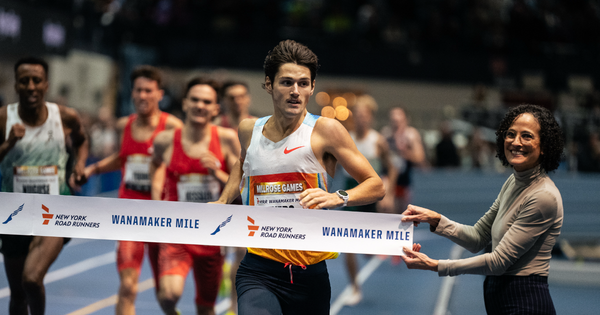
That’s a Wanamaker champion who isn’t consumed by a single data point on the clock.
Lastly, I want to see a young star with obvious areas for improvement. A sprinter with great top-end speed, but a terrible start… that’s okay, you can learn that! A miler who always gets caught on the inside and closes like a maniac to make up the difference. Tactics can be perfected by coaching or experience. It can seem like a red flag, but inconsistency is a sign of a high ceiling.
Ultimately, there is too long of a timeline and too many variables to pinpoint the perfect formula that will ensure the fastest kid today will become the fastest adult tomorrow. But the consistent threads among those who were able to make the transition are poise, persistence, and the ability to roll with the punches.
And what we have seen from this current crop of young talent is that they’re incredibly well-prepared thanks to those who were in their shoes before them.

Kyle Merber
Kyle Merber is a former professional miler turned media multi-hyphenate. While he’s not above dropping a quick “back in my day,” he’s far more focused on the present. Since 2021, he has brought his signature analysis and commentary to track fans across the CITIUS MAG network. When he’s not writing The Lap Count or hopping on podcasts, Kyle manages partnerships and pitches a relentless stream of ideas for Chris to consider. He might not be running a 3:52 mile anymore, but he keeps himself in just good enough shape to ensure the athletes still respect him.