By Chris Chavez
October 21, 2026
In an email to athlete agents, World Athletics said the qualification window for the LA28 Olympic marathon will run from Nov. 1, 2026, through April 30, 2028, with 70 quota places per gender — down from 80 at Paris 2024. The time entry standards will be finalized following approval by the World Athletics Council in December 2026.
As expected, athletes will have multiple paths to qualify for the 2028 Summer Games:
- Entry standard: World Athletics aims to fill roughly 40% of the field through the time standard. A top-five finish at any Platinum Label marathon during the qualification window will also count as meeting the standard.
- World Rankings: The remaining 60% of the field is expected to qualify through the World Rankings during the ranking period.
Fans can follow the rankings and list of qualified athletes through World Athletics’ online “Road to LA” tool.
However, meeting the entry standard doesn’t guarantee an Olympic spot. If more athletes meet the standard than there are quota places available, only those with the best performances will qualify, leaving no places for athletes to qualify through the rankings. Each country is limited to three athletes.
One key date is March 19, 2028: Athletes ranked in the top 55 on the filtered “Road to LA” quota list that day will be considered qualified and cannot be displaced. The final 15 places will be filled afterward using the same criteria.
For Americans, that cutoff comes six days before the 2028 U.S. Olympic Marathon Trials, scheduled for March 25 in St. Louis.
At final entries, a national Olympic committee can also reallocate a quota place to an otherwise unqualified athlete, provided they have run 2:11:00 or faster for men or 2:29:00 or faster for women during the qualification window.
For a marathon performance to count toward Olympic qualifying, the course must have been measured by a World Athletics/AIMS Grade A or B measurer, with a measurement certificate no more than five years old on race day.
To count toward the entry standard, the course can’t drop more than one meter per kilometer from start to finish or about 42 meters total for a marathon. Results on courses with a greater drop can still count toward World Rankings, but points will be deducted based on how much elevation the course loses.
Quick thoughts
– What will the time standards be? We’ll have to wait until December to find out. I initially thought 2:06:00 for men and 2:23:20 for women might hold, but those standards are built around fields of 100 athletes for the 2027 World Championships. With a smaller Olympic field and the same target percentage qualifying via the standards, the times will likely need to get faster.
Remember, the top-five provision for Platinum Label marathons extends beyond the World Marathon Majors. Races like Shanghai and Xiamen will also count toward the share of athletes qualifying via the entry standard.
My guess? Somewhere between 2:05:00 and 2:05:30 for men, and 2:22:30 and 2:23:00 for women. We’ll find out in December.
– Remember the qualifying headache in 2024, when the U.S. men had only two Olympic spots unlocked at the Trials? The March 19 cutoff should help avoid a repeat. Anyone in the top 55 on the filtered “Road to LA” list that day is qualified and cannot be displaced as the final 15 spots are filled. In 2024, the picture wasn’t settled until the qualification window closed. This time, if the U.S. has three runners in the top 55 by March 19, that third spot is protected from other spring marathon results.
– That also means an athlete who finishes in the top three at the U.S. Olympic Marathon Trials without the entry standard or a qualifying World Ranking could still go to the Olympics through a reallocated U.S. quota place, provided they’ve run 2:11:00 or faster for men or 2:29:00 or faster for women on an eligible course during the qualification window. It will likely take a faster performance than that to finish in the top three in St. Louis.
– What happens when the top American marathoners flock to Boston next spring because the appearance fees are better than what they’re offered elsewhere? A top-five finish would count as meeting the entry standard because Boston is a Platinum Label race, but that’s always tough against such strong international fields. They can also chase a fast performance to boost their World Ranking, even though their time won’t count toward the entry standard.
For example, Charles Hicks earned 1,257 points for finishing seventh in 2:04:35 at Boston and then 1,250 points for finishing eighth in 2:05:35 at Chicago.
One important wrinkle: Running 2:11:00 or faster for men or 2:29:00 or faster for women at Boston won’t establish eligibility for a reallocated quota place because the course isn’t eligible. But a 2:09 or 2:28 at the McKirdy Micro Marathon or Grandma’s Marathon would. Both races are on the World Athletics calendar and have eligible courses, giving athletes that backup option if they have a breakthrough top-three finish at the Trials without the entry standard or a high enough World Ranking.
– The 2026 USATF Marathon Championships will be held at the California International Marathon in December, but the course’s elevation loss makes it ineligible for Olympic qualifying times. Athletes can boost their World Ranking there, but they can’t use their times to meet the entry standard or establish eligibility for a reallocated quota place. The 2027 USATF Marathon Championships will be held within the 2027 Chicago Marathon.
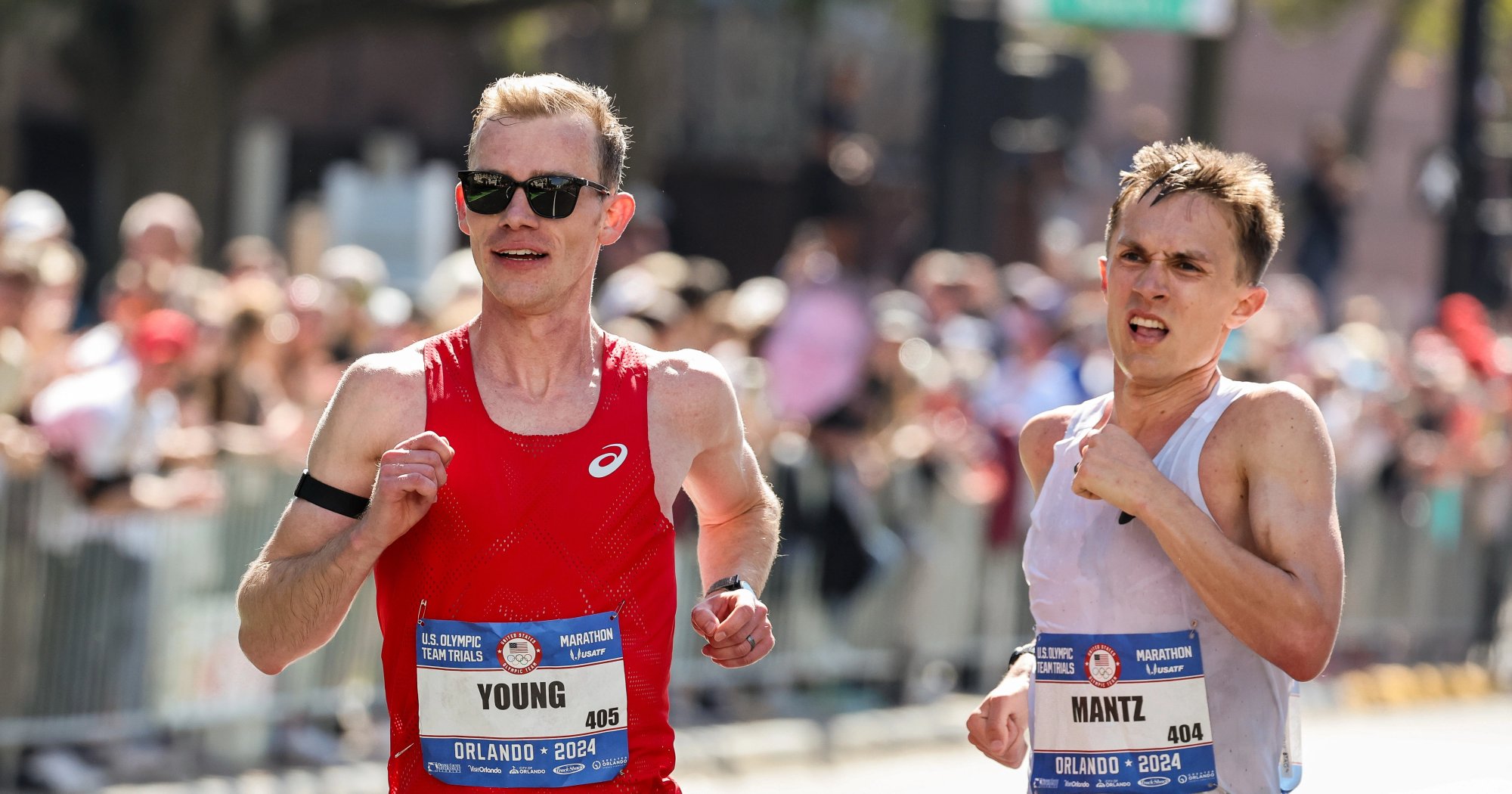
– With the qualification window opening Nov. 1, any American who finishes in the top five at the New York City Marathon will count as having met the Olympic entry standard. That’s an early opportunity for Zouhair Talbi, Conner Mantz, Joe Klecker, Jess McClain and Weini Kelati, who are all set to compete.
– TL;DR: I feel much better about the United States heading into the 2028 U.S. Olympic Marathon Trials with all three men’s and women’s spots unlocked before race day in St. Louis.
If today’s marathon world rankings were the standings on March 19, 2028, with a limit of three athletes per country, the U.S. would have three men (Conner Mantz at No. 11, Zouhair Talbi at No. 15 and Charles Hicks at No. 19) and three women (Emma Grace Hurley at No. 13, Jess McClain at No. 15 and Annie Frisbie at No. 21) comfortably inside the qualifying quota. That would put all six spots in hand, leaving the top three in St. Louis to decide who goes to the Games, provided they meet the reallocation requirements.
Given the depth and level of competition we’ve seen from American marathoners over the past 18 months, I like those chances. The next 18 months will tell us more, but the qualification chase starts fresh on Nov. 1.
Chris Chavez
Chris Chavez launched CITIUS MAG in 2016 as a passion project while working full-time for Sports Illustrated. He covered the 2016 Olympics in Rio de Janeiro and grew his humble blog into a multi-pronged media company. He completed all six World Marathon Majors and on Feb. 15th, 2025 finally broke five minutes for the mile.